Play store


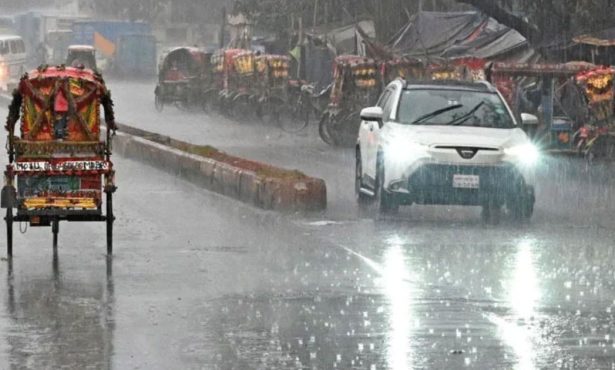
DHAKA: Rainfall has brought temporary relief to residents of the capital as air pollution levels have declined. According to the latest live ranking by Swiss air quality monitoring organisation IQAir, Dhaka ranks 25th among the world’s most polluted cities today. While this offers some relief to residents, environmental experts say the improvement may be short-lived.
According to IQAir’s air quality index (AQI), Dhaka recorded a score of 78 today, placing the city’s air quality in the moderate category. Rainfall has temporarily washed away dust particles and other pollutants suspended in the air, significantly reducing pollution levels. Although an AQI score of 78 is considered moderate, some risks remain for sensitive groups, including children, older people and those suffering from asthma or respiratory problems.
While Dhaka’s air quality has improved somewhat, pollution levels remain severe in several other major cities around the world. Pakistan’s Lahore tops the list with an AQI score of 453, placing it in the hazardous category. India’s capital, New Delhi, ranks second, with its air quality classified as very unhealthy. Kolkata, also in India, ranks third with an AQI score of 179, falling in the unhealthy category.
Mongolia’s Ulaanbaatar and the Netherlands’ Rotterdam rank fourth and fifth, with AQI scores of 160 and 149, respectively. China’s Shanghai and Wuhan, Afghanistan’s Kabul and India’s Mumbai are also among the cities with high pollution levels.
According to international AQI standards, scores of 0–50 indicate good air quality, while 51–100 are considered moderate. Scores of 101–150 are unhealthy for sensitive groups, 151–200 are unhealthy, 201–300 are very unhealthy, and scores of 301 or above are considered hazardous.
Dhaka’s 25th position on the list offers some relief. However, environmentalists have warned that air pollution in the capital could worsen as winter sets in. Dry weather, emissions from brick kilns and dust from various development projects could cause pollution levels to rise again as temperatures fall.