Play store

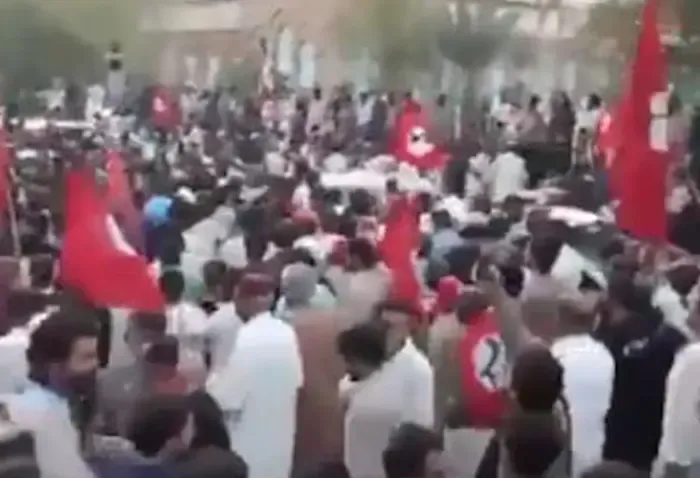
Tensions are mounting in Pakistan’s political landscape over a proposal to divide the country’s four provinces into new administrative units. Thousands of people in Sindh province have taken to the streets to protest against the controversial plan, reportedly linked to Army Chief Field Marshal Asim Munir.
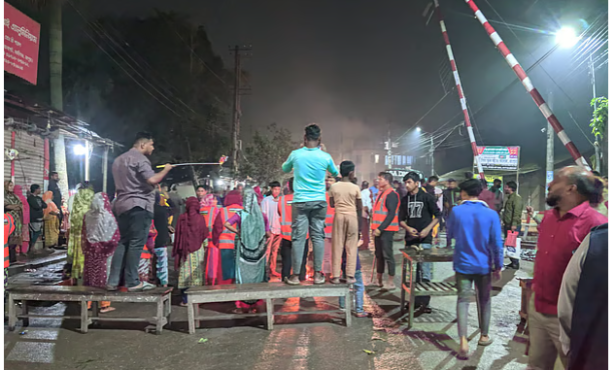
At a rally in Karachi, protesters demanded that Sindh’s geographical boundaries remain intact.
According to a report by Pakistan Today, the demonstration was organised in Karachi earlier this week by the Jeay Sindh Rahbar Committee. Nationalist leaders, political activists, lawyers and representatives of civil society took part in the rally. Many protesters wore Sindh’s traditional Ajrak shawls and caps.
Speakers at the gathering opposed any changes to the existing boundaries of Sindh province. They said there could be no compromise on the province’s territorial integrity and that the views of local people must be given the highest priority in any decision to alter its boundaries or administrative structure.
They also said Sindh’s identity was not confined to administrative boundaries but was deeply rooted in its long history, culture and civilisation. That identity, they argued, could not be fragmented in the name of administrative convenience.
The protesters also opposed proposals to hold referendums on the creation of new provinces or administrative regions. They urged the federal government led by Prime Minister Shehbaz Sharif and relevant institutions not to take any decision that could fuel political tensions and divisions in the province.
They warned that any attempt to impose administrative changes without public consent would be resisted through constitutional, legal and democratic means. They also threatened to launch a province-wide movement if necessary.
Discussions are under way about dividing Pakistan’s four major provinces — Punjab, Sindh, Khyber Pakhtunkhwa and Balochistan — into 12 or more provinces or administrative regions. Army Chief Asim Munir’s name has been linked to the initiative.
Although Pakistan’s Constitution places the president and prime minister above the army chief in the formal state hierarchy, Asim Munir is widely believed to wield considerable power in practice. However, no official blueprint for a plan approved by him has been made public so far.
Supporters of the proposal argue that creating new administrative regions would improve governance, decentralise power and make public services more accessible to ordinary citizens.
Experts, however, fear that implementing the proposal could bring major changes to Pakistan’s existing federal structure.
In an editorial published on October 8, British magazine The Economist described the initiative as an attempt to divide political opponents and further consolidate the army chief’s power.
‘People will take up arms if Sindh is divided’
Pakistan Peoples Party (PPP) Chairman Bilawal Bhutto Zardari has previously taken a strong stance against the proposed division of Sindh.
Speaking at an event at the Karachi Press Club on November 17, he warned that people could take up arms if Sindh were forcibly divided.
According to Geo TV, Bilawal said, “If a province is divided by force, society will also become divided. This will create hostility, ordinary people will take up arms, and the bloodshed will not be limited to the death of just one person.”
He said his party supported the creation of new provinces in accordance with public will, the Constitution and the law. However, the PPP opposed any attempt to divide a province through coercion.
“We object to coercion and pressure. We do not want any division through the use of force,” Bilawal said.
He further said Pakistan’s Constitution had a specific procedure for creating new provinces. Proposing a referendum in this regard, he argued, amounted to an attempt to bypass the constitutional process. He also noted that referendums had been used for undemocratic purposes in Pakistan in the past.
Overall, what began as a discussion on creating new provinces in the name of administrative decentralisation has sparked a major political confrontation in Sindh over provincial identity and territorial integrity. How far the initiative reportedly linked to Asim Munir will proceed remains to be seen.