Play store

By Mohammed Zonaid
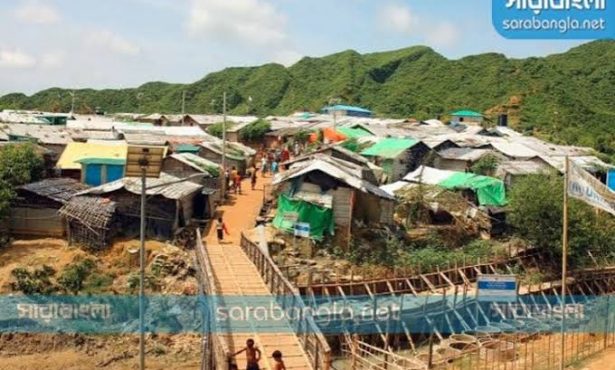
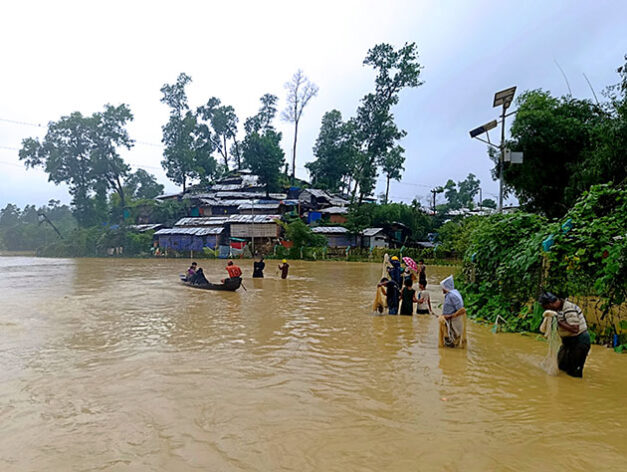
Heavy monsoon rains this week unleashed landslides and flash floods across the Rohingya refugee camps in Cox’s Bazar, killing at least 14 refugees, most of them women and girls.
Among the victims were three young girls and their teacher, who died when an Islamic learning centre was buried in a landslide on July 8. Others lost their lives in separate landslides across six camps. Thousands of families have since been moved to temporary shelters, while hundreds of bamboo-and-tarpaulin homes have been destroyed or submerged.
For those of us living in the camps, these tragedies are painfully familiar. Every monsoon brings the same cycle of destruction. Every disaster is followed by fresh appeals from humanitarian agencies for more funding. Yet after nearly nine years of international assistance and more than US$5 billion in aid, a difficult but necessary question remains unanswered:
The question has gained renewed urgency following Audit Report 2025/084 by the UN Office of Internal Oversight Services (OIOS), which identified significant weaknesses in the UN refugee agency’s Rohingya response in Bangladesh. The audit raised concerns about project planning, procurement, monitoring and the effective use of humanitarian resources.
As reported by Bangladesh’s New Age, the audit found that millions of dollars had been spent on infrastructure that remained unused, projects overlapped, procurement lacked adequate oversight and several programmes failed to achieve their intended objectives.
These findings are especially troubling at a time when humanitarian funding is declining even as thousands more Rohingya continue to flee violence in Myanmar and seek refuge in Bangladesh.
Among the examples highlighted in the audit was a US$1.5 million specialised hospital in Ukhiya that remained unused. A 20-bed inpatient facility on Bhasan Char, equipped with US$140,000 worth of solar equipment and a US$74,301 X-ray machine, also remained unused.
The audit further noted spending of US$18,000 on honour boards, US$23,000 on staff uniforms and US$27,000 on a documentary, raising questions about priorities while essential humanitarian needs remained unmet.
Perhaps the most striking example was the procurement of US$182,028 worth of cutlery, including spoons, forks and knives.
As someone who has lived in the camps since 2017, I have never received such items, nor have I seen them widely distributed. Most Rohingya traditionally eat with their hands, making the expenditure difficult to understand from the perspective of camp residents.
At the same time, monthly food assistance for most refugees has been reduced from US$12 to US$7 per person, an amount that barely covers basic nutritional needs.
The contrast is impossible to ignore. Many learning centres that once provided children with at least some education now stand largely empty. Hospitals built with substantial international funding often struggle to provide medicines beyond basic painkillers or stomach tablets.
Last year, after waiting for hours to see doctors at a camp health facility, my young daughter was prescribed medicine that the hospital could not provide because of funding shortages. We were forced to purchase it ourselves from a local pharmacy.
The audit also identified duplicated procurement. According to the report, UN partners spent US$4.2 million on shelter materials that had already been purchased by UNHCR. It also found duplication involving US$194,000 in solar and energy projects and US$800,000 in medicines and medical equipment.
Beyond procurement issues, the audit observed that eight years into the crisis, 67 percent of funding had gone to immediate humanitarian relief, while only 17 percent had been directed towards empowerment and longer-term solutions.
That imbalance is visible across the camps. There is still no formal education system for Rohingya children. Health services remain inadequate. Durable housing has not been constructed. Hundreds of thousands of refugees continue to live on unstable hillsides vulnerable to landslides and flooding.
Around 200,000 Rohingya who arrived since 2024 remain in extremely fragile shelters with little protection from the elements.
The humanitarian response has undoubtedly saved countless lives since 2017. Aid workers, medical staff and many humanitarian organisations have made extraordinary contributions under extremely difficult circumstances.
But acknowledging those achievements should not prevent legitimate scrutiny. Transparency and accountability are not obstacles to humanitarian action. They are essential to maintaining public trust and ensuring scarce resources reach those who need them most.
The Rohingya response is one of the world’s largest humanitarian operations. It is jointly led by the Government of Bangladesh, UNHCR and the International Organization for Migration (IOM), with participation from dozens of UN agencies and international and national NGOs.
Each year, the Joint Response Plan also earmarks a significant share of funding to support Bangladeshi host communities.
Yet many residents living beside the camps say they have never received assistance, skills training or livelihood support. Some are unaware that funding has even been allocated for their communities.
These concerns deserve independent examination. One possible way forward would be the establishment of an independent Quality Assurance and Financial Oversight Committee, comprising representatives from the Government of Bangladesh, donor governments, relevant UN bodies, independent auditors, civil society organisations and Rohingya representatives.
Its role should be to verify that projects address genuine needs, monitor implementation and ensure that humanitarian funding delivers measurable outcomes for both refugees and host communities.
Humanitarian assistance must remain focused on the people it is intended to serve. Funding shortages are real. But so too is the need for stronger oversight, greater transparency and better value for every donor dollar spent.
As long as Rohingya refugees cannot safely and voluntarily return to Myanmar with dignity, rights and citizenship, the international community has a responsibility not only to provide assistance but also to ensure that every dollar is used wisely.
Mohammed Zonaid is an award-winning Rohingya journalist and photographer, in Cox’s Bazar, Bangladesh.
The views expressed in this IPS article are the author’s own and do not necessarily reflect the editorial policy of Sarabangla.