


 Play store

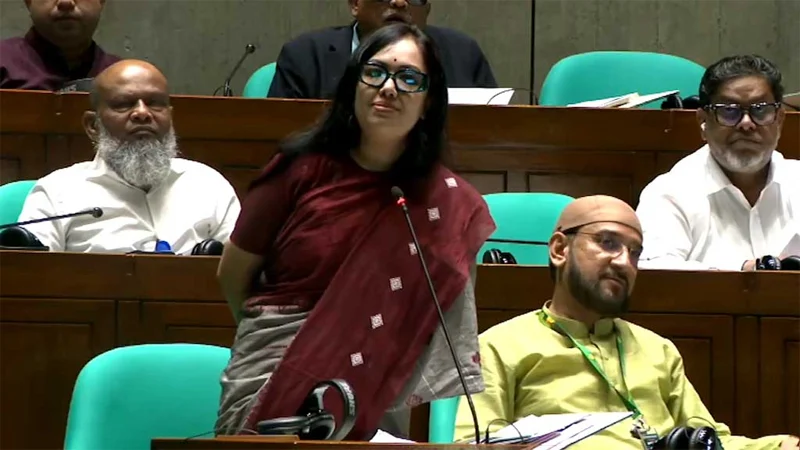
Independent MP Barrister Rumeen Farhana’s remarks about the BNP sparked a heated exchange in Parliament on Wednesday, with allegations that she was subjected to abusive language during the session.
The incident occurred during a discussion on the Bank Resolution (Amendment) Bill. Farhana, MP for Brahmanbaria-2, criticised the BNP’s record in government, referring to past shortages of gas, electricity and fertiliser, as well as corruption and rising loan defaults.
“BNP will come to power and there will be no gas and electricity crisis—that cannot happen,” Farhana said, adding that Bangladesh could not avoid becoming a champion in corruption if the BNP returned to power.
She also alleged that loan defaults had reached more than Tk 660,000 crore during the BNP’s previous tenure.
Her remarks prompted BNP lawmakers to raise objections, leading to loud protests and commotion inside the chamber.
Despite the disruption, Farhana continued speaking and criticised what she described as an increasingly intolerant Parliament.
She compared the behaviour to that witnessed during the Awami League government and said the BNP was now displaying similar, or worse, conduct.
As the uproar continued, Farhana’s allotted speaking time expired and her microphone was switched off.
She continued speaking without a microphone and later alleged that she had been subjected to abusive remarks by BNP lawmakers.
NCP lawmaker Abdul Hannan Masud also protested, saying a parliamentarian should not be verbally abused in such a manner.
Other opposition lawmakers joined the protest.
Deputy Speaker Kaiser Kamal repeatedly called for order and reminded lawmakers that obstructing another MP while speaking was contrary to parliamentary norms.
He said members had the right to present their views and that others could respond when given the floor.
Opposition Leader Shafiquur Rahman later said that whatever Farhana had said should have been heard properly, arguing that if any part of her speech was unparliamentary, the Speaker could rule on it or the relevant minister could respond.
The Bank Resolution (Amendment) Bill was subsequently passed amid the controversy.