Play store

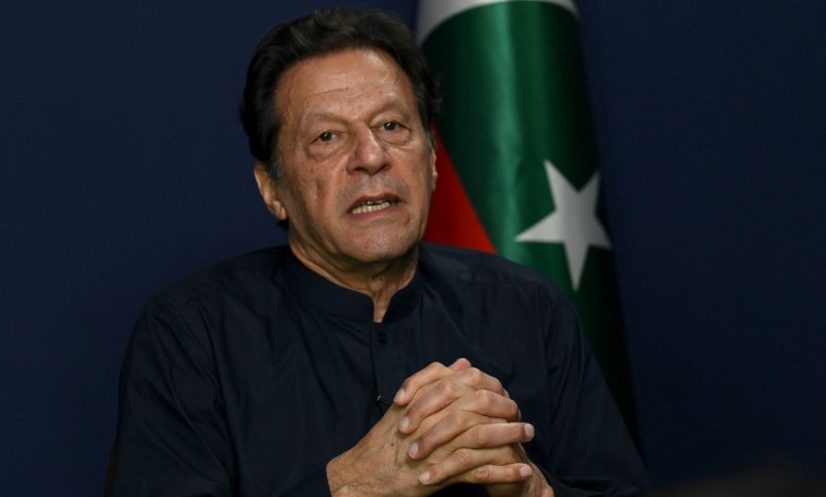
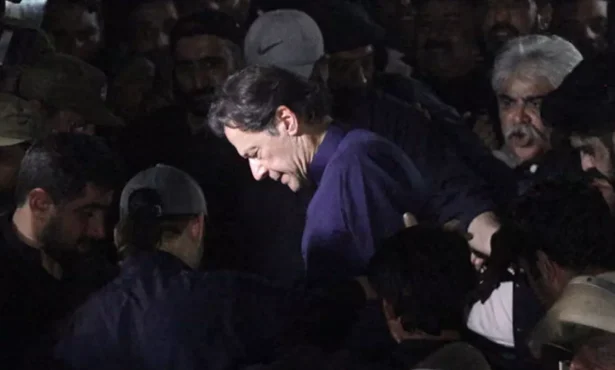
Imran Khan has become a complex reality for Pakistan’s power structure. His continued presence is an embarrassment to the system, while his death in prison could turn into a major indictment of the state.
That is now the biggest dilemma facing Field Marshal Asim Munir and the two dynastic political families operating under the military shadow—the Sharifs and the Bhutto-Zardaris.
Pakistan’s Supreme Court has ordered the transfer of 73-year-old former prime minister Imran Khan to Shifa International Hospital for medical treatment.
The court also directed that his personal doctor be included on the medical board and that his regular communication with family members be restored.
In any normal constitutional system, these would not be considered privileges but basic rights of a citizen.
Yet Pakistan’s ruling establishment has controlled fundamental rights for so long that even a prisoner’s right to see his doctor is now being presented as a major constitutional achievement.
The irony became even clearer when the government challenged part of the court’s ruling. It appears that controlled elections, political engineering, mass cases and the distortion of state institutions can be tolerated, but allowing a former prime minister to receive treatment at a private hospital has become a constitutional red line.
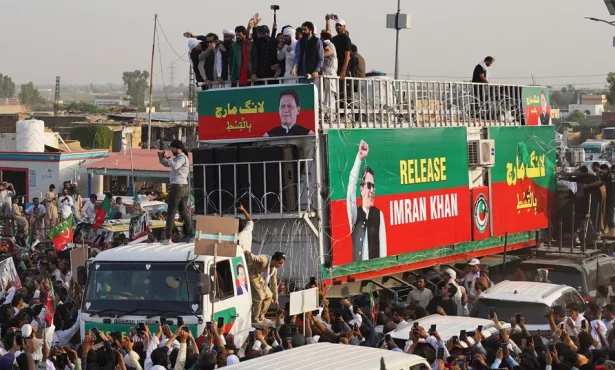
The objective of keeping Imran Khan in prison was to weaken him politically—keep him away from rallies, television and political activities, burden him with successive cases, exhaust his party and isolate him in a way that could achieve what political competition could not.
But the state’s strategy has produced the opposite result. By sending him to prison, it has made his symbolic power even stronger.
Every rejected meeting has become evidence. Every dispute over his medical treatment has turned into an allegation. The more the authorities have tried to keep him out of sight, the more politically visible he has become. His prison cell has effectively turned into a kind of broadcasting centre.
This is Asim Munir’s biggest strategic nightmare.
A healthy prisoner can be controlled. But a visibly ill prisoner can become a symbol of accusation against the state. And the death of a prisoner can turn him into history. History is harder to control than parliament.
Munir may be praised abroad as former US President Donald Trump’s “favourite field marshal”. He may pose for photographs with presidents, receive prominence in diplomatic meetings and be regarded as the indispensable manager of a complex nuclear-armed state. But such international prominence only makes his domestic vulnerability more visible.
Having to keep a political rival behind bars for years is not a demonstration of confidence; it is an admission of fear.
As the medals grow larger, the space for political imagination appears to be shrinking.
If Imran Khan is released, he will not return as the same politician who entered prison. He could emerge older, more wounded, more legendary and armed with an even stronger political argument: the entire repressive machinery of the state had to be used to keep one man away from voters.
On the other hand, if he remains in prison despite deteriorating health, every legal dispute will gradually boil down to a simple question: what kind of system fears a politician so much that even his doctor, family visits and telephone conversations become matters of state control?
And if Imran Khan dies in prison, the issue will no longer be confined to political management. It could become a political explosion.
A living politician can be criticised, mocked, blamed or defeated in an election. But the memory surrounding a dead political prisoner can become much simpler. Documents may disappear, allegations may lose their force and legal explanations may become less important. What may remain is a single image: a former prime minister dying after years in state custody while demanding adequate medical treatment.
It would be extremely difficult for those in power to impose their own narrative on such a memory. That is why Imran Khan is dangerous to Munir both alive and dead.
Alive, he is a popular political rival. Dead, he could become a permanent moral indictment that would be even harder to control.
The Sharif and Bhutto-Zardari families cannot escape scrutiny either.
They cannot present themselves forever as guardians of constitutional values while benefiting from a system in which their principal political rival has been kept out of public life. Their position is deeply contradictory.
They speak of democracy while remaining part of a political system whose stability depends on keeping the country’s most powerful opposition leader inactive.
They speak of civilian authority while governing under the long shadow of Rawalpindi. They preserve party identities as if they were inherited property, then wonder why electoral politics increasingly looks to the public like a feudal drama with ballots.
The Sharifs want power but do not want to acknowledge who guarantees that power. The Bhutto-Zardaris want to maintain a democratic image without taking democratic risks.
Both families are political partners in a system they occasionally criticise but repeatedly benefit from.
That is why the Supreme Court’s recent order is more than a medical decision. It has exposed the profound weakness of a system in which fundamental rights have been suppressed so extensively that restoring them appears revolutionary.
A confident state does not fear an eye specialist. A confident government does not fight in court against family visits. And confident military leadership does not need prisons, cases, information control and dynastic political allies to contain a 73-year-old political opponent.
Munir may lead the army. The Sharifs may control ministries. The Bhutto-Zardaris may retain their traditional political position. They possess offices, institutions, communications networks and state power.
But Imran Khan possesses something that cannot be created through an order, constitutional amendment or appointment: political meaning and symbolic power.
Keep him alive in prison, and that power will challenge them. Release him, and that power may return to the streets. Let him die, and that power may survive all of them.
Rawalpindi’s “generalissimo” has taken into his hands a prisoner whom he cannot comfortably release, safely break or decisively defeat.
And the political dynasties standing beside him should understand the same grim truth: when a state fears both a man’s heartbeat and his absence, that prisoner is no longer the weakest person in the room.