Play store

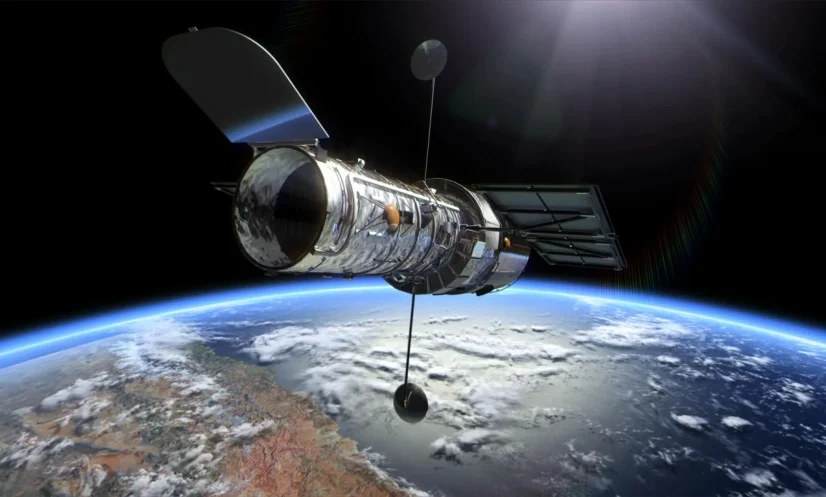
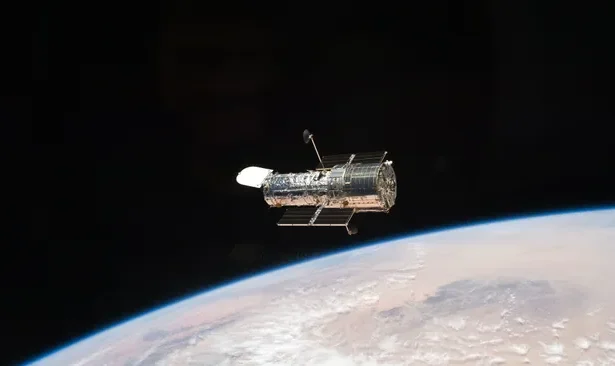
NASA is exploring whether private space companies could help extend the operational life of the Hubble Space Telescope, which has been transforming humanity’s understanding of the universe for more than 35 years.
The US space agency issued a Request for Information on October 29, seeking proposals from commercial companies on technologies that could service Hubble while it remains in orbit, boost its altitude or safely retire the observatory when its mission ends.
NASA Administrator Jared Isaacman said Hubble still had important scientific work ahead and the agency wanted to explore every reasonable opportunity to keep it operational for as long as possible.
“Extending Hubble’s life would mean more discoveries, more science, and more opportunities to expand our understanding of the universe,” he said.
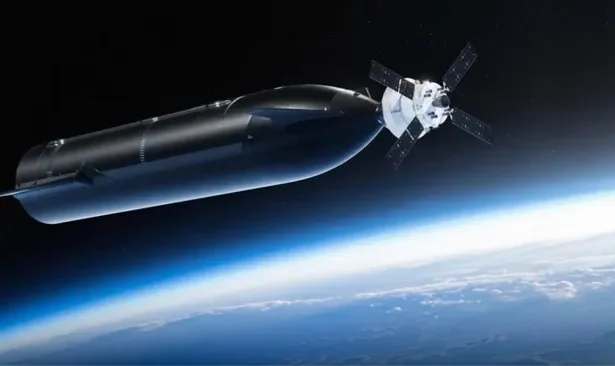
One option under consideration is sending a spacecraft to push Hubble into a higher orbit, countering the gradual loss of altitude caused by atmospheric drag. Such an operation could potentially allow the telescope to continue its scientific work for several additional years.
NASA is also seeking information about commercial capabilities for servicing the observatory and improving its performance. Another possibility is a controlled re-entry into Earth’s atmosphere or another safe disposal arrangement once its scientific mission comes to an end.
Nicky Fox, associate administrator of NASA’s Science Mission Directorate, said commercial space companies had made significant advances in satellite capture and servicing technologies in recent years.
The agency wants to assess these capabilities and explore the possibility of moving Hubble into a higher orbit while developing a flagship mission to succeed it, she said.
Hubble could re-enter Earth’s atmosphere by 2034
Hubble currently operates in low Earth orbit, where the residual atmosphere creates drag and gradually reduces its altitude.
Unlike spacecraft equipped with propulsion systems, Hubble has no onboard engines to raise or maintain its orbit. As a result, its altitude continues to decline.
NASA estimates that the telescope could re-enter Earth’s atmosphere sometime between 2033 and 2034 without intervention. Any mission to boost its orbit would likely need to take place by 2032.
The timeline leaves NASA with a limited window to assess commercial proposals, develop a suitable mission and carry it out.
Companies interested in participating can submit responses through NASA’s Request for Information published on the federal government’s procurement website. The deadline is 3pm EST on Monday, November 30.
Hubble’s scientific legacy
Launched in 1990, Hubble has become one of the most influential astronomical observatories ever built. Its observations have transformed scientific understanding of galaxies, stars, black holes and the expansion of the universe.
The telescope is a joint project of NASA and the European Space Agency (ESA).
NASA’s Goddard Space Flight Center in Maryland oversees the mission, with operational support from Lockheed Martin Space. Scientific operations are managed by the Space Telescope Science Institute in Baltimore.