Play store

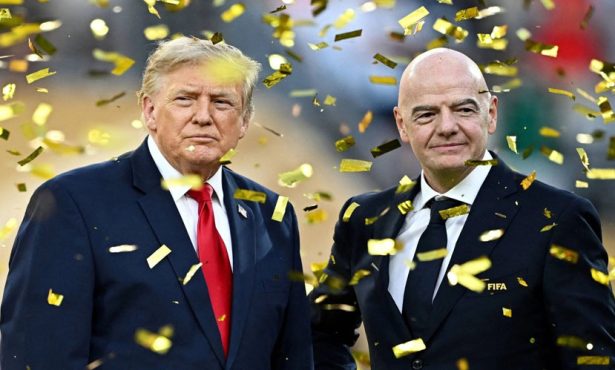
The curtain has only just fallen on the expanded 2026 FIFA World Cup, but football’s governing body is already considering making the tournament even bigger. FIFA President Gianni Infantino has confirmed that discussions on further expanding the World Cup for the centenary edition in 2030 will take place following the conclusion of this year’s tournament.
One proposal attracting growing attention is a 64-team World Cup, a move that would significantly reshape the competition and extend it into a six-week global event.
The 2030 World Cup is already set to be historic. To celebrate the tournament’s 100th anniversary, Spain, Portugal and Morocco will serve as the main hosts, while Argentina, Uruguay and Paraguay will each stage one opening match in recognition of South America’s role in hosting the inaugural World Cup in 1930.
South American football officials, however, want a larger role in the celebration. Alejandro Dominguez, president of CONMEBOL, has publicly backed expanding the competition to 64 teams.
“We are working to ensure that the 2030 World Cup is held with 64 national teams in homage to the centenary of the World Cup,” Dominguez said.
If approved, the expansion would represent another major leap after the 2026 tournament increased the field from 32 to 48 teams.
A 64-team World Cup would require 16 groups of four teams, producing 96 group-stage matches, up from the 72 played in the 48-team format.
The logistical impact would be enormous. During the 2026 World Cup, FIFA scheduled the 72 group-stage matches over 16 days, averaging about 4.5 matches per day. Maintaining that pace with 96 group games would stretch the opening phase to around three weeks.
The knockout rounds—from the round of 32 through to the final—already take another three weeks under the expanded format. Together, that would create a six-week World Cup, making it the longest tournament in the competition’s history.
The extended schedule would also affect clubs and players. With approximately two weeks of pre-tournament preparation, players would likely spend close to two months away from their clubs, posing fresh challenges for domestic leagues and the international football calendar.
The expansion would also increase the number of participating footballers to around 1,664 players, making it by far the largest World Cup ever staged.
On the pitch, a bigger tournament could bring even more goals and entertainment. The 2026 World Cup, featuring 104 matches, produced 308 goals, shattering the previous tournament record of 172 goals at the 2022 edition.
Interestingly, scoring increased not only because of the higher number of matches but also because teams averaged 2.96 goals per game, compared with roughly 2.6 goals per match across the previous three World Cups.
Analysts attribute the higher scoring rate partly to the wider gap in quality between the strongest and weakest teams. With more nations qualifying, the difference in FIFA rankings between competing teams reached its highest level, resulting in more one-sided contests and higher-scoring matches.
While supporters may welcome more football and greater opportunities for emerging nations, critics argue that a 64-team, six-week World Cup could dilute the quality of the competition, place greater physical demands on players and further congest an already crowded football calendar.
FIFA is expected to discuss the proposal with member associations in the coming months, with any decision likely to shape the future of the world’s biggest sporting event for decades to come.