Play store

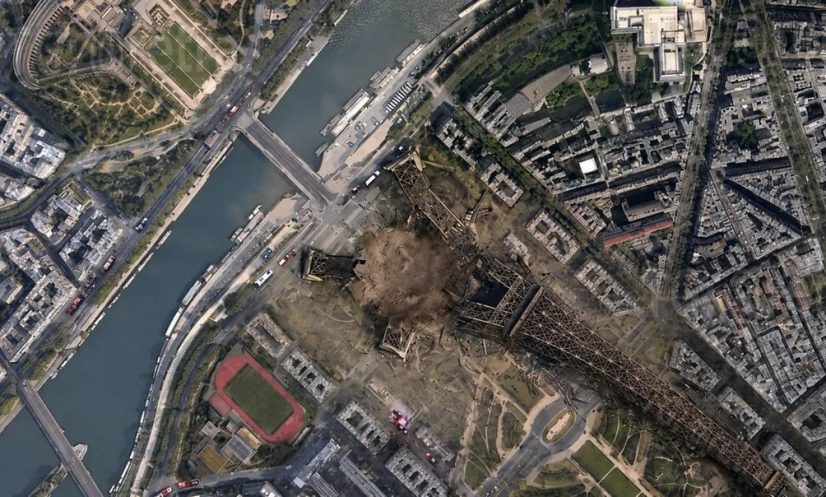
Google has rolled back its new AI tool that allowed people to create fake images on top of its satellite imagery, following a BBC Verify report in which experts raised concerns about misuse and the potential to spread misinformation.
Less than 48 hours after the tech giant announced the integration of its AI image generator Nano Banana 2 into Google Earth, it said it was pausing the feature “while we work on implementing stronger guardrails”.
In its statement on Friday, Google said it had seen “people sharing screenshots of generated imagery that appear to violate our policies”.
The retracted feature enabled users to use text prompts to generate false scenarios on top of a base layer of real satellite, aerial or 3D imagery – which could then be downloaded and shared on other platforms.
“We know that people uniquely trust Google Earth for a reliable view of the world,” it added.
Experts told BBC Verify the tool could be used to spread misinformation with the appearance of Google’s legitimacy – and highlighted the potential for bad actors to abuse it.
A collapsed Eiffel Tower, a sinkhole swallowing the Great Pyramid of Giza and Russian tanks in Ukraine’s capital were among the images BBC Verify was able to create when testing the feature, which initially launched on Thursday.
Before it was paused, AI and misinformation expert Henk van Ess highlighted the risks the feature posed, by creating fake images of a non-existent nuclear power plant in Iran, a refugee camp on the US-Mexico border and a fake hospital in Gaza with a bomb crater next to it.
He said Google had allowed “invented” imagery to be “welded to genuine coordinates, drawn on genuine imagery”.
“The forgery does not have to look convincing on its own. It inherits the credibility of the map it was born on,” van Ess added.
Google said AI content created by its tools contain invisible watermarks to indicate that they are fake or manipulated, adding that anyone who is “unsure about an image” can check it using the Gemini chatbot app or use the Lens feature in its search.
Generally, BBC Verify’s tests found this is effective with images generated by the new feature. But we also found it was possible to circumnavigate these checks and trick Gemini into saying these fake Google Earth images are real.
Tests using external AI detection tools also in some cases failed to identify the Google Earth AI-content.
AI-detection researcher Henry Ajder told BBC Verify the creation of fake imagery in conflict zones could prove particularly “destabilising” when events are fast-moving and information is scarce.
“Journalists might be able to check that image… and report on it. But again, not everyone is going to do that,” he added.