Play store

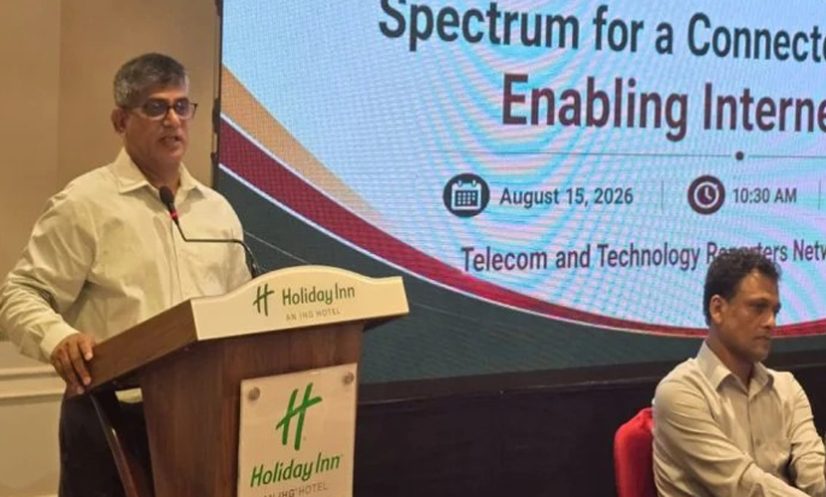
Bangladesh will need around 1,500MHz of spectrum by 2035 to meet growing demand for telecommunications services, BTRC Chairman Md Emdad Ul Bari has said, stressing the need for research-based spectrum pricing and balanced policy decisions.
At present, around 460-462MHz of spectrum is in use, while the regulator plans to auction an additional 400MHz next year, he said.
Emdad Ul Bari made the remarks at a roundtable organised by the Telecom and Technology Reporters Network Bangladesh (TRNB) at a hotel in Dhaka on Saturday.
He said Bangladesh faces a significant spectrum shortage compared with international standards. While the global requirement is 2-6MHz of spectrum for every one million subscribers, Bangladesh has only 2.29MHz.
The relatively low use of fixed broadband, currently at 36%, is also putting additional pressure on mobile networks, he said.
The BTRC chairman called for finding a “sweet spot” in spectrum pricing that balances consumer service quality, operators’ business viability and economic growth rather than focusing solely on one-time government revenue.
He said spectrum pricing and telecom policy should be based on scientific research rather than assumptions. The BTRC has already formed an independent research team for this purpose, he added.
Referring to the large-scale spectrum renewal due next November, Emdad said decisions should be made through a sensitive and participatory national process rather than unilaterally.
He said the high spectrum prices set in the 2018 auction had subsequently become a permanent benchmark, making it difficult to reduce prices through administrative measures because of the risk of audit objections and allegations of revenue losses to the government.
He also said a BTRC proposal to offer a 10-25% discount on Robi’s EGSM, or 850MHz band, for a three-year allocation had faced legal complications at the Finance Ministry.
According to the BTRC chairman, the potential loss of government revenue from unused spectrum is not receiving adequate consideration.
He stressed that the interests of consumers, operators and the government must be considered together. Although data prices in Bangladesh are around one-tenth of global levels, they still put pressure on consumers when compared with regional purchasing power.
“Consumers’ main demand is uninterrupted service and a call-drop-free network,” he said.
At the same time, he questioned whether simply reducing spectrum prices would guarantee better services, noting that operators have low average revenue per user (ARPU) while facing high spectrum costs.
He also said policymakers should assess how much of the benefit from reduced SIM taxes has actually reached consumers.
The BTRC chairman said new incentives and financial concessions were also being introduced to encourage operators to make more effective use of spectrum in remote and underserved areas.
He urged policymakers, telecom operators and the media to work together with a “360-degree perspective”, saying the ultimate goal should be to improve services for ordinary people and accelerate Bangladesh’s overall digitalisation.
TRNB General Secretary Faruk Hossain said the roundtable was organised to discuss balanced spectrum allocation among operators and practical issues such as EGSM and to seek proper policy direction.
TRNB President SM Masuduzzaman Robin chaired the meeting, while Prime Minister’s ICT and Telecom Adviser Rehan Asif Asad attended as the chief guest.
MTOB President and Robi CEO Ziad Sattar, Grameenphone CEO Yasir Azman, Banglalink CEO Johan Buse and other telecom industry representatives and experts also attended the event.