Play store

NASA has launched a new initiative to accelerate the development of critical technologies needed to establish a sustained human presence on the Moon, inviting industry feedback before awarding contracts worth up to $50 million each.
The US space agency recently released a draft solicitation for its Lunar Enabling Infrastructure Accelerator (LEIA) programme, aimed at supporting the development of key infrastructure for future lunar missions. The initiative is part of NASA’s Next Space Technologies for Exploration Partnerships-3 (NextSTEP-3) programme, which promotes public-private collaboration to advance deep-space technologies.
Managed by NASA’s Glenn Research Center, the draft solicitation is open for public feedback until July 17. The final call for proposals is expected to be issued in August, with contract awards anticipated in late 2026 or early 2027.
NASA said individual awards will range from $5 million to $50 million, with projects tied to performance-based milestones over a period of up to three years.
The programme focuses on closing five major technology gaps that NASA considers essential for a permanent lunar outpost. These “Civil Space Shortfalls” include the development of vertical solar arrays, radioisotope thermal generators, in-situ resource utilisation, in-space advanced manufacturing and innovative nanomaterials.
The agency said vertical solar arrays are needed because the Sun remains low on the horizon at the Moon’s polar regions, where NASA plans to establish a long-term base due to the presence of water ice. Unlike conventional horizontal panels, vertical arrays would be able to capture sunlight more effectively and could eventually form the backbone of a lunar power grid.
NASA also stressed the need for reliable nuclear power to supplement solar energy. It is seeking improved radioisotope thermal generators (RTGs), particularly advanced versions of the Stirling RTG technology used in several space missions, to provide continuous electricity regardless of sunlight conditions.
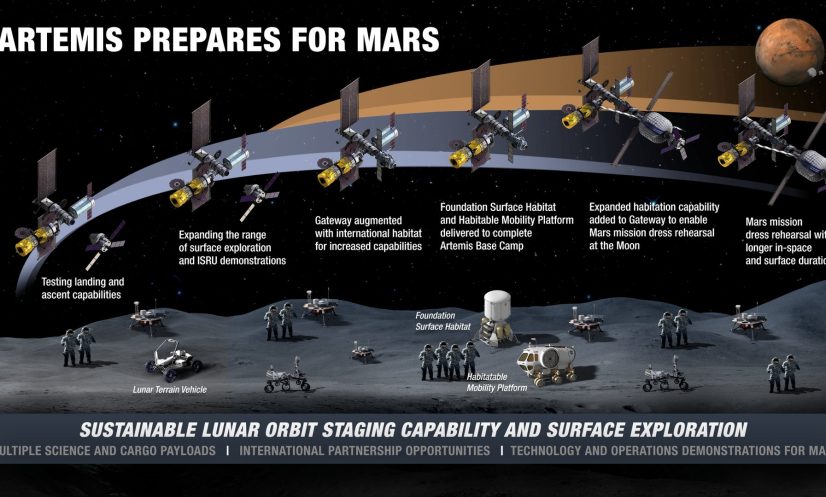
The LEIA programme is part of NASA’s broader Artemis campaign, which aims to return astronauts to the Moon and lay the groundwork for long-term exploration before future human missions to Mars.