Play store

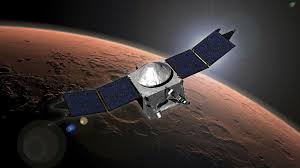
NASA is preparing a high-risk mission to rescue its aging Neil Gehrels Swift Observatory from falling back to Earth, marking the first attempt by the United States to use a robotic spacecraft to extend the life of an orbiting scientific observatory.
The US$30 million mission, scheduled to launch as early as Tuesday, will see a robotic servicing spacecraft developed by Katalyst Space Technologies attempt to capture the Swift Observatory and boost it into a higher, more stable orbit.
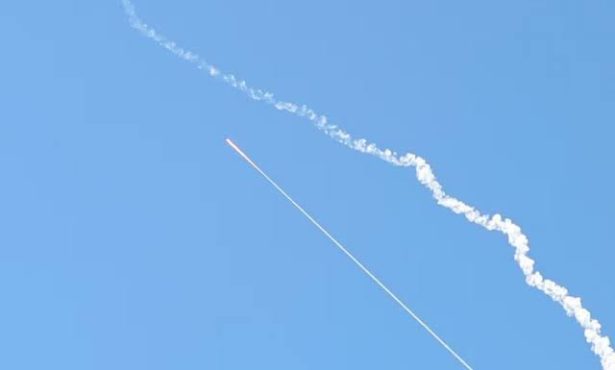
The spacecraft, named Link, will be launched aboard a Pegasus rocket from the Marshall Islands. After reaching orbit, it is expected to spend about a month catching up with Swift before using its robotic arms to secure the telescope and gradually raise its orbit over the following two months.
Launched in 2004, Swift has spent more than two decades detecting gamma-ray bursts, exploding stars and other powerful cosmic events. However, increased solar activity has accelerated atmospheric drag, causing the spacecraft to lose altitude at a faster rate than expected.
NASA officials say Swift must be lifted from its current orbit of about 360 kilometres to roughly 600 kilometres before it drops below the critical altitude of 300 kilometres, beyond which a rescue would no longer be possible. Current estimates suggest that point could be reached by October.
“This is the first American space robot to go up and do anything like this,” Katalyst Chief Executive Ghonhee Lee told the Associated Press, describing the mission as a demonstration of a new capability for servicing satellites already in orbit.
NASA awarded the contract to Katalyst last September, asking the company to move quickly while ensuring the rescue attempt did not increase the risk to the observatory.
The challenge is considerable. Swift was never designed to be repaired or captured in orbit. Link will rely on three robotic arms equipped with specialised grippers to secure the 1.4-tonne telescope before carefully raising its orbit.
NASA has already switched off Swift’s scientific instruments to slow its descent. Scientific observations ended in February, allowing engineers more time to prepare the rescue mission.
NASA officials say preserving Swift is far more cost-effective than replacing it.
“If we let Swift re-enter, we would lose that telescope. We don’t currently have the budget to build another one to replace it,” said Nicky Fox.
Success could have far-reaching implications. NASA believes robotic servicing could become a routine way of extending the operational lives of expensive satellites and telescopes, including the Hubble Space Telescope, which is also gradually losing altitude.
If the mission succeeds, Swift could resume scientific operations as early as September, while opening a new chapter in satellite servicing that could eventually include repairing, refuelling and upgrading spacecraft already in orbit.