


 Play store

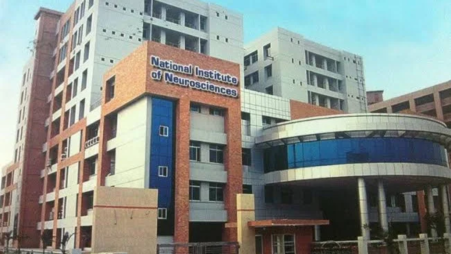
Full-fledged healthcare services are expected to begin soon at the new 500-bed building of the National Institute of Neurosciences and Hospital in Agargaon, Dhaka, as authorities prepare to address a severe manpower shortage that has kept much of the facility underused.
Although the 15-storey building has been formally inaugurated after construction, only around half of its facilities are currently operational. Limited outpatient services are being provided on the first and second floors, while CT scan, MRI, X-ray, catheterisation laboratory (Cath Lab), post-operative care and academic activities have also begun on a limited scale.
The facility has 500 beds, including 40 intensive care unit (ICU) beds and 20 high-dependency unit (HDU) beds, as well as 112 cabins, two MRI machines and two CT scan machines.
Hospital Director Professor Dr Mohammad Nuruzzaman Khan told BSS that a shortage of doctors, nurses and other staff was preventing the full operation of the building.
“We have a manpower shortage. However, manpower will be recruited very soon. Once the recruitment is completed, patients will receive full-fledged services at the hospital,” he said.
Prime Minister Tarique Rahman inaugurated the building on August 15. Constructed at a cost of around Tk506 crore, the new facility is intended to improve treatment for patients with neurological diseases.
According to hospital authorities, 547 posts for doctors and nurses remain vacant. Of the 649 approved posts for doctors, 288 are occupied, leaving 361 vacant. In the nursing department, 678 of 864 approved posts are filled, while 186 remain vacant.
Overall, the hospital has 2,728 approved posts for doctors, nurses, officers and employees, of which 1,619 are currently occupied. It also needs an additional 800 to 1,000 doctors, nurses, technologists and other personnel to make the new building fully functional.
The shortage is particularly acute in several specialist positions. Of 27 professor posts, 19 are vacant, while 29 of 45 associate professor posts and 63 of 86 assistant professor posts remain unfilled. The hospital also has 111 vacancies among 151 indoor medical officer posts.
In the nursing department, all three deputy nursing superintendent posts are vacant, while 13 of 20 nursing supervisor posts remain unfilled. Of 840 approved senior staff nurse posts, 669 are occupied.
The hospital also has 1,215 outsourced staff positions, of which 656 are filled and 559 remain vacant.
Nuruzzaman Khan said the recruitment process had been delayed as the government was revising its recruitment policy for public-sector jobs. The hospital expects to publish a recruitment circular within the next two to three weeks, once the policy is finalised.
He added that recruitment through outsourcing was also underway and expressed hope that the new building would soon become fully operational.
The demand for services is already high. According to hospital statistics for the 2025-26 fiscal year, its outpatient department treated 813,098 patients, while 18,789 were admitted and 31,293 received emergency treatment.
The National Institute of Neurosciences and Hospital began operations in 2012 with 300 beds. Its capacity was later expanded by another 200 beds. Once the new building is fully operational, the hospital’s total capacity will reach 1,000 beds.
Patients from across the country seek treatment there for complex neurological conditions, including stroke, brain injuries, spinal disorders, Parkinson’s disease, dementia and epilepsy. However, limited bed availability often leaves patients waiting for admission.
Rashidul Islam, from Begumganj upazila of Noakhali, recently came to the hospital for surgery to remove a brain tumour after being referred by Noakhali General Hospital. His brother, Rabiul Islam, said doctors had advised an early operation, but they could not secure a bed.
“We have been staying in a rented house near the hospital for the past four days, but my brother still cannot be admitted,” he said.
An associate professor at the hospital, speaking on condition of anonymity, said expanding healthcare services required more than constructing new buildings.
“What is the benefit of constructing large buildings if there are no doctors and nurses?” the faculty member said, stressing the need to recruit staff before expanding infrastructure.
Source : BSS