


 Play store

Europe’s extreme summer heat could wipe out almost a year of economic growth, with the European Union facing an estimated €180 billion in losses in 2026, according to research by Triodos Bank.
The projected damage is equivalent to around 1% of EU GDP, almost matching the bloc’s expected economic growth of about 1.1% this year. France is expected to suffer the biggest hit among major EU economies.
The research identifies several channels through which extreme heat and wildfires are affecting economic activity.
Lower crop yields and reduced dairy production, along with resulting food price increases, are estimated to account for about 0.15% of EU GDP.
Energy production could take another 0.12% to 0.15% hit as heat constrains nuclear, hydropower and thermal generation, reduces solar efficiency and pushes up wholesale electricity prices.
Transport disruptions affecting railways, roads and waterways could shave off another 0.15%.
The largest impact is expected to come from declining labour productivity. Output per worker falls when temperatures rise above roughly 25°C to 30°C, with outdoor and physically demanding jobs particularly vulnerable. Office workers can also be affected as extreme heat disrupts sleep, concentration and cognitive performance.
A cross-country analysis by Allianz, cited by the research, estimates that output per hour worked falls by about 3% for every degree above 30°C when extreme temperatures persist for several days.
The research does not simply rank countries according to how hot they are. Instead, Triodos assessed factors including the share of economic activity in heat-exposed sectors, commuting patterns, air-conditioning coverage and how well populations are adapted to high temperatures.
France is projected to lose around 1.4 percentage points of economic growth, potentially pushing its economy into a contraction of about 0.6%.
The Netherlands could lose around 0.8 percentage points, leaving its economy roughly stagnant. Spain and Italy have highly exposed workforces and have experienced many hot days, but greater long-term adaptation is expected to limit the impact.
Poland is considered particularly vulnerable because of low air-conditioning coverage and limited acclimatisation. However, a relatively cooler summer means its economy is still expected to grow by around 2.9%.
The economic estimates do not fully capture the human cost of extreme heat.
Around 20,400 heat-related deaths were estimated across France, Germany, Spain and Italy during the June heatwave alone. The estimated 25,000 heat-related deaths over the summer could represent an economic cost of between €1.5 billion and €7 billion when measured through lost years of life.
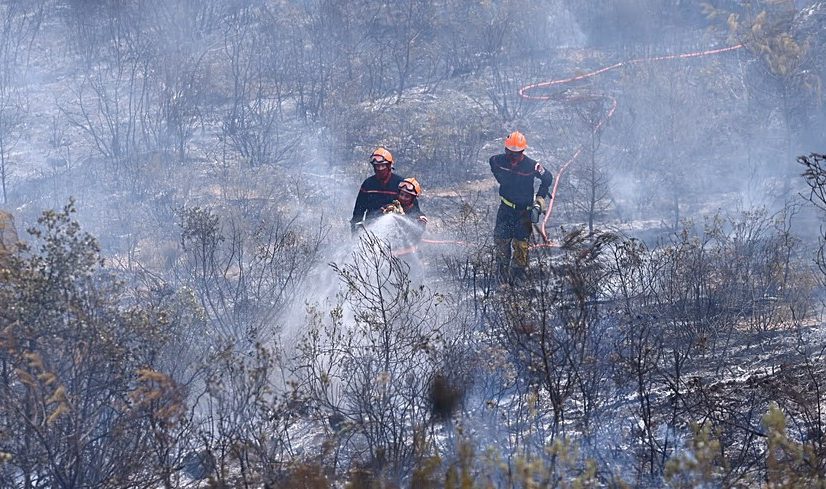
Wildfires had also burned more than 490,000 hectares across the EU by last week, compared with a 20-year average of about 197,000 hectares, according to the European Forest Fire Information System. France recorded a record level of wildfire damage.
The loss of ecosystem services from the burned land could add another €100 million to €4.6 billion in costs.
The research estimates that adaptation measures could reduce heat-related productivity losses by around 40%, although they would not eliminate the economic damage.
Triodos said adaptation alone would not be enough and called for stronger action to reduce greenhouse gas emissions, arguing that recent moves to ease the trajectory of the EU’s main carbon-pricing system risk undermining efforts to address the growing economic impact of climate change.