


 Play store

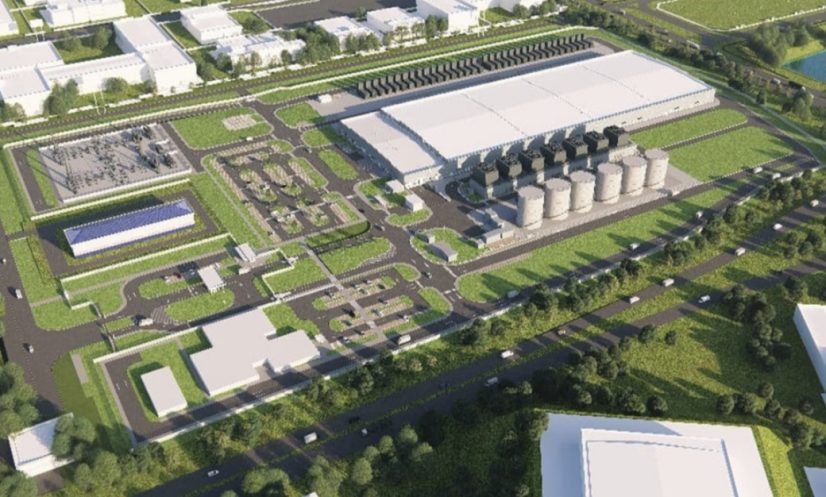
Ahmadul Kobir, Kuala Lumpur: Google will fully finance the electricity infrastructure required for its first data centre in Malaysia, ensuring that the cost of transmission lines and a substation needed to power the facility is not passed on to local communities.
The data centre is currently under construction at Elmina Business Park in Selangor as part of Google’s planned US$2 billion investment in Malaysia.
Ken Siah, Google Asia-Pacific’s principal for global infrastructure, said the company was committed to covering the cost of local infrastructure upgrades associated with the facility. “We don’t want those costs to be borne by local residents or communities,” Siah said.
He said Google would pay 100 per cent of the data centre’s electricity bill and would not seek subsidies for its power consumption. The company would also pay the electricity tariff introduced specifically for data centres in Malaysia.
Google announced the US$2 billion, equivalent to around RM8.09 billion, investment in Malaysia in 2024 for the development of the data centre and related infrastructure.
Siah said electricity availability and capacity were key considerations in selecting locations for Google data centres.
Before deciding to build a facility, Google assesses whether the local electricity network has sufficient capacity to meet the centre’s requirements.
If the additional demand could put pressure on electricity supplies available to surrounding communities, the company would either invest in additional capacity or choose an alternative location, he said.
The approach is intended to ensure that the growing demand for data centre capacity does not undermine electricity reliability for households and existing businesses.
Water consumption is another major consideration for the Elmina facility, particularly because data centres require substantial cooling capacity.
Siah said Google preferred to publish actual operational data once the facility becomes fully operational rather than rely on estimates prepared during the design phase.
The company plans to publish the data centre’s annual water consumption once the facility reaches full-scale operation.
He said Google had conducted a water-risk assessment for Elmina using up to 100 years of historical data. The assessment indicated that the facility could operate without placing excessive pressure on local water resources.
However, Google would consider alternative cooling technologies if its water consumption were found to pose a risk to local supplies, Siah said.
At Elmina, water used for evaporative cooling will be continuously recirculated. Although some water will eventually return to the broader water cycle through evaporation, Google will count it as consumed water under its water-replenishment commitments.
Siah said Google would replenish an amount of freshwater equivalent to its consumption, plus an additional 20 per cent.
Google’s first water-replenishment project in Malaysia is being implemented with the Global Environment Centre and Petaling Jaya City Council. The project involves restoring a lake at Taman Aman and increasing the flow of freshwater into it.
Google is also seeking to expand renewable energy generation in Malaysia as part of its long-term clean-energy strategy.
The company has signed 21-year power purchase agreements with consortia led by Shizen Energy and TotalEnergies. The agreements will support the development of 50MW of new solar generation capacity in Malaysia.
The initiative forms part of Google’s global target of operating entirely on carbon-free energy around the clock by 2030.
Siah said Google did not want to rely solely on clean energy already available on the national grid. Instead, it wanted its electricity demand to support the development of additional renewable generation that might otherwise not have been built.
The Elmina data centre is also expected to create substantial employment opportunities during construction and after it becomes operational.
Siah said more than 4,000 workers could typically be employed during the construction of a data centre, with construction potentially continuing for three to five years.
Once operational, the facility is expected to support hundreds of permanent jobs, including positions for server technicians, network engineers, mechanical engineers and electrical engineers.
Siah said data centres were sometimes mistakenly viewed as large facilities requiring relatively few employees.
In reality, Google’s data centres are designed to operate the company’s own products and services and require highly specialised personnel.
Data centres support services used by billions of people, including online search, email, video streaming and digital payments. The rapid growth of artificial intelligence is also increasing demand for computing infrastructure and making data centres increasingly important to the digital economy.
Server technicians will install and maintain computing equipment, while network engineers will oversee connectivity. Mechanical engineers will manage cooling systems, and electrical engineers will ensure a reliable power supply around the clock.
Additional jobs are also expected in procurement, supply chain management, renewable energy, water management, environmental health and safety, and community relations.
The economic impact is expected to extend beyond direct employment.
According to Siah, each job created directly at a Google data centre generally supports around nine additional jobs in the surrounding community.
These indirect opportunities could include construction and consultancy services, transportation, security, waste management, equipment supply, maintenance and fuel deliveries.
The facility will also require catering services for its large workforce, creating opportunities for local food suppliers, vendors and kitchen staff.
Google will contract local companies for a range of goods and services required to operate the data centre, Siah said. The additional demand generated through those contracts could create further employment and business opportunities.
The economic contribution is expected to continue beyond the construction phase. Unlike data centres designed primarily to lease capacity to outside operators, Google builds and operates its own facilities to support its digital products and services.
As a result, the Elmina facility is expected to remain an important source of employment, local procurement and economic activity after it becomes fully operational.