


 Play store

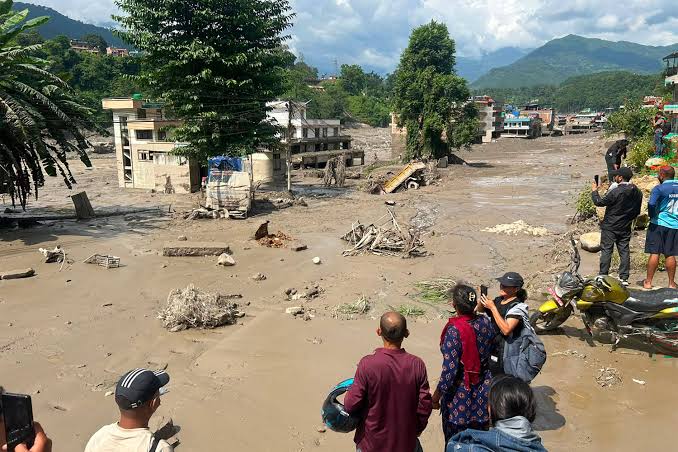
Massive flooding in Nepal killed at least eight people on Wednesday, while Chinese state media reported “major casualties” and missing persons following a mudslide near a key trade hub in Tibet along the two countries’ shared border.
Nepal Police said eight bodies had been recovered, with rescue operations continuing in the affected Himalayan district bordering China.
“So far, eight bodies have been found. Rescue operations are underway,” Nepal Police spokesman Abi Narayan Kafle told AFP.
Images and videos released by Nepal Police showed torrents of muddy water surging through mountain valleys and sweeping away houses and other structures.
“We do not exactly know the extent of damage, but the flood is big, and it could have damaged many settlements,” Kafle said, adding that residents living near rivers had been urged to relocate.
The Nepal Army said it had deployed helicopters and disaster response personnel to the affected area as authorities continued assessing the scale of the damage.
Nepal’s Electricity Authority said around 430 megawatts of generation capacity, including hydropower and solar facilities, had been damaged, disrupting electricity production and supply. Several highways were also closed.
On the Chinese side of the border, state broadcaster CCTV reported that a mudslide near Gyirong Port in Tibet had resulted in “major casualties and missing people.”
Footage aired by CCTV showed rushing water carrying tree branches and debris, while roads in the area were flooded.
Chinese state news agency Xinhua reported that President Xi Jinping had ordered “all-out” rescue operations, urging authorities to search for missing people, treat the injured and minimise casualties.
Traffic authorities in Tibet’s Shigatse said roads in the affected area were at risk of further mudslides and unsafe for travel.
In July last year, 17 people went missing after a mudslide near Gyirong Port.
Monsoon rains between June and September regularly trigger deadly floods and landslides across South Asia, while scientists warn that climate change is increasing the frequency and intensity of extreme weather events in the region.