Play store

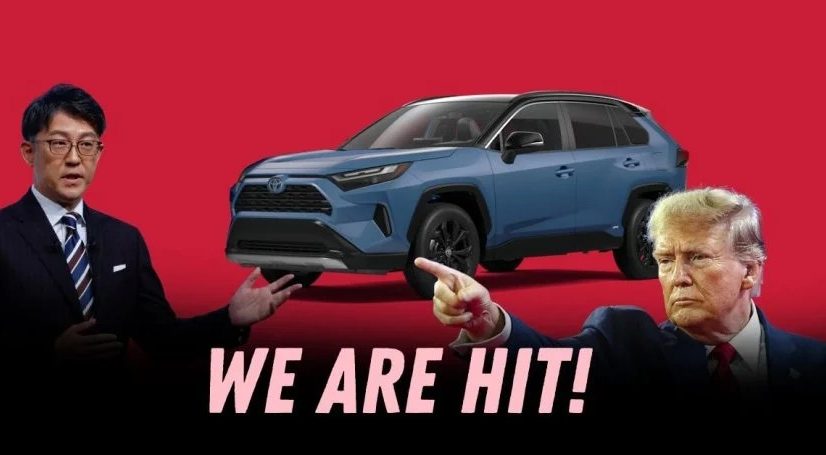
US President Donald Trump has proposed raising tariffs on cars imported from Canada to as high as 50%, a move that could severely affect Japanese automakers Toyota and Honda.
Although Ottawa is the main target of the proposed tariff policy, Toyota and Honda could face significant consequences because the two companies produce more than three-quarters of all vehicles manufactured in Canada.
If the new tariff structure takes effect on January 1 next year, the companies could be forced to suspend production at some Canadian assembly plants.
Production shutdowns feared
The impact could be particularly severe in the US market. According to international analyst firm Barclays, vehicles produced at Canadian plants accounted for nearly one-quarter of Honda’s US sales last year and 17% of Toyota’s.
Doubling the existing 25% tariff to 50% could therefore cause major disruptions to both companies’ US operations.
Japanese automakers are already facing growing competition from lower-cost Chinese electric vehicles in Southeast Asia, Europe and Latin America. Restricted access to the US market for Canadian-made vehicles could further complicate their business outlook.
Automakers plan more US investment
Canada’s automotive industry produces about 1.2 million vehicles a year and directly and indirectly supports more than 427,000 jobs.
Toyota’s RAV4 and Honda’s CR-V, two of the best-selling SUV models in the US, are largely manufactured at Canadian plants.
In response to Trump’s unpredictable trade policies, Toyota has formulated a five-year, $10 billion investment plan to expand production in the US. The company is also building a new plant in Texas at a cost of $3.6 billion.
USMCA uncertainty adds to pressure
Honda, meanwhile, is struggling to revive its loss-making automotive business. Uncertainty also surrounds the future of the US-Mexico-Canada Agreement (USMCA).
Honda has indicated that it could suspend plans to build a new North American plant if the trade agreement is not renewed.
If the proposed tariffs take effect, Toyota and Honda could be forced to redirect Canadian-made vehicles to markets outside the US. However, the vehicles are specifically designed for the US market, making it difficult to quickly find alternative markets or expand production at plants elsewhere.
The two automakers are therefore closely monitoring developments as they await a final decision on the proposed tariffs.