


 Play store

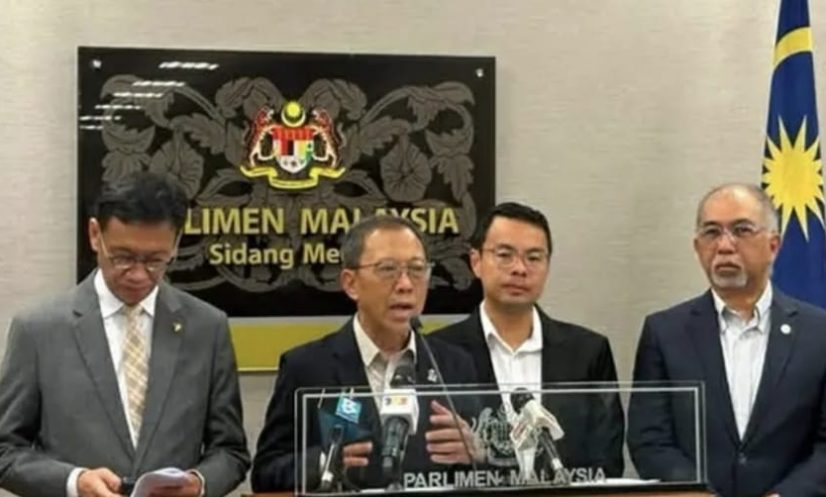
Seven Malaysian lawmakers have called on the government to immediately suspend the proposed Universal Recruitment Advanced Platform (TURAP), warning that the new foreign worker recruitment system raises serious concerns over transparency, governance and the risk of creating a private monopoly.
In a joint statement issued on Monday, the Members of Parliament (MPs) urged the government to put the project on hold until all relevant details are disclosed to Parliament and the public.
The lawmakers said unresolved governance and accountability issues surrounding the existing Foreign Workers Centralised Management System (FWCMS) make it inappropriate to introduce another centralised recruitment platform without first addressing the shortcomings of the current system.
They questioned whether the Cabinet had formally approved the TURAP project and asked why Bestinet, the company behind FWCMS, appeared to be positioned once again at the centre of Malaysia’s foreign worker recruitment framework.
According to the MPs, TURAP is designed to oversee virtually the entire foreign worker recruitment process, including employer matching, immigration processing, worker mobility, recruitment costs, labour rights and the personal data of millions of migrant workers.
Given its extensive scope, they argued that the project should not proceed without broad public consultation, greater transparency and strong accountability measures.
While acknowledging that TURAP aims to reduce the role of intermediaries by directly linking employers with foreign workers, the lawmakers cautioned that digitalisation alone would not solve longstanding problems in the recruitment system.
“Without proper oversight and transparency, the same patterns of exploitation could simply be replicated under a new digital structure,” they said.
The MPs cited findings by Malaysia’s Public Accounts Committee (PAC), which identified multiple governance failures in the management of FWCMS. The committee found that the system had operated for more than six years without a formal agreement between the government and Bestinet, while also highlighting weaknesses involving system administration, application approvals and cybersecurity.
They also referred to the Auditor-General’s 2022 Report, which described the management of FWCMS as unsatisfactory.
Despite those findings, the government renewed Bestinet’s contract from June 2024 until January 2031, increasing the service fee for each foreign worker application from RM100 to RM215.
The lawmakers questioned the rationale for awarding another major national platform to the same company and insisted that any future project should be awarded through an open tender or a transparent Request for Proposal (RFP) process rather than direct negotiations.
They also warned that TURAP could effectively place the entire foreign worker recruitment ecosystem, from recruitment in source countries and employer matching to permit renewals and worker data management, under the control of a single private entity.
Citing media reports, the MPs said Bestinet’s proposal reportedly involves a 12-year concession, with recruitment costs estimated at around US$1,000 (approximately RM3,950) per worker application. Reports have also suggested an additional fee equivalent to one month’s salary for each worker, although the proposals remain under discussion.
The lawmakers said such plans have raised serious concerns over rising recruitment costs, value for money and whether the reforms genuinely serve the interests of migrant workers.
They called on the government to explain whether TURAP has received Cabinet approval, justify any direct negotiations with Bestinet, disclose the project’s financial model and procurement process, clarify data ownership and protection arrangements, and explain the need for another centralised recruitment platform.
The joint statement was signed by Petaling Jaya MP Lee Chian Chung, Subang MP Wong Chen, Wangsa Maju MP Zahir Hassan, Balik Pulau MP Muhammad Bakhtiar Wan Chik, Ampang MP Rodziah Ismail, Sungai Siput MP Kesavan Subramaniam and Gopeng MP Tan Kar Hing.
The MPs said Malaysia’s foreign worker recruitment system requires comprehensive reform to eliminate excessive recruitment fees, debt bondage, worker exploitation and fraudulent recruitment practices, but stressed that replacing multiple intermediaries with a single dominant private operator would not constitute meaningful reform.