Play store

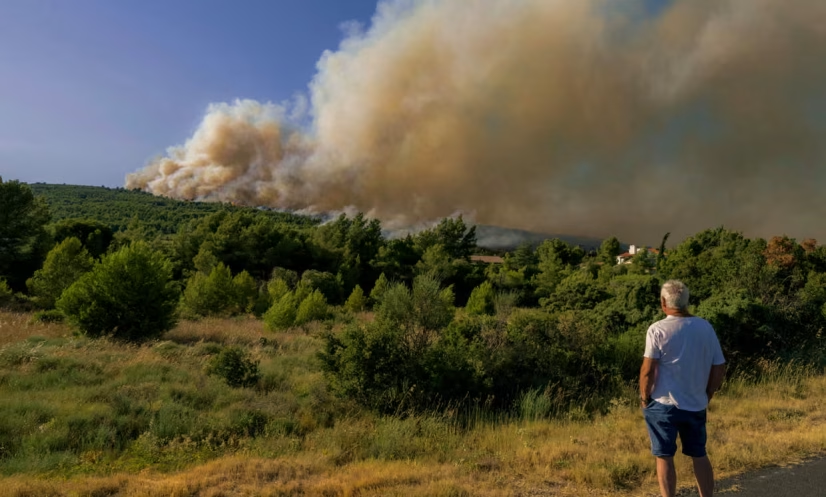
Western Europe has been scorched by its hottest June on record, scientists have said, as the UK enters its third heatwave of the year and wildfires ravage France and Spain.
Inflamed by carbon pollution, the deadly June heatwave helped push surface air temperatures for the region 3.06C above their average from recent decades, according to the EU’s Copernicus climate monitoring service.
Globally, June 2026 was 0.56C hotter than the 1991-2020 average and 1.39C hotter than preindustrial levels, making it the second-warmest June on record, the agency found. The planet’s oceans were hotter than scientists had ever seen them.
“Together, these records reflect a climate system continuing to accumulate heat,” said Samantha Burgess, a climate scientist at Copernicus. “The result is increasingly intense heatwaves, a persistently warm ocean, and growing risks for people, ecosystems and infrastructure.”
Western Europe is facing its third heatwave in six weeks and widespread dryness is helping small wildfires explode into unchecked blazes. Copernicus said the succession of heatwaves illustrated “the growing challenge” posed by worsening heat extremes.
Raging infernos have laid waste to large areas of southern Europe in recent days, prompting the EU to scramble firefighters and water-bearing planes to help national services overwhelmed by simultaneous blazes. Data published on Tuesday shows EU wildfires have burned 56% more land than usual.
The area that has gone up in flames is four times bigger than the average for this time of year in France, where 35,400 hectares (87,474 acres) have burned, and double the average in Spain, where 55,128 hectares (136,224 acres) have burned, according to the European Forest Fire Information System.