Play store

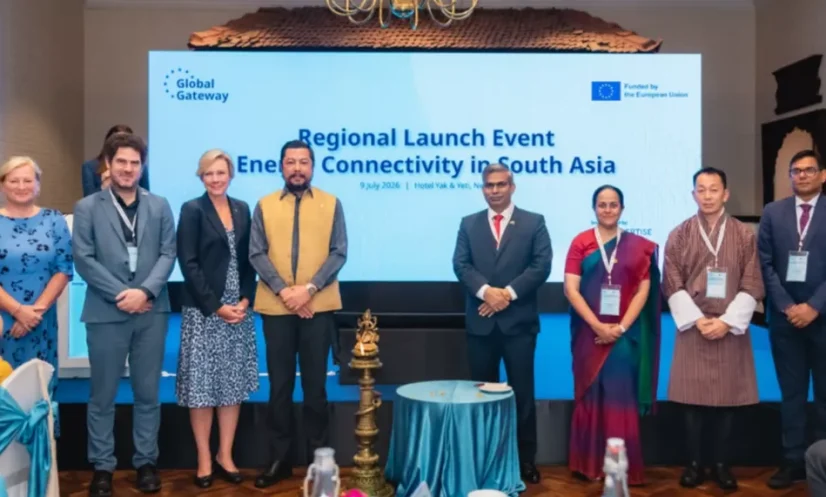
The European Union (EU), in partnership with regional stakeholders, has launched a €5 million initiative to strengthen energy connectivity across South Asia, aiming to deliver affordable, clean, and reliable electricity to millions.
The four-year programme, titled Energy Connectivity in South Asia (ECSA), brings together Bangladesh, Bhutan, India, Nepal, and Sri Lanka to promote cross-border electricity trade (CBET), expand renewable energy integration, and enhance regional energy security.
Funded by the EU and implemented by Expertise France, the project was officially unveiled at a high-level regional event in Kathmandu attended by government representatives, regulators, investors, and energy experts.
EU officials said the initiative aligns with the bloc’s Global Gateway strategy, seeking to boost sustainable infrastructure, stimulate green investment, and strengthen economic resilience across the region.
Nepal’s Minister for Energy, Water Resources and Irrigation, Biraj Bhakta Shrestha, underscored the importance of regional cooperation, noting that South Asia’s vast renewable energy potential and rising electricity demand make cross-border power trade essential for sustainable growth.
European Commissioner for International Partnerships Jozef Síkela described the project as a flagship effort to deliver “cheaper, cleaner, and more reliable electricity,” adding that stronger EU–South Asia partnerships will unlock new opportunities for businesses and communities.
EU Ambassador to Nepal Véronique Lorenzo highlighted Europe’s experience in building integrated electricity markets, saying enhanced connectivity leads to more resilient and cost-effective energy systems.
Officials from Expertise France said the ECSA project will serve as a platform for policy dialogue, technical cooperation, and knowledge exchange, combining European expertise with South Asian priorities.
Discussions at the launch focused on harmonising regulatory frameworks, strengthening institutional capacity, and attracting investment in renewable energy and transmission infrastructure.
Experts also emphasised the need for transparent market rules and coordinated grid planning to accelerate regional power trade.
Participants agreed that deeper energy integration could reduce greenhouse gas emissions, create jobs, and improve long-term energy security across South Asia.
The ECSA initiative is expected to play a key role in advancing a more interconnected, sustainable, and investment-friendly regional electricity market.