Play store

Bangladesh needs to fully integrate nutrition services into its primary healthcare system through stronger public-private partnerships to tackle the country’s evolving nutrition challenges and accelerate progress towards Universal Health Coverage (UHC), experts said at a national roundtable in the capital.
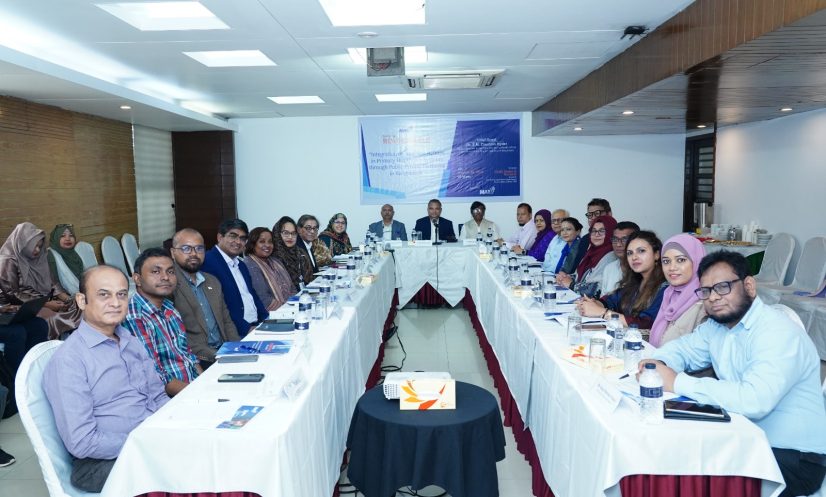
The experts made the call at a discussion titled “Integration of Nutrition Actions in Primary Healthcare Systems through Public-Private Platforms in Bangladesh,” organised by Max Foundation Bangladesh on Monday.
Presided over by Dr ATM Tariqul Islam, Country Director of Max Foundation Bangladesh and Regional Director for South Asia, the event brought together senior government officials, representatives of UN agencies, development partners, research institutions, academia, civil society organisations and private sector stakeholders to explore practical strategies for embedding nutrition services into routine primary healthcare.
Speaking as the chief guest, Dr S.M. Ziauddin Hyder, Special Assistant to the Prime Minister on Health Affairs, said Bangladesh has made progress in reducing malnutrition and stunting, but the pace has been slower than expected because nutrition programmes have historically relied heavily on donor support rather than strong government leadership.
“We have achieved gains in tackling malnutrition and stunting, though progress has been slow. We need a stronger, government-led and coordinated approach,” he said.
Dr Hyder outlined the government’s vision of building a healthier Bangladesh through a life-cycle approach, ensuring preventive healthcare and nutrition support from pregnancy through adulthood.
He said the government plans to strengthen primary healthcare by expanding services at union sub-centres, each staffed by nine community health workers. He also revealed that the government is considering establishing a National Food and Nutrition Authority Commission to improve coordination among agencies responsible for nutrition, food safety and public health.
Special guest Prof Dr Pravath Chandra Biswas, Director General of the Directorate General of Health Services (DGHS), warned that micronutrient deficiencies are contributing significantly to Bangladesh’s growing burden of non-communicable diseases (NCDs).
He noted that around 70 per cent of deaths in Bangladesh are now caused by NCDs such as hypertension, diabetes, cardiovascular diseases and kidney disorders.
“Poor nutrition during pregnancy and early childhood can permanently affect organ development. A child deprived of adequate nutrition in the womb carries a higher risk of chronic diseases throughout life,” he said.
Dr Mohammed Eunus Ali, Director of the Institute of Public Health Nutrition (IPHN), said nutrition continues to be treated as a peripheral component of healthcare rather than a core service.
His colleague, Dr Rawshan Zahan Akhter Alo, Deputy Director of IPHN, stressed the importance of the “golden 1,000 days”—from conception through a child’s second birthday—as the most critical period for preventing malnutrition and ensuring healthy growth.
Delivering the keynote presentation, public health nutrition specialist Saiqa Siraj said Bangladesh has developed an extensive policy framework for nutrition, but implementation remains fragmented.
She pointed out that an estimated 60 to 70 per cent of healthcare services in rural areas are provided by informal and private healthcare providers, many of whom remain outside official nutrition protocols.
Executive Director of icddr,b, Dr Tahmeed Ahmed, highlighted the role of scientific research in improving child nutrition and said studies have shown that poor water, sanitation and hygiene (WASH) are among the key drivers of childhood stunting.
Public health nutrition expert Dr Iqbal Kabir emphasised the need for a clear framework defining the roles of the public and private sectors in nutrition services, while Prof Kaosar Afsana of BRAC James P Grant School of Public Health argued that nutrition should be addressed through an integrated, multi-sectoral approach involving health, agriculture, fisheries, livestock, education, sanitation and environmental sectors.
The discussion concluded with a call for stronger collaboration among government agencies, development partners, the private sector and civil society to build a more resilient and inclusive primary healthcare system.
Dr ATM Tariqul Islam said achieving sustainable improvements in nutrition would require coordinated action across sectors.
“Bringing together the public sector, private sector and civil society is essential to strengthening both nutrition and primary healthcare,” he said.
Experts at the roundtable agreed that integrating nutrition into primary healthcare is not only essential for reducing malnutrition but also for preventing non-communicable diseases, improving maternal and child health, and achieving Bangladesh’s Sustainable Development Goal (SDG) commitments and Universal Health Coverage targets.