


 Play store

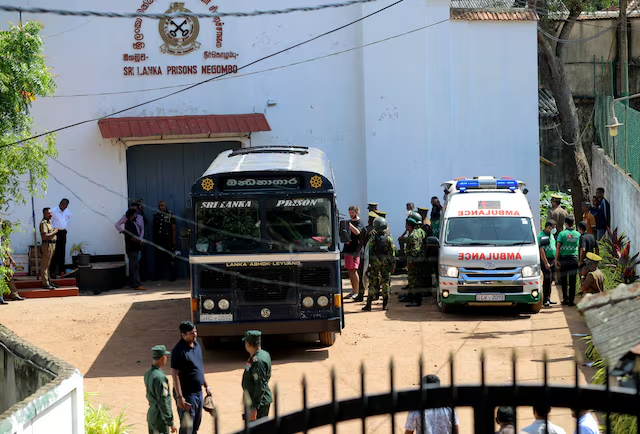
Sri Lanka’s efforts to reduce prison overcrowding by reopening a colonial jail and recruiting more staff after a deadly riot left 28 people dead need to be underpinned by a commitment to international best practice, human rights advocates said on Friday.
Eight prison officials and 20 prisoners died in two days of fighting between two groups of inmates at the prison in the coastal town of Negombo, about 35 km (20 miles) north of the commercial capital, Colombo, authorities said.
The clash was Sri Lanka’s worst since 2012.
Overcrowding was a key reason for the riot, advocates told Reuters, noting the problem was chronic in Sri Lanka. The Negombo prison was built to house about 650 inmates but held around 2,400 when the violence broke out.
Overall, Sri Lankan jails hold about 41,000 people or nearly 400% more than the facilities are supposed to accommodate, authorities said. The country has 22 prisons.
“Prisoners refer to their sleep arrangements as “salmon packing” where they have to sleep lying end-to-end in shifts at night,” said Rasika Gunawardana, a project manager at the Committee for Protecting Rights of Prisoners.
“Some prisoners, including women, have to sleep inside toilets. There is no privacy to even change clothes.”
Prisons have also been strained by anti-drug campaigns with offenders rising from 9,344 in 2021 to 31,314 in 2024, making up 65.5% of the total prison population, latest data from the Department of Prisons showed.
“What you need to do is prevent people from coming into conflict with the law, prevent people from being incarcerated, and do something about over-incarceration,” said Ambika Satkunanathan, former commissioner of the Human Rights Commission of Sri Lanka.
“The evidence in other countries shows that harm reduction services, opioid substitution therapy (and) community-based, evidence-based treatment options work to address drug dependence.”