Play store

Rising fuel prices and mounting living costs are fuelling protests across Europe and strengthening far-right parties ahead of elections next year in France, Italy and Poland.
The economic pressures have compounded existing public discontent over inflation, housing shortages, low wages and poor public services, putting governments under growing pressure.
The US-Iran war, which began in February and sent energy prices soaring, has further complicated efforts to control inflation, stimulate economic growth and contain public spending. The European Commission estimates the conflict has cost Europe around €100 billion ($112 billion) through disruptions to trade and energy markets. Gas prices have risen about 140%, while diesel prices have doubled.
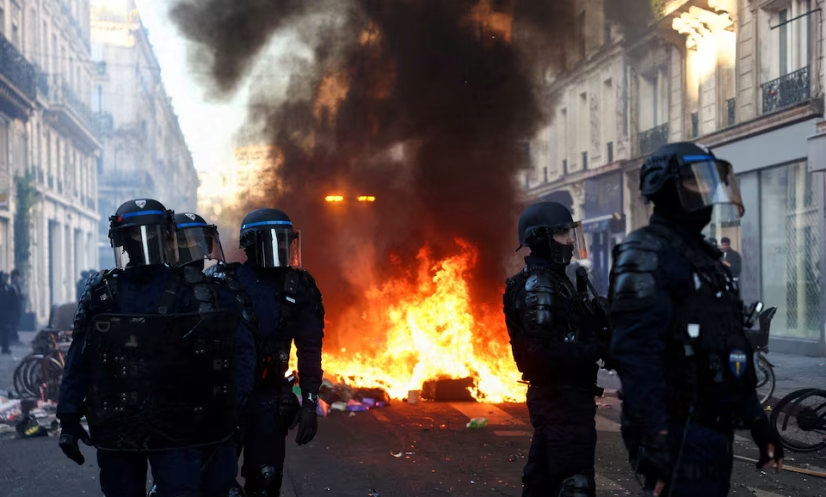
In France, demonstrations initially sparked by deteriorating school facilities in northern Paris suburbs have escalated into widespread unrest, with shops looted, buildings set on fire and a 19th-century town hall in Limoges torched.
“Quite simply, I find the current cost of living truly terrifying,” said Quentin Leviloux, a 21-year-old protester in Nantes, citing the rising costs of food, fuel and other essentials.
President Emmanuel Macron acknowledged protesters’ legitimate concerns over living costs and fuel prices but condemned violence and looting.
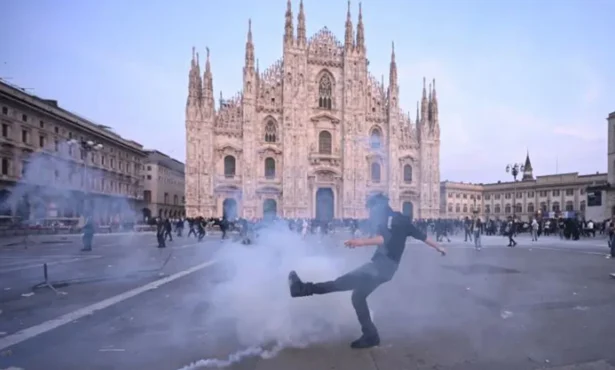
Similar unrest has spread across the continent. In Milan, northern Italy, police clashed with protesters on Sunday as demonstrations over rising living costs and inadequate public services turned violent.
Italian farmers have also protested against soaring fuel costs, saying they have made agricultural machinery increasingly expensive to operate. Transport disruptions caused by roadblocks set up by truckers, farmers and steelworkers have contributed to local fuel shortages and concerns about supermarket supplies.
In Portugal, tens of thousands of people marched through Lisbon on Saturday to protest low wages, housing costs and the rising cost of living, increasing pressure on the centre-right government.
Spain has also witnessed nationwide demonstrations over housing shortages and soaring rents following the eviction of an 87-year-old woman. The housing crisis has contributed to the calling of a snap election next month. Belgium has also seen protests, while demonstrations in Albania have been driven by anger over alleged government corruption, unemployment and poor education standards.
Political analysts say declining purchasing power has become a major driver of populist politics, benefiting parties on both the far right and far left.
In France, the energy crisis has emerged as a key issue ahead of next April’s presidential election. Far-right National Rally leader Marine Le Pen and hard-left veteran Jean-Luc Melenchon have both made fuel prices central to their campaigns.
Le Pen’s proposal to sharply cut value-added tax on fuel has attracted broad public support. Her popularity has improved since the Iran war began, while Macron’s ratings have declined, according to polling by Elabe.
Analysts say her message resonates particularly strongly with rural and semi-rural voters who depend heavily on cars for transport.
In Germany, the far-right Alternative for Germany (AfD) is leading national opinion polls following strong performances in regional elections. The cost of living remained Germans’ top concern for the fifth consecutive year, according to a survey published this month.
Inflation approached a three-year high in September, with energy prices rising 14.9%, providing the AfD with further ammunition to criticise Chancellor Friedrich Merz’s government.
The party has called for restoring energy ties with Russia, arguing that Germany’s support for Ukraine has harmed its economy and energy-intensive industries.
Jan Steckel, a professor of the political economy of climate change at the Technical University of Munich, said high energy prices had previously been associated with increased support for the AfD.
Populist parties often portray rising energy costs as the result of government policy rather than geopolitical developments, making it harder for incumbent governments to defend their decisions, he said.
Similar arguments are gaining ground in Italy and Poland. Italian Prime Minister Giorgia Meloni faces growing competition from National Future, a new far-right party led by former army general Roberto Vannacci that advocates restoring gas links with Russia.
In Poland, rising energy bills are helping the far-right Confederation of the Polish Crown gain support. Its leader, Grzegorz Braun, has called for renewed purchases of Russian oil and gas, echoing demands from AfD politicians in Germany.
The growing appeal of such proposals challenges Europe’s mainstream political consensus on supporting Ukraine and highlights how the energy crisis is reshaping political debate across the continent.