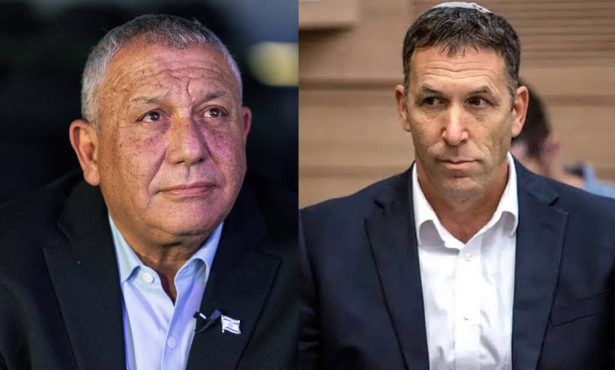
Play store

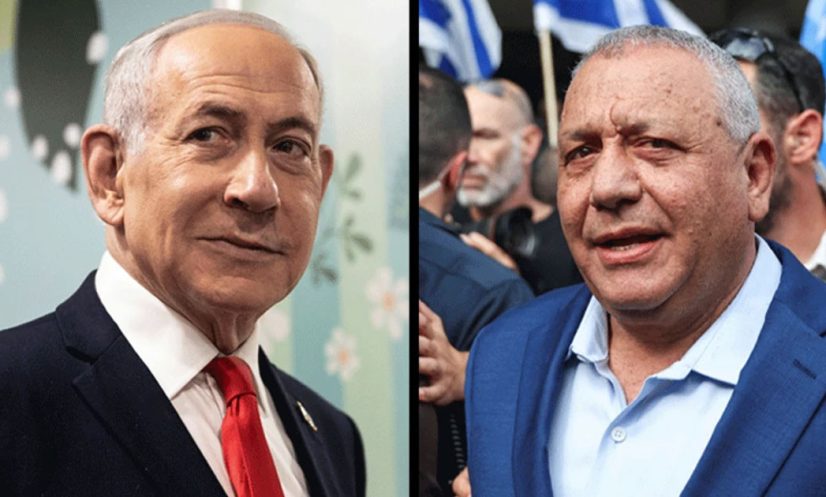
Israeli Prime Minister Benjamin Netanyahu and his main challenger, Gadi Eisenkot, are both facing difficulties forming a government after exit polls from Tuesday’s election showed no clear majority for either bloc in the 120-seat Knesset.
According to reports cited by CNN and Al Jazeera, Netanyahu’s right-wing coalition was projected to win around 51 to 52 seats, while the opposition bloc led by former military chief Eisenkot’s Yashar party was projected to secure about 49 seats. Arab parties were projected to win 19 seats, according to one exit poll cited by Al Jazeera.
A minimum of 61 seats is required to command a majority in the Knesset, leaving neither side with a clear path to forming a government based on the projected results.
The projections suggest a significant setback for Netanyahu’s coalition, which held 68 seats in the outgoing parliament. His Likud party, however, was expected to remain the largest single party.
The results could trigger weeks of negotiations over coalition-building, with the possibility of a prolonged political deadlock or another election if no viable government emerges. Israeli politics depends on alliances among multiple parties, rather than a single party winning an outright majority.
Although parties opposed to Netanyahu appear to have a numerical advantage in several exit polls, they remain divided across right-wing, centrist and left-wing political groups, as well as Jewish and Arab parties.
Eisenkot’s Yashar party is positioned to play a central role in the opposition’s efforts to form a government. However, securing the support of Arab parties could prove politically difficult, particularly if some opposition leaders refuse to cooperate with them.
The exit polls remain provisional, and the final distribution of seats could change as votes are counted. Different Israeli broadcasters have produced varying projections, with some showing the opposition ahead and others indicating a narrow advantage for Netanyahu’s bloc.
Both leaders have claimed a political mandate. Netanyahu has called for a right-wing government, while Eisenkot has argued that voters have rejected the prime minister’s continued leadership. Neither has secured a clear path to a parliamentary majority.
Once the official results are announced, President Isaac Herzog will consult party representatives before assigning a candidate the task of forming a government. The nominee will be the person judged most likely to secure the support needed for a governing coalition, not necessarily the leader of the largest party.
Under Israel’s coalition-building process, the designated candidate generally has 28 days to form a government, with a possible 14-day extension. If the attempt fails, another candidate may be given a chance; failure to establish a viable government could eventually lead to another election.
For now, the election has left Israel facing uncertainty over its next government, with coalition negotiations likely to determine whether Netanyahu remains in office or Eisenkot can assemble an alternative administration.