Play store

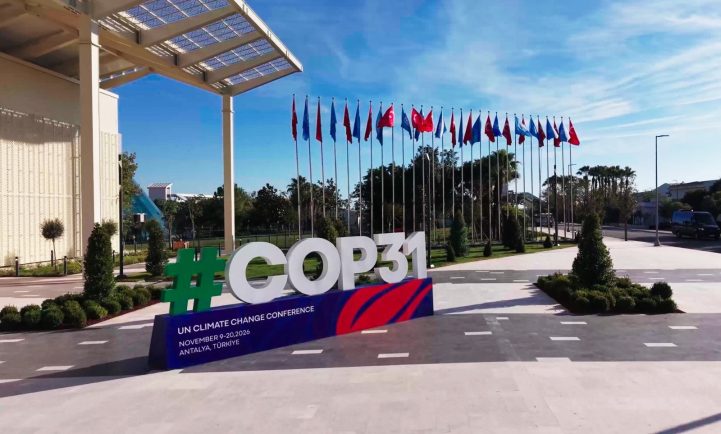
The COP31 presidency has launched new initiatives to strengthen health systems, improve farmers’ resilience and safeguard food security against growing climate risks, with health, food and agriculture taking centre stage on the opening day of the UN climate summit on Monday.
The first day’s theme is ‘Food, Agriculture and Health’, highlighting the need for international cooperation, financing and technological capacity to address climate-induced health risks, agricultural disruptions and mounting pressure on food security.
As part of the day’s programme, the COP31 presidency announced the launch of the ‘Antalya Initiative for Resilient Health Systems’ (AIR), aimed at helping countries make their healthcare systems more capable of responding to climate change.
The initiative focuses on climate-sensitive health technologies, digital healthcare services, humanitarian assistance and exchanges of experience among countries. High-level discussions are also being held on strengthening health systems against climate-related threats.
The World Health Organisation (WHO), in collaboration with Türkiye’s Ministry of Health, is hosting a high-level meeting where health policymakers from different countries are discussing national priorities and joint measures to address climate-related health risks.
Agriculture and food security are also receiving significant attention.
The International Fund for Agricultural Development (IFAD) and Türkiye’s Ministry of Agriculture and Forestry are set to present a technical report titled ‘The Unfunded Half’, highlighting the challenges and limited access women farmers face in securing climate finance.
A high-level dialogue is also focusing on expanding women’s access to financing and ensuring their participation in climate-resilient agricultural systems.
Meanwhile, the World Meteorological Organisation (WMO) is leading discussions on the use of weather and climate information in agriculture, water management and food security.
The discussions are examining how meteorological and hydrological data can help improve agricultural production, water management and preparedness for climate-related risks.
The WMO has also scheduled the release of its 2026 global climate update on the opening day, presenting information on global temperatures, greenhouse gas concentrations, sea-level rise and ocean temperatures.
The summit is also seeking to expand youth participation in transforming food and agricultural systems.
The COP31 presidency, the UN Food and Agriculture Organisation (FAO) and Türkiye’s Ministry of Agriculture and Forestry are organising a high-level dialogue on the role of young people in agriculture, water management and food systems.
In addition, investors, financiers and experts are expected to engage with young climate innovators to showcase new technologies and solutions.
The opening day’s initiatives reflect an effort to address climate change not only as an environmental crisis but also as a major global challenge affecting public health, agriculture, food security and economic resilience.
The broader objective is to translate climate commitments into practical action through increased financing, technological development and international cooperation.