Play store

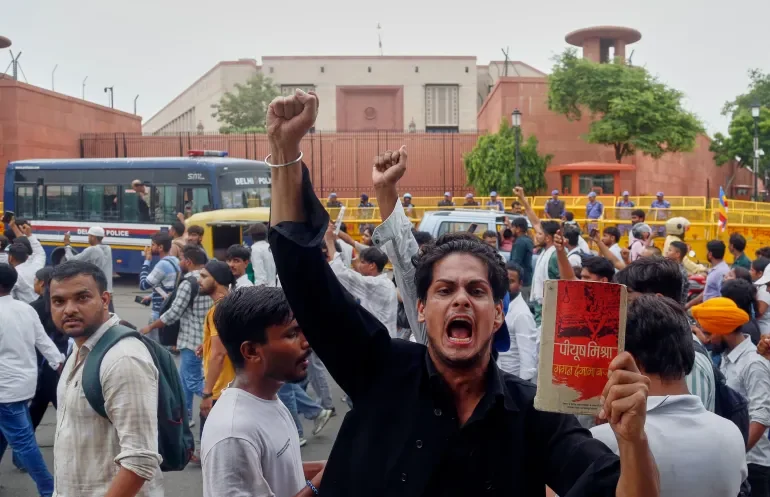
The student-led protest movement that began in New Delhi has expanded into a nationwide campaign, posing one of the biggest political challenges to Prime Minister Narendra Modi’s government in recent years.
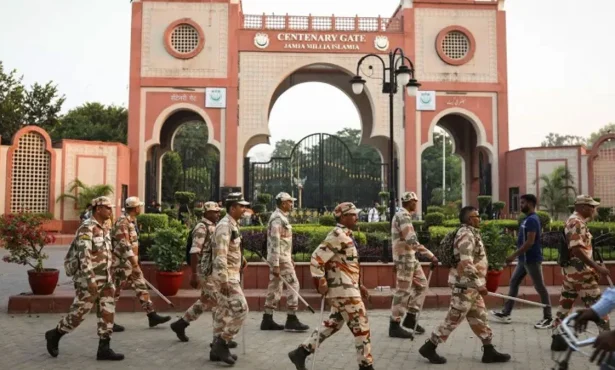
Thousands of protesters continue to occupy parts of Jantar Mantar in the Indian capital, despite repeated attempts by police to disperse the crowds. Security has been significantly tightened across central Delhi, with authorities remaining on high alert for further demonstrations.
The agitation, led by the Cockroach Janta Party (CJP), was initially sparked by allegations of examination paper leaks and demands for reforms to India’s education and recruitment systems. However, the movement has since evolved into a broader campaign highlighting youth unemployment, corruption and government accountability.
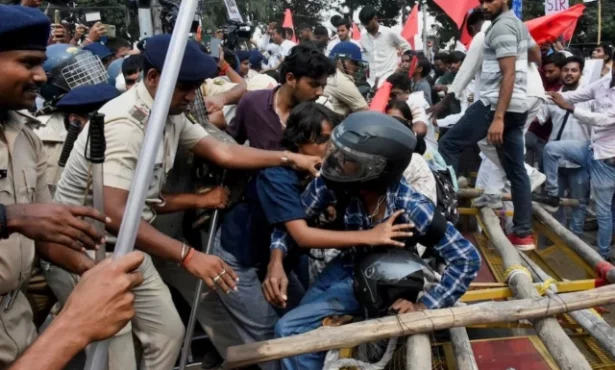
Fresh clashes erupted on Wednesday evening when protesters confronted police near Jantar Mantar. Delhi Police said officers used batons and fired tear gas after demonstrators allegedly threw stones and bottles at security personnel. Protesters, however, accused police of using excessive force to suppress the demonstrations.
According to Delhi Police, more than 100 security personnel have been injured since the protests began. Protest organizers also claim that many demonstrators have been hurt during repeated confrontations with law enforcement.
The movement has spread well beyond the capital, with demonstrations, solidarity marches and rallies taking place in several major Indian cities, including Mumbai, Bengaluru, Kolkata, Hyderabad, Chennai, Pune, Lucknow and Chandigarh. Student groups at universities across the country have joined the campaign, while Indian diaspora communities have organized solidarity protests in New York and other international cities.
Seeking to defuse the crisis, Prime Minister Modi has announced a series of measures, including fast-track courts to prosecute those responsible for examination paper leaks, stronger action against corruption in the education sector and initiatives aimed at restoring public confidence in the examination system.
However, CJP leaders have rejected the government’s proposals, insisting that their key demand remains the resignation of Education Minister Dharmendra Pradhan, along with comprehensive reforms to India’s examination and recruitment processes.
The unrest has also intensified political tensions in Parliament, where opposition parties have backed the protesters and accused the government of mishandling the crisis and using excessive force against students.
Political analysts say the demonstrations have grown into a broader expression of frustration among young Indians over employment opportunities, corruption and governance, making the movement a major test for the Modi government.
As of Thursday, protesters remained camped at Jantar Mantar, security forces maintained a heavy presence across central Delhi, and student leaders vowed to continue nationwide demonstrations until their demands are met.