Play store

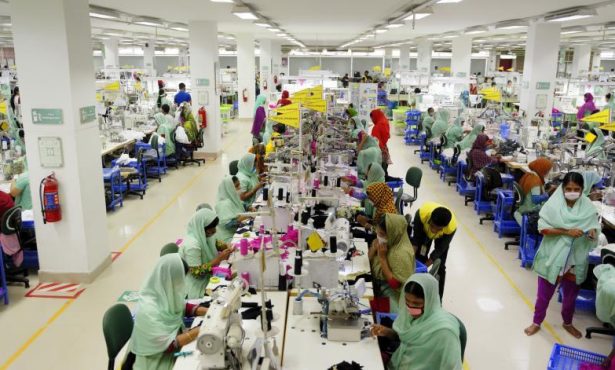
Bangladesh’s export-oriented ready-made garment (RMG) and textile industries are facing one of their worst energy disruptions in recent years after a fire at a floating liquefied natural gas (LNG) terminal off Maheshkhali sharply reduced gas supplies, forcing many factories to cut production to as little as 35 to 40 per cent of capacity.
Industry leaders warned that if gas supplies are not restored quickly, exporters could miss shipment deadlines, incur higher production costs and risk losing the confidence of international buyers.
Hundreds of factories in major industrial belts, including Gazipur, Narayanganj and Greater Dhaka, are struggling with critically low gas pressure. The shortage has hit spinning mills, textile factories and dyeing units particularly hard, as they rely heavily on uninterrupted gas supplies to operate boilers and production machinery.
According to Bangladesh Oil, Gas and Mineral Corporation (Petrobangla), the country’s daily gas demand is around 3,800 million cubic feet (mmcfd), while average supply in recent years has remained close to 2,700 mmcfd. Following the shutdown of the damaged floating storage and regasification unit (FSRU), however, national gas supply has dropped below 2,150 mmcfd, widening the supply gap to its highest level in years.
Petrobangla officials said imported LNG normally accounts for around 35 to 40 per cent of Bangladesh’s gas supply, making the temporary loss of one import terminal a major setback for the country’s energy system.
Petrobangla Director (Operations and Mines) Rafiqul Islam said repairing the damaged FSRU would take time because of the technical complexity of the work.
The crisis has affected industries unevenly.
While factories inside Export Processing Zones (EPZs), particularly in Chattogram, continue to receive relatively stable gas supplies, manufacturers outside the EPZs are bearing the brunt of the shortage.
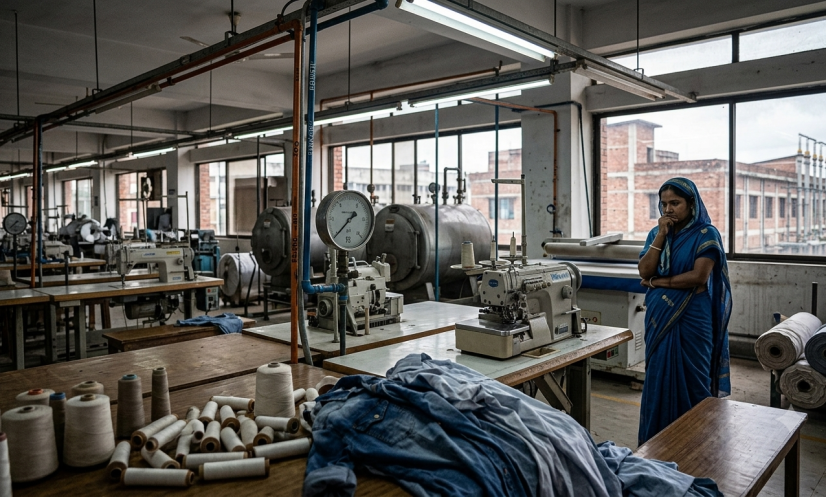
Factory owners said gas pressure has fallen so low that many industrial boilers cannot generate enough steam to sustain normal production, forcing operations to slow significantly or stop altogether.
Bangladesh Textile Mills Association (BTMA) President Showkat Aziz Russel described the situation as alarming, saying spinning and textile mills, which form the backbone of the apparel supply chain, are among the worst affected.
“In some parts of Narayanganj, mills are receiving barely 35 per cent of the gas they need,” he said. “Production processes that normally take eight hours are now taking between 12 and 16 hours, increasing overtime costs while reducing efficiency.”
The longer production cycle is also pushing up utility expenses and adding to financial pressure from higher raw material prices, wage increases and elevated borrowing costs.
Bangladesh Knitwear Manufacturers and Exporters Association (BKMEA) President Mohammad Hatem warned that prolonged gas shortages could damage Bangladesh’s reputation as a dependable sourcing destination.
“International buyers operate on strict delivery schedules,” he said. “If factories fail to complete production on time, exporters may have to use expensive air freight instead of sea transport to meet shipment deadlines, significantly reducing profit margins.”
Bangladesh Chamber of Industries (BCI) President and Evince Group Managing Director Anwar-ul-Alam Chowdhury (Parvez) said factories in Gazipur’s Bhabanipur industrial area are operating at only 35 to 40 per cent of installed capacity.
He noted that the manufacturing sector has already endured persistent energy shortages over the past two years.
Bangladesh’s garment exports, the country’s largest source of foreign exchange earnings, recorded negative growth of 1.34 per cent in FY2023-24, reflecting both weak global demand and domestic production constraints.
Economists said the latest disruption comes at a particularly critical time as Bangladesh seeks to boost export earnings, strengthen foreign exchange reserves and maintain macroeconomic stability.
The RMG sector accounts for more than 80 per cent of the country’s export earnings and directly employs around four million workers, making reliable energy supplies vital to industrial output and the broader economy.
Business leaders urged the government to prioritise gas supplies for export-oriented industries while expediting repairs to the damaged LNG terminal. They also called for greater investment in domestic gas exploration, LNG infrastructure and alternative energy sources to reduce Bangladesh’s vulnerability to future supply shocks.
They warned that unless gas pressure is restored soon, the country could face delayed export shipments, rising production costs and a loss of competitiveness in the global apparel market.