Play store

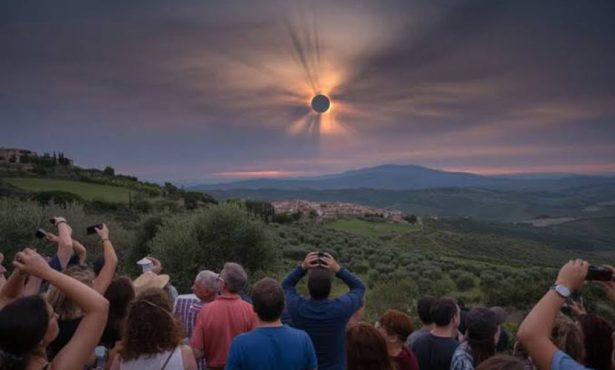
A total solar eclipse will sweep across parts of the Northern Hemisphere on August 12, briefly turning day into twilight as the Moon passes directly between Earth and the Sun.
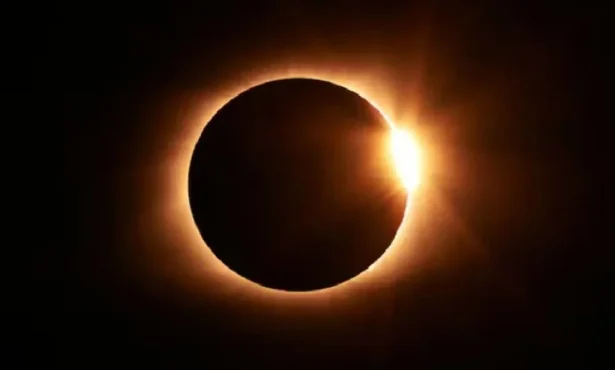
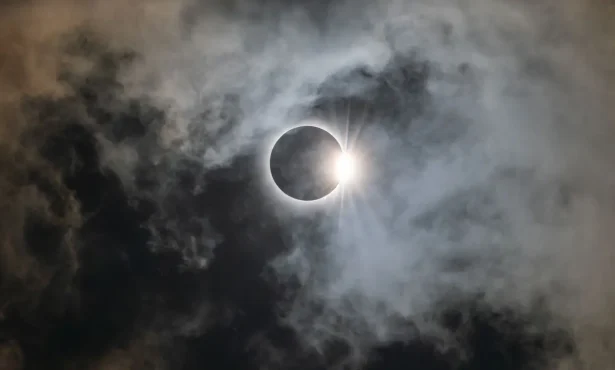
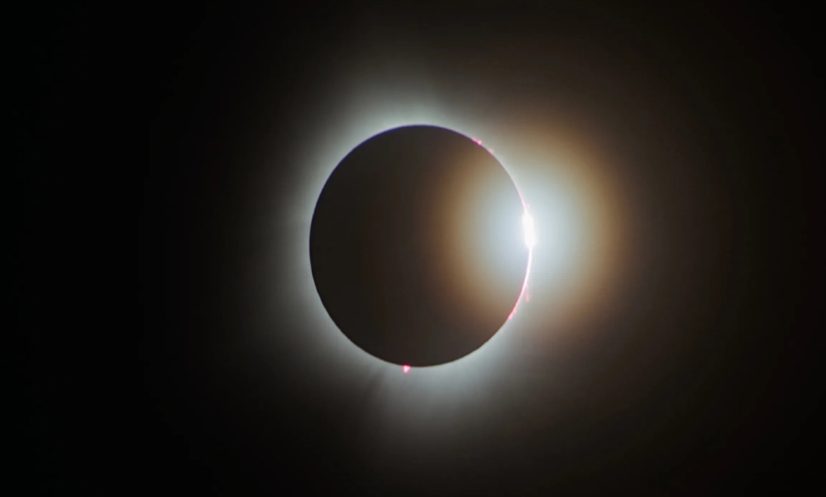
The spectacular event will be visible in totality from Greenland, Iceland and Spain, with a small part of northeastern Portugal also falling within the path of totality. Observers in the best locations will see the Sun completely covered for up to about 2 minutes and 18 seconds, revealing the faint, glowing corona around the darkened Moon.
The eclipse will occur when the New Moon’s shadow falls on Earth’s surface. The New Moon will occur at 1:37 p.m. EDT on August 12, when the Moon reaches the precise alignment needed to produce the eclipse.
Total solar eclipses are possible because the Sun, although about 400 times wider than the Moon, is also roughly 400 times farther from Earth. As a result, the two objects appear almost identical in size in the sky. When the Moon passes directly across the Sun from Earth’s perspective, it can completely block the solar disk.
However, solar eclipses do not occur during every New Moon. The Moon’s orbit around Earth is tilted slightly relative to Earth’s orbit around the Sun, meaning the Moon usually passes above or below the Sun in the sky. Only when the orbital planes align closely enough can an eclipse occur.
The narrow path of totality for the August 12 eclipse will cross Greenland, Iceland and northern Spain, along with a small section of northeastern Portugal.
The longest period of totality, lasting about 2 minutes and 18 seconds, will occur off the western coast of Iceland. In Reykjavik, the total eclipse will last approximately one minute, while locations farther west along Iceland’s coast will experience nearly two minutes of darkness.
Northern Spain will also experience close to two minutes of totality across much of the central part of the eclipse path.
For people outside the path of totality, the eclipse will still be visible as a partial solar eclipse in several regions.
Parts of Europe, Russia, Africa and North America will see the Moon cover a portion of the Sun. Areas of Alaska and the northeastern and eastern United States will also experience a partial eclipse.
The extent of the eclipse will vary considerably by location. London will see about 91 percent of the Sun covered, while Paris will experience a 92 percent partial eclipse. Rome will see roughly 69 percent coverage, and Stockholm about 81 percent.
In North America, Nova Scotia will experience around 33 percent coverage, while Anchorage will see about 28 percent. Toronto will see roughly 8 percent of the solar disk covered, compared with about 5 percent in Winnipeg.
Along the U.S. East Coast, Boston will see approximately 16 percent coverage, New York City about 9 percent and Virginia Beach around 2 percent.
For those unable to travel to the narrow path of totality, NASA will provide live coverage of the eclipse, allowing viewers around the world to follow the event safely online.
Anyone observing a partial phase of the eclipse directly must use proper solar-viewing protection, as looking at the Sun without certified eclipse glasses or other appropriate solar filters can cause permanent eye damage.