Play store

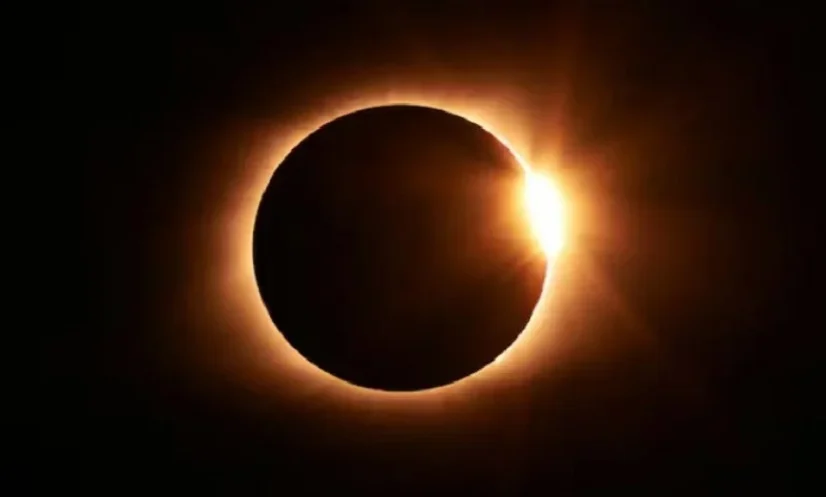
A rare total solar eclipse will take place on Wednesday, August 12, but skywatchers in Bangladesh will not be able to witness the celestial event because it will occur during nighttime in the country.
The Bangladesh Meteorological Department (BMD) confirmed this in a bulletin issued on Monday.
According to the BMD, the partial phase of the eclipse will begin at 9:34:18pm Bangladesh Standard Time (BST) on August 12. The central phase will start at 11:05pm, with the eclipse reaching its maximum magnitude of 1.08 at 12:48:48am on August 13.
As these phases occur after sunset in Bangladesh, the eclipse will remain invisible from the country.
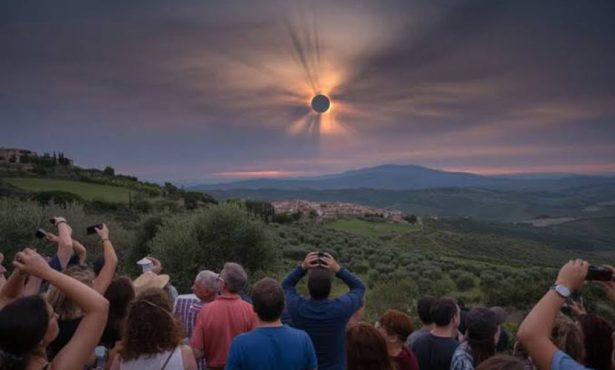
The total eclipse will be visible only along a relatively narrow path of totality stretching across parts of northern Russia, the Arctic Ocean, Greenland, Iceland, Spain and Portugal.
Several cities will fall within the path of totality, including Reykjavík in Iceland and León, Zaragoza and Valencia in Spain. In León, totality is expected to begin at around 8:28pm local time and last for approximately two minutes.
A much wider area will experience a partial solar eclipse, including large parts of Europe, North America and northwest Africa.
The extent of the Sun covered by the Moon will vary significantly by location. The eclipse will cover around 92 percent of the Sun in Paris, 91 percent in London, 85 percent in Berlin and 96 percent in Algiers. Parts of Canada will experience up to 53 percent coverage.
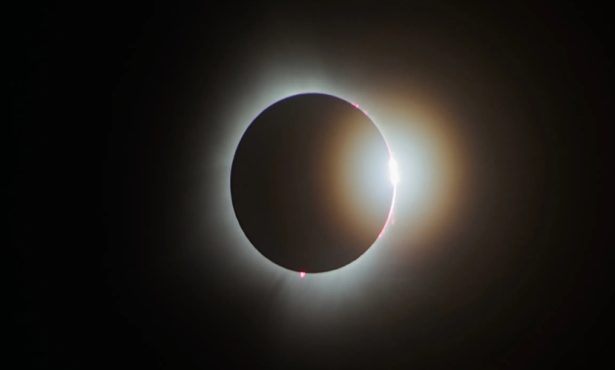
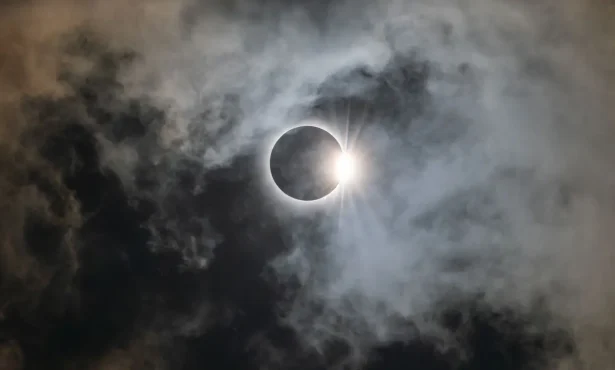
A total solar eclipse occurs when the Moon passes directly between the Earth and the Sun and completely blocks the Sun’s bright disk for observers within the path of totality. For a brief period, the normally hidden outer atmosphere of the Sun, known as the corona, becomes visible.
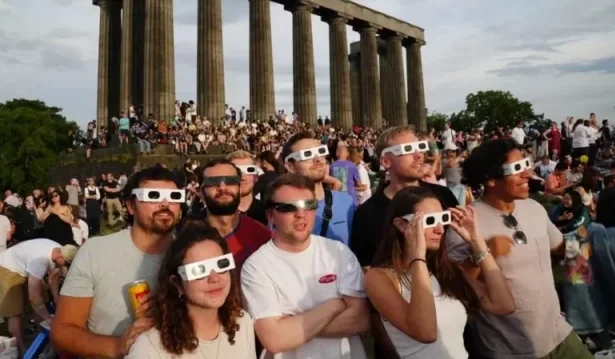
The event is expected to attract large numbers of skywatchers and astronomy enthusiasts in areas where totality can be observed.
NASA has warned that looking directly at the Sun during the partial phases can cause serious and permanent eye damage. Observers outside the brief period of totality should use ISO 12312-2-certified solar viewing glasses or other approved solar filters.
Regular sunglasses are not safe for viewing a solar eclipse, and viewers should never look directly at the Sun through cameras, binoculars or telescopes without appropriate solar filters.
For people in Bangladesh, the eclipse will therefore remain an astronomical event to follow through photographs, livestreams and coverage from regions within the viewing zone rather than from the local sky.