Play store


A rare total solar eclipse captivated millions of skywatchers across parts of Europe and the North Atlantic on Wednesday, as the Moon moved directly between Earth and the Sun, completely blocking the Sun’s visible disk.
The August 12, 2026 eclipse was particularly significant for Western Europe, marking the region’s first total solar eclipse in nearly three decades. The last comparable event was seen in 1999.
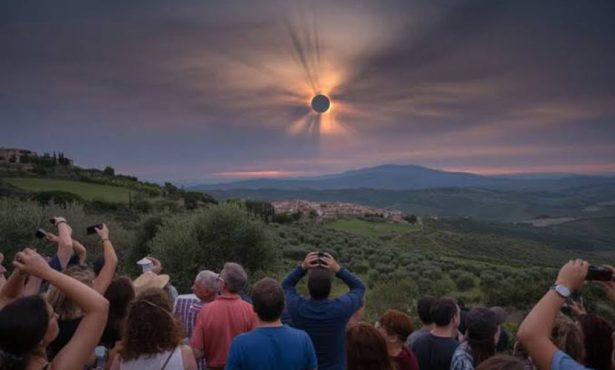
The path of totality crossed areas including Iceland and Spain, where spectators gathered to witness the brief period of darkness.
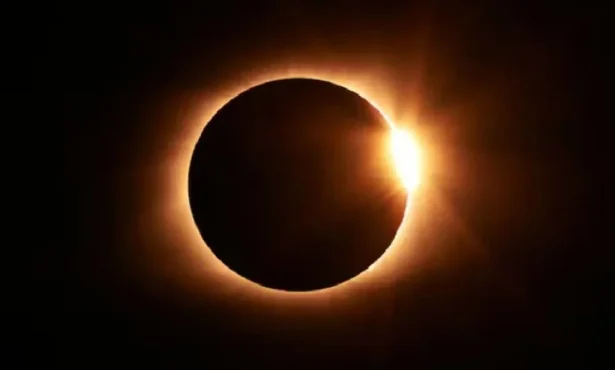
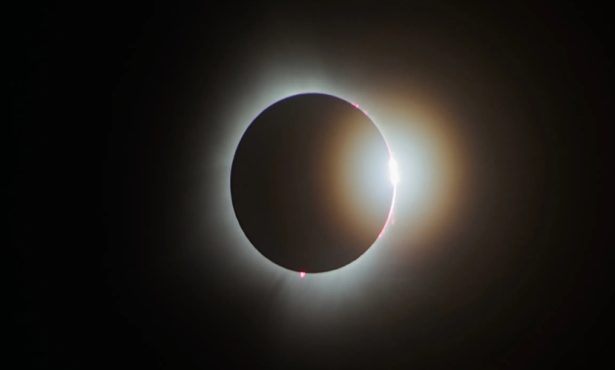
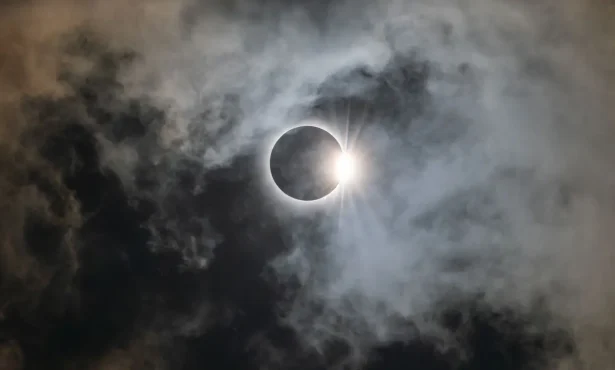
In parts of Spain, the sky turned dramatically dark shortly after sunset approached, while the eclipse produced striking views of the Sun’s corona around the Moon’s silhouette.
In Spain, authorities deployed thousands of police officers and additional aircraft to manage large crowds drawn to prime viewing locations.
The event also generated a major tourism surge, with visitors travelling specifically to experience the rare celestial phenomenon.
A total solar eclipse occurs when the Moon passes directly between the Earth and the Sun and appears large enough in the sky to cover the Sun completely.
During totality, the normally bright solar disk disappears, allowing the Sun’s faint outer atmosphere, or corona, to become visible.
The eclipse reached its greatest point at about 17:47 UTC on August 12, with totality lasting for more than two minutes along the central path.
Although totality was visible only along a relatively narrow path, a partial eclipse could be observed across much wider areas of Europe and beyond.
For many observers, the spectacle was a once-in-a-generation experience, with crowds describing the sudden darkness and appearance of the solar corona as extraordinary.