Play store

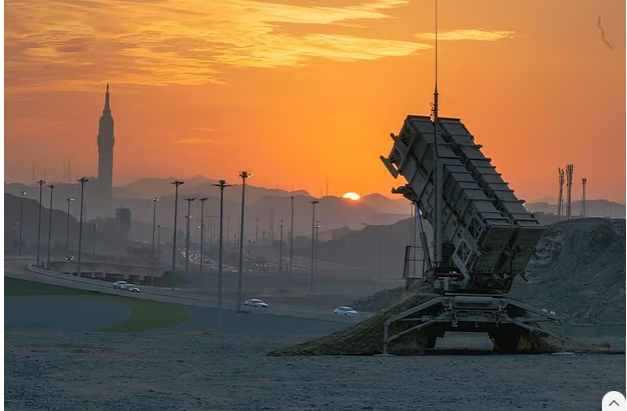
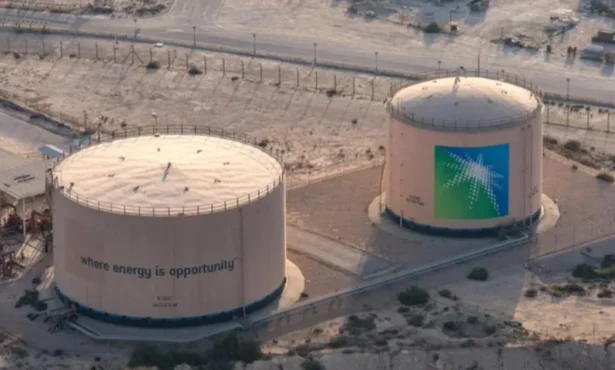
Saudi Arabia, a major power in the Middle East, spends tens of billions of dollars annually on defence. Yet it is struggling to protect critical infrastructure, including airports, oil refineries and pipelines, from missile and drone attacks launched by Yemen’s Houthi rebels.
The kingdom has acquired sophisticated weapons systems from the United States and Europe and built a multilayered air defence network. Despite these investments, Saudi Arabia’s main airport in the capital, Riyadh, has come under deadly attack in the past week.
According to the Stockholm International Peace Research Institute (SIPRI), Saudi Arabia spent $83 billion on defence last year, placing it among the world’s top 10 military spenders. Its purchases include US fighter jets, Patriot and THAAD air defence systems, and a range of advanced weapons from France and the United Kingdom.
But Saudi Arabia also has an enormous territory to defend. The country is roughly one-fifth the size of the United States, and threats confront it along three of its borders.
To the east, Iran launched nearly 1,000 missiles and drones at Saudi facilities and infrastructure during the most intense phase of this year’s Middle East conflict. To the north, Iran-backed militias in Iraq carried out drone attacks on the kingdom’s strategically vital East-West oil pipeline. From the south, the Iran-backed Houthis continue to launch missiles from concealed mountain positions and mobile launchers in Yemen.
According to Vision2030.ai, an independent website analysing Saudi Arabia’s economic transformation, defending the kingdom means protecting an extensive network of potential targets, not just Riyadh or a single oil refinery. Its defence systems must detect incoming threats, determine which ones to intercept and warn civilians within moments.
Saudi Arabia has managed to intercept many Houthi missiles and drones, but some attacks have still reached their targets. A Saudi source said the defence ministry faces difficult decisions about how to allocate its existing systems, given the number of vulnerable facilities and infrastructure across the country.
## The Houthis’ capabilities
The Houthis have developed tactics combining ballistic and cruise missiles with long-range drones to overwhelm Saudi air defences. The approach resembles Russia’s tactics in Ukraine, where Moscow has frequently combined cruise and ballistic missiles with large numbers of drones.
Cruise missiles fly at relatively low altitudes, making them harder to detect and track. The Houthis have also introduced a new generation of ballistic missiles that they claim can change direction during flight.
Countering a combination of missiles and drones with a single air defence system is an extremely difficult task.
But the Houthis have not developed these capabilities entirely on their own.
Despite international arms restrictions, UN experts found missile debris, military equipment and drones of Iranian origin in Yemen eight years ago.
Two years ago, the same panel reported an unprecedented scale, range and variety of military equipment and technology supplied to the Houthis by external sources, including financial assistance and fighter training.
Experts say the designs of the Houthis’ latest missiles, including the Hatem-2 and Palestine-2, resemble Iranian weapons. They are reportedly highly manoeuvrable and accurate.
Last year, a Houthi missile penetrated Israel’s renowned air defence network and struck near Ben Gurion Airport. Analyst Amir Bar Shalom told CNN at the time that the missile’s precision was remarkable, particularly given that it had been launched from a distance of 2,000 kilometres.
Brigadier General Majed al-Najili, a spokesman for Yemen’s government forces, said the Houthis had also modified and upgraded Iranian air defence weapons to target aircraft and cruise missiles.
Last month, al-Najili said some of these missiles could remain airborne for up to 25 minutes and were guided by thermal-tracking systems.
Will the Houthis listen to Tehran?
The Houthis have long been part of Iran’s so-called “axis of resistance”. While other allied groups, including Hezbollah, Hamas and Iraqi militias, have suffered significant losses, the Houthis have continued to strengthen their position.
Their relationship with Tehran remains strong. They sent a delegation to attend the funeral of Iran’s former supreme leader, Ayatollah Ali Khamenei. However, the group also has its own objectives.
The seven-year conflict between Saudi Arabia and the Houthis from 2015 to 2022 caused immense suffering in parts of Yemen under Houthi control. Economic and transport restrictions have continued since then.
The situation eventually prompted the Houthis to announce attacks on Saudi ships in the Red Sea in July. Missile strikes followed. The initial attacks targeted an Aramco oil refinery along the Red Sea coast before the group shifted its focus to Saudi airbases.
The Houthis are demanding an end to Saudi airstrikes in support of Yemen’s government forces, as well as billions of dollars in compensation from Riyadh.
Iran has offered to mediate between Saudi Arabia and the Houthis, whether or not the group follows Tehran’s lead. On Monday, Iranian Foreign Minister Abbas Araghchi said Tehran was prepared to provide “any assistance necessary” to initiate talks between Saudi Arabia and the Yemeni group.
Mohammed al-Bukhaiti, a member of the Houthis’ political bureau, claimed on Monday that the group had rejected ceasefire proposals lasting two weeks and one month, despite Riyadh’s acceptance of mediation.
Al-Bukhaiti said the current conflict was unlike previous confrontations and that the situation on the battlefield had changed.
“With each passing day, the scope of this conflict will expand and the damage will deepen,” he said, warning that a settlement possible today could become difficult or impossible tomorrow.
## Saudi Arabia faces difficult choices
Despite the escalating conflict, Saudi Arabia has tried to maintain the appearance that everything is normal. The kingdom’s civil defence authorities had stopped sending mobile phone alerts warning the public about missile and drone threats in the week before the deadly attack on Riyadh’s airport.
Several Riyadh residents who spoke to CNN said the alerts had since resumed. Saudi authorities said three ballistic missiles were intercepted on Monday.
An expatriate living in Riyadh told CNN that their children were studying from home this week. The resident expressed anger over the absence of automated advance warnings of missile attacks in the days leading up to the airport strike.
By Monday, however, the phone alerts appeared to be working effectively, the resident said. They also expressed frustration at the Saudi authorities’ silence throughout the weekend following the attack on Riyadh’s airport.
CNN sought comment from Saudi authorities on why the alerts had been suspended.
Saudi Arabia now faces difficult choices. After more than a dozen civilians were killed in the airport attack, reaching an accommodation with the Houthis would be politically difficult and unpopular.
On the other hand, escalating the conflict through intensified airstrikes could invite further missile attacks. That would threaten Crown Prince Mohammed bin Salman’s central ambition of transforming Saudi Arabia into a global destination for investment, technology and tourism.
The risks extend well beyond the oil industry. Data centres, water treatment facilities and airports are essential to Saudi Arabia’s technological ambitions, water supplies and tourism economy.
Attention is now turning to the crown prince’s plans to deliver a keynote address to international investors in Riyadh later this month.
Meanwhile, major international companies have stayed away from the World Petroleum Congress held in Riyadh this week.
## Why defeating the Houthis remains difficult
The prospects of defeating the Houthi rebels through a ground offensive by Yemen’s internationally recognised government forces appear limited. The Houthis are well organised, battle-hardened and familiar with the mountainous terrain. Last month, they inflicted heavy losses on government forces.
Last year, the United States spent more than $1 billion on a seven-week air campaign against the Houthis. Although the group eventually agreed to stop attacking US ships in the Red Sea, the campaign failed to significantly weaken its position. The Houthis also shot down several advanced US Reaper drones.
Neither US nor Israeli strikes have managed to eliminate the core of the Houthi leadership, although several commanders and technicians have been killed.
Instead, the Houthis, with an estimated 350,000 armed members, now appear to have the initiative.
The Institute for the Study of War said on Monday that the group had encircled Taiz, Yemen’s third-largest city and a key logistics hub, which remains under the control of government forces. Source: Agencies.