Play store

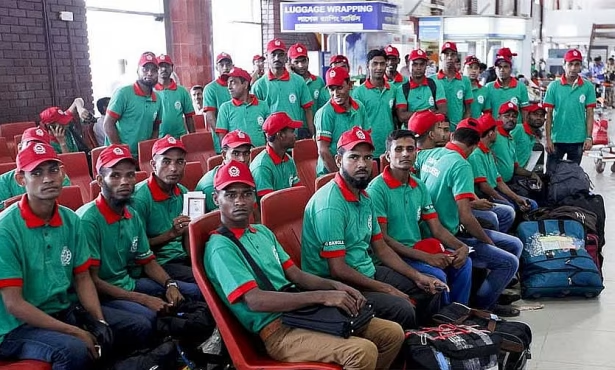
The government has received 568 demand letters for recruiting Bangladeshi workers in Malaysia and aims to begin sending them to the country through Malaysian company DHL before December, a senior official said on Thursday.
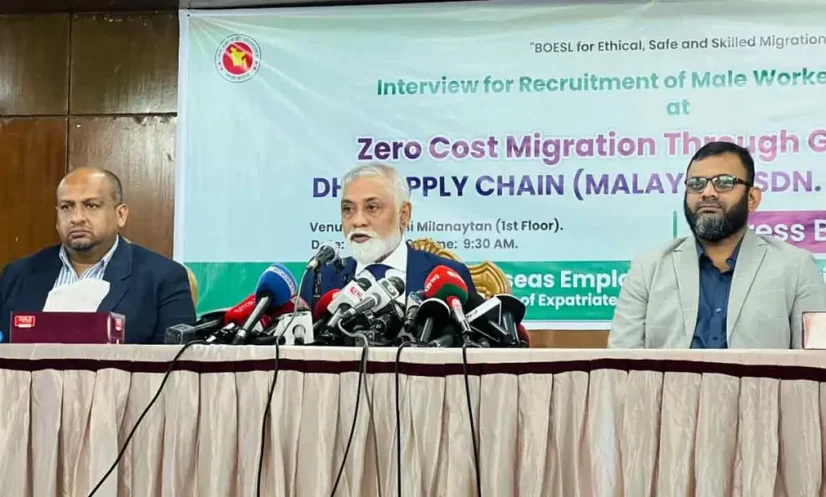
Mohammad Rashedul Haque, managing director of Bangladesh Overseas Employment and Services Limited (BOESL), disclosed the plan at a press conference organised by the Ministry of Expatriates’ Welfare and Overseas Employment in Dhaka on November 12.
“We have received 568 demand letters so far. We want to complete the process before December and start sending workers through DHL. A delay of a day or two, if unavoidable, would be a separate matter,” he said.
The government has taken an initiative to send 10,000 Bangladeshi workers to Malaysia through BOESL at zero migration cost. The recruitment will be carried out in phases, depending on demand from employers.
As part of the first phase, the final selection process began on Thursday to recruit 112 male workers for Malaysian company DHL.
Haque said Malaysia was Bangladesh’s second-largest overseas labour market and that BOESL was working to ensure safe, ethical and skilled migration at low or zero cost, in line with the government’s election commitments.
He said BOESL received a recruitment demand from DHL on November 2 and published an online recruitment notice on November 5. A total of 4,029 applications were submitted between November 6 and 8.
To ensure equal opportunities and transparency, an online lottery was conducted on November 8, initially selecting 300 candidates for two positions: 200 for operations assistant and 100 for technical skilled worker.
Of the shortlisted candidates, 112 will be selected through assessments of professional skills, practical abilities and suitability for the positions.
A nine-member delegation from Malaysia has arrived in Bangladesh to conduct practical tests and interviews from November 12 to 15.
The BOESL managing director said the organisation would not interfere in the selection process and that the final decision would rest entirely with the employer.
He emphasised that the recruitment would involve absolutely no migration costs for the selected workers. All government-prescribed migration expenses would be borne by the Malaysian employer, while BOESL would collect neither migration fees nor service charges from employers or candidates.
“Zero means zero,” he stressed.
Warning against fraudulent recruitment practices, Haque said legal action would be taken against brokers, middlemen or unauthorised individuals attempting to collect money, as well as candidates involved in unethical financial transactions.
He urged applicants to avoid all monetary dealings during the recruitment process.
“Our objective is to ensure that no qualified and capable person is deprived of overseas employment opportunities simply because of financial constraints. Workers should be able to secure jobs abroad based on their skills, qualifications and hard work,” he said.