Play store

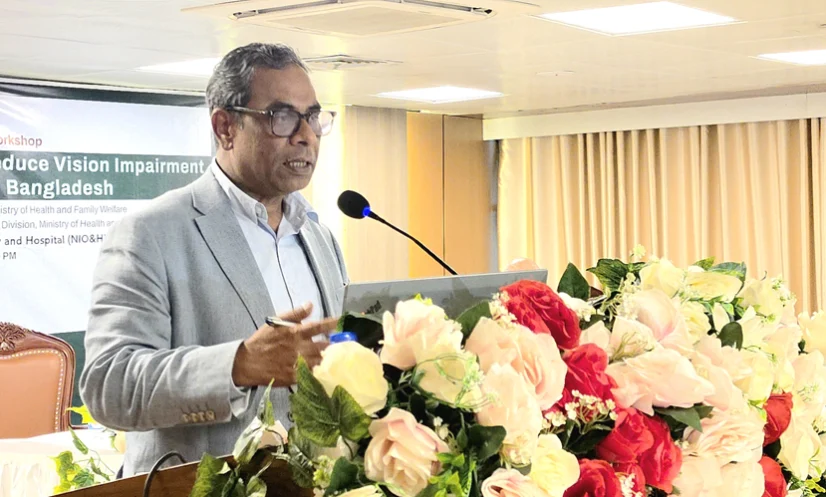
Dr. M. A. Muhith has expressed optimism that Bangladesh will be able to eliminate cataract-related blindness within the next four to five years through coordinated national efforts.
Speaking at a stakeholder consultation workshop titled “Advanced Eye Care in Bangladesh: Action Plan to Reduce Visual Impairment and Prevent Blindness”, held at the National Institute of Ophthalmology and Hospital in Sher-e-Bangla Nagar on Thursday, he outlined a comprehensive strategy to strengthen eye care services across the country.
The state minister said the goal could be achieved through a unified national roadmap involving government, private, and NGO sectors.
He emphasized the need to leverage artificial intelligence and modern technologies to ensure high-quality eye care services reach even the most marginalized communities as a basic citizen right.
Highlighting current challenges, he noted the absence of a coordinated reporting system in the eye care sector and announced plans for a national initiative backed by a five-year perspective plan. In the first year, district hospitals will undergo a reassessment of existing eye care facilities, followed by measures to enhance capacity and recruit additional skilled personnel where necessary.
Dr. Muhith also stressed early detection of vision problems among schoolchildren through nationwide screening campaigns, alongside providing necessary eyeglasses. Similar initiatives will be extended to workplaces to improve eye health among employees, which he said could significantly boost productivity.
To address cataract-related blindness among the elderly, the government plans to implement large-scale cataract surgery programmes, aiming to conduct several hundred thousand successful operations annually.
He further highlighted the growing burden of eye diseases such as diabetic retinopathy, noting that AI-based enhanced screening systems could play a vital role in early diagnosis and treatment. Technological advancements, he added, have made it easier to deliver outreach services at the community level.
Underscoring the importance of skilled human resources, the state minister called for increased focus on training and capacity development. He pointed out that while several quality training institutions exist in the private and NGO sectors, expanding both the number and standard of such institutions is essential to strengthen the country’s ophthalmology workforce.
The event also featured remarks from senior officials and eye care experts, while representatives from international organizations, including the World Health Organization, presented keynote papers. A wide range of stakeholders—including veteran ophthalmologists, academics, and field-level practitioners—took part in the open discussion session.