Play store

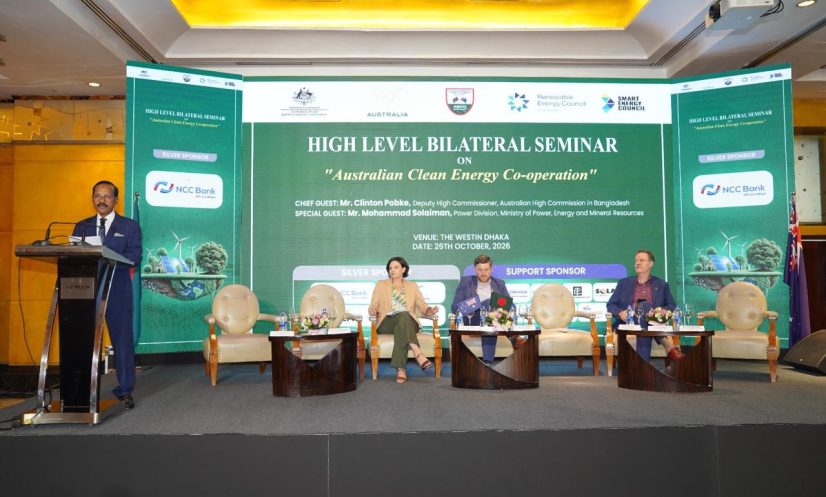
Dhaha: Australian businesses have been urged to explore commercial partnerships with Bangladeshi companies in renewable energy, battery storage, electric mobility and other clean technologies to support Bangladesh’s energy transition and unlock investment opportunities.
M Maksud, president of the Australia Bangladesh Chamber of Commerce and Industry (ABCCI), made the call at a high-level seminar on clean energy cooperation jointly organised by ABCCI and the Australian High Commission at a city hotel on Monday.
The seminar brought together Australian government representatives, renewable energy companies, Bangladeshi policymakers, business leaders and financial institutions to explore opportunities for bilateral commercial cooperation.
“Our gathering transcends a routine exchange on green energy; it marks a strategic milestone in our bilateral economic relationship,” Maksud said, stressing the need to combine the two countries’ strengths to advance a secure, resilient and sustainable energy transition.
He said Bangladesh’s industrial expansion and urban growth required reliable and modern energy infrastructure, while the country was seeking to strengthen energy security, improve efficiency, reduce fossil fuel dependence and expand clean energy generation.
Maksud said Australia’s expertise in utility-scale solar, battery energy storage, grid modernisation, green hydrogen research and electric mobility could complement Bangladesh’s growing demand for clean energy solutions.
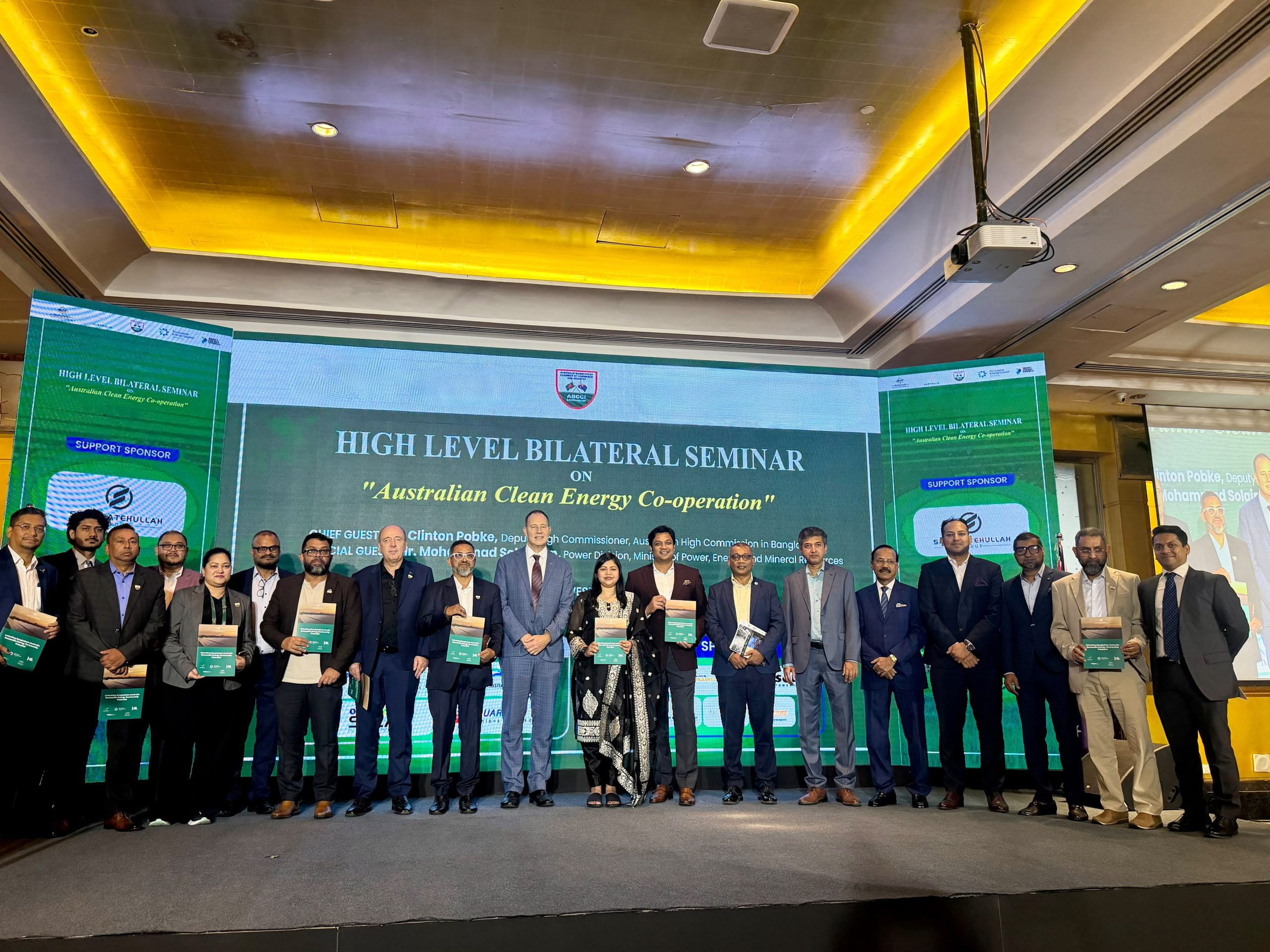
He called for deeper institutional partnerships, joint ventures, co-investment and technology development, rather than limiting bilateral cooperation to conventional trade.
While solar power remained central to Bangladesh’s clean energy strategy, he said, opportunities were expanding in commercial and industrial rooftop solar, floating solar and utility-scale projects integrated with storage systems.
He also highlighted the potential for cooperation in battery energy storage systems, microgrids, distributed energy, peak-load management and electric vehicle charging infrastructure.
Maksud encouraged Australian companies to consider joint manufacturing and assembly of clean technologies, engineering and technical consultancy, research and development, skills training and innovative green financing.
He said Bangladesh should be viewed not only as a market for technology exports but also as a potential destination for foreign investment, local manufacturing and long-term joint ventures.
Australian Deputy High Commissioner to Bangladesh Clinton Pobke said Bangladesh had made significant progress in expanding electricity access and developing infrastructure to support economic growth. However, meeting rising energy demand securely, affordably and sustainably remained a major challenge.
He welcomed Bangladesh’s Renewable Energy Policy 2025, which sets targets of generating 20 per cent of electricity from renewable sources by 2030 and 40 per cent by 2041.
Renewable energy accounts for around five per cent of Bangladesh’s total installed power generation capacity, indicating considerable scope for investment and technological cooperation, Pobke said.
He identified rooftop solar, net metering, battery storage, grid-scale energy storage, electric vehicle charging infrastructure and floating solar as promising areas for Australian businesses.
Solar installations on underused land within tea plantations could also offer opportunities to expand renewable energy generation, he added.
Pobke said Australia had gained considerable experience in managing its energy transition, including grid integration, system security, investment and workforce development. However, he stressed that Australian expertise needed to be adapted to Bangladesh’s local conditions and development priorities.
“The real opportunity is to combine international experience and technology with Bangladesh’s local knowledge, its capabilities, and its priorities,” he said.
Jody McKay, senior trade and investment commissioner at the Australian Trade and Investment Commission (Austrade), said the global energy transition was creating significant opportunities for international businesses, particularly in solar power and biomass.
She said the Australian delegation was visiting Bangladesh not merely to showcase technologies but also to understand the local market, identify potential partners and explore commercial opportunities.
The participating Australian companies brought expertise in solar photovoltaic systems, battery technologies, engineering, electrical safety, energy modelling, skills development and renewable energy project development.
The potential partnership, McKay indicated, extended beyond equipment exports to joint ventures, local manufacturing and assembly, engineering services and research collaboration.