Play store

HM Akhtar, New York: The race for a US Senate seat in Michigan has become a flashpoint in American politics, with debate over the economy, inflation, healthcare and immigration increasingly intertwined with questions of racism, Islamophobia and the political rights of Muslim Americans.
At the centre of the controversy is Democratic candidate Abdul El-Sayed, who has faced attacks from President Donald Trump over his Muslim identity and alleged links to the Muslim Brotherhood. Trump has also questioned El-Sayed’s patriotism and loyalty to the United States, prompting criticism that the rhetoric risks turning religious identity into a weapon in the election campaign.
The allegations have not been substantiated publicly, according to the account presented in the report. El-Sayed has rejected the attacks, describing attempts to question his patriotism in this way as shameful.
The controversy has added a national dimension to Michigan’s Senate race ahead of the 3 November midterm elections, which will determine control of Congress. El-Sayed is challenging Republican candidate Mike Rogers, and closely contested polling has drawn particular attention to the race.
A key question is whether attacks centred on religion and national loyalty will help Republicans mobilise their supporters or alienate voters who regard such rhetoric as divisive.
If elected, El-Sayed would become the first Muslim member of the US Senate, a prospect that has added symbolic significance to an already closely watched contest. His candidacy has brought questions of religious representation and equal political participation into the wider debate over the country’s future.
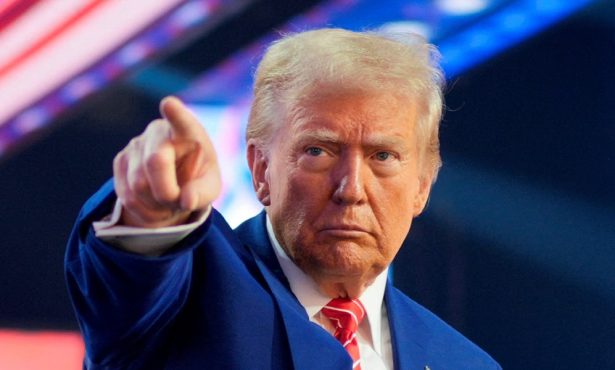
Trump’s remarks at a campaign rally in Port Huron on 25 October intensified the controversy. According to Reuters and the Associated Press, he called El-Sayed a “jihadist”, linked him to the Muslim Brotherhood and invoked the September 11, 2001, terrorist attacks while questioning whether he should serve in the Senate. El-Sayed has denied extremist links and rejected attempts to portray him as disloyal to the United States.
Critics argue that challenging a candidate’s policies and political record is a normal part of democratic campaigning, but questioning someone’s patriotism because of their religion is different. They warn that unsupported allegations of extremism can deepen prejudice and divert attention from substantive policy debates.
Republicans, however, have sought to make El-Sayed’s past statements, political associations and positions on foreign policy central to their campaign against him. The contest has therefore become about more than religious identity, encompassing national security, economic policy and competing visions of America’s role in the world.
El-Sayed, a former public health official in Michigan, has campaigned on expanding access to healthcare, reducing living costs, increasing taxes on the wealthy and ending US military assistance to Israel. His positions have drawn opposition from Republicans and reflect broader divisions over economic inequality and Washington’s foreign policy.
The Senate contest is particularly important because Republicans are defending a narrow path to retaining control of the chamber, while Democrats are seeking the four additional seats they need to take a majority. Michigan’s open seat, being vacated by retiring Democratic Senator Gary Peters, is among the races that could help determine the balance of power in Washington.
Polling suggests El-Sayed has a modest advantage, although the contest remains highly competitive. RealClearPolitics’ average of polls conducted between 24 September and 22 October put him at 47.9 per cent, compared with 46 per cent for Republican Mike Rogers, a lead of 1.9 percentage points.
A Marist University poll conducted from 15 to 18 October found El-Sayed leading Rogers by 50 per cent to 48 per cent among likely voters. An InsiderAdvantage survey conducted on 21 and 22 October showed a narrower gap, with El-Sayed at 47 per cent and Rogers at 46 per cent.
The figures suggest that El-Sayed has gained ground in recent weeks, but his lead is within the margin of error of individual polls. Voter turnout, undecided voters and campaign developments in the final days could still determine the outcome.
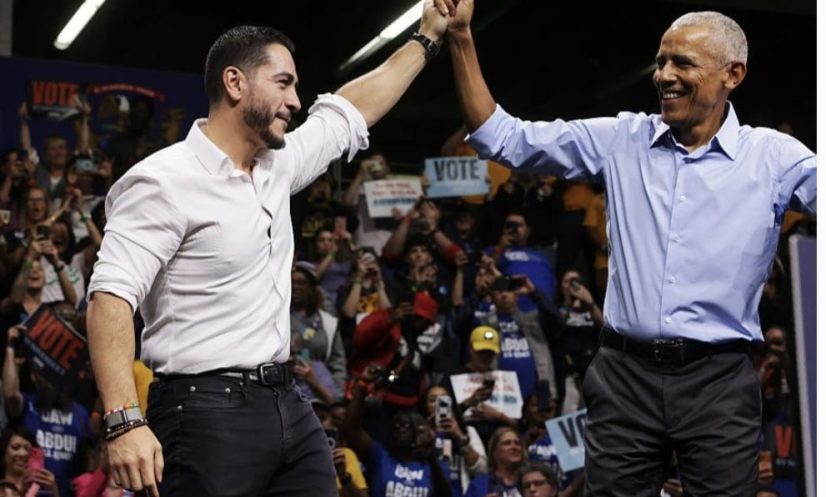
The controversy has also drawn prominent Democratic figures into the debate. Former President Barack Obama campaigned in Detroit on 24 October alongside El-Sayed and other Democratic candidates. Obama’s appearance was part of a broader effort to mobilise voters ahead of the midterms and strengthen Democratic prospects in Michigan.
Senator Bernie Sanders has also criticised the attacks on El-Sayed. Speaking in Michigan, Sanders described much of the campaign against the Democratic candidate as based on racist attacks and argued that such rhetoric was being used to divide voters and distract them from economic concerns.
The controversy has particular resonance in Michigan, which has a significant Arab-American and Muslim population. In the 2024 presidential election, dissatisfaction over the war in Gaza and US policy towards Israel posed challenges for Democrats in the state. Those concerns, alongside the cost of living and attitudes towards Muslim Americans, could again influence voting decisions.
For some voters, the attacks on El-Sayed may reinforce concerns about Islamophobia and political discrimination. Others may place greater emphasis on security, foreign policy or the candidates’ broader political positions. The extent to which religious identity influences voting will depend on how different groups respond to the campaign and whether they turn out on Election Day.
The dispute surrounding El-Sayed is part of a broader pattern of political conflict over Muslim representation in the United States. Democratic Congresswoman Ilhan Omar of Minnesota has also faced repeated attacks from Trump and other Republicans over her religion, immigration background and positions on national identity and foreign policy.
Critics say repeatedly questioning Muslim politicians’ loyalty risks marginalising their policy arguments and portraying religious identity itself as a security concern. Supporters of Trump’s approach argue that national security and ideological differences are legitimate campaign issues. The central dispute is whether the allegations against individual candidates are supported by evidence or are being used to stigmatise them because of their faith.
The Michigan race has consequently become a test of how voters respond to identity-based political campaigning at a time when economic pressures remain a major concern. Inflation, healthcare costs, housing expenses and energy prices are among the issues competing for voters’ attention as the midterms approach.
It remains uncertain whether the attacks will benefit Republicans by energising their supporters or hurt them by alienating Muslim, Arab-American and other voters who view the rhetoric as discriminatory. The impact may also vary across communities, making it difficult to predict the electoral consequences from national reactions alone.
The 3 November election is therefore about more than a single Senate seat. Its outcome could influence control of Congress while offering an indication of how voters assess Trump’s political strategy, the Democrats’ economic message and the place of religious diversity in American public life.
El-Sayed’s narrow polling lead gives Democrats reason for optimism, but it does not guarantee victory. Ultimately, turnout, economic concerns, the candidates’ policy positions and the final days of campaigning will determine whether he wins the seat.
The larger question, however, will remain: will voters prioritise policy and economic concerns, or will appeals based on religious identity and national loyalty play a decisive role in shaping their choices?