


 Play store

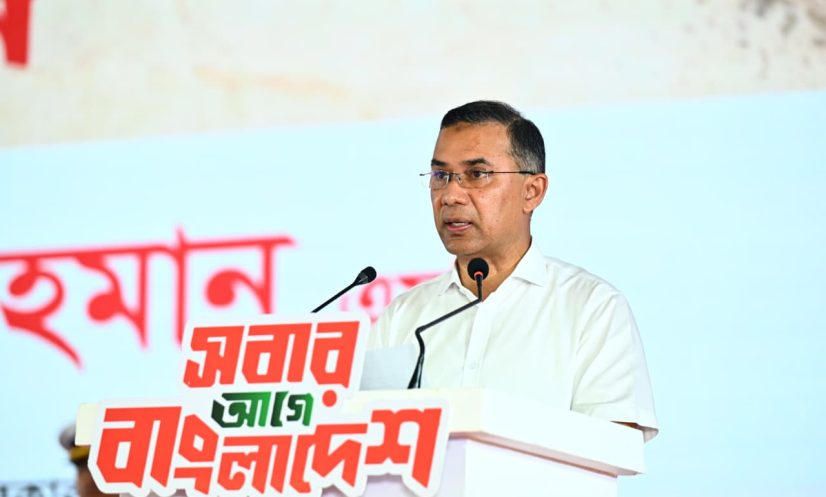
Dhaka: Prime Minister Tarique Rahman has said that the July Uprising Memorial Museum is not only a tribute to the July 2024 mass uprising but also a reflection of the history, sacrifices, and struggles of all democratic movements in Bangladesh. He said the museum would inspire future generations by preserving the nation’s history of democracy, freedom, and courage.
Speaking as the chief guest at the museum’s inauguration ceremony in the capital on Wednesday (August 5), the prime minister described the museum as a historic initiative to preserve the country’s democratic struggles, sacrifices, and acts of bravery in the national memory.
He said the museum would document not only the events of the July–August uprising but also the broader journey of Bangladesh’s democratic movements. Stressing the importance of preserving the history of every democratic struggle, he said the museum should serve as a comprehensive archive of the nation’s fight for democracy.
Rahman said that during more than a decade and a half of anti-fascist movements, thousands of people were subjected to enforced disappearances, abductions, torture, and politically motivated cases. He also claimed that during the July–August uprising, thousands of students and civilians, including women and children, were killed, while at least 30,000 people were injured. He paid tribute to those who lost their lives and expressed sympathy for the injured and the affected families.
He further alleged that the uprising was suppressed through brutal measures, including gunfire from helicopters, and claimed that enforced disappearances, killings, and abductions had become part of state governance over an extended period. According to him, the museum would play an important role in presenting these events to future generations and exposing the realities of authoritarian rule.
The prime minister said the museum would preserve the identities and life stories of those killed in the uprising, testimonies of the injured, accounts from participating students and citizens, photographs, videos, news reports, posters, wall writings, graffiti, cartoons, poems, songs, plays, artworks, personal memorabilia, and digital archives. He thanked everyone who had contributed materials to the museum.
Highlighting the importance of accuracy and impartiality in documenting history, Rahman said incomplete or biased narratives weaken historical records. He called for every piece of information preserved in the museum to be as accurate as possible and suggested presenting information not only in Bangla but also in English and other languages so that people around the world could learn about Bangladesh’s democratic struggles.
He also said that all crimes committed during the anti-fascist movement would be prosecuted through transparent and impartial legal processes, emphasizing that such trials were aimed at establishing the rule of law rather than seeking revenge.
Urging that the museum should not become a platform for promoting the political narrative of any individual, party, or group, Rahman said the true heroes of the 2024 mass uprising were the people of Bangladesh who stood for democracy. He added that just as the 1971 Liberation War was a struggle for independence, the 2024 uprising was a movement to safeguard the people’s freedom and democracy.
On the rehabilitation of those affected by the uprising, the prime minister said injured individuals were receiving free treatment at government hospitals. He added that critically injured victims had been sent to Thailand, Singapore, Türkiye, and Russia for advanced medical care, with around 50 people currently undergoing treatment abroad. More than 13,000 officially recognized July fighters, he said, were also receiving monthly honorariums based on different categories.
Rahman said the government was gradually implementing its 31-point election manifesto and the July Charter, signed at the South Plaza of the National Parliament, with the aim of building the Bangladesh envisioned by those who lost their lives. He also noted that a special committee on constitutional amendments had already begun its work.
In his concluding remarks, the prime minister warned that certain groups were attempting to create unnecessary issues and instability in what he described as a fascism-free Bangladesh. He urged the public to remain vigilant against any actions that could inadvertently create opportunities for the return of authoritarian forces.
Thanking everyone involved in establishing the July Uprising Memorial Museum and expressing condolences to the families of those who lost their lives, Rahman concluded by saying, “Bangladesh will never again become a subservient state.”