


 Play store

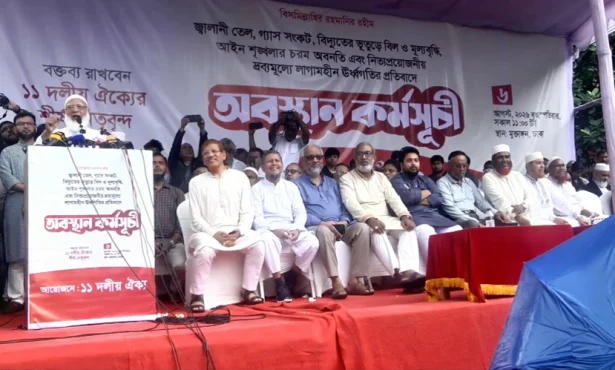
An 11-party opposition alliance led by Bangladesh Jamaat-e-Islami has announced a series of long marches across four divisions, along with a mass rally in the capital, pressing demands that include the withdrawal of increased prices of gas, electricity, water, and LPG.
The announcement came on Thursday during a sit-in programme at Muktangan, where opposition leader and Jamaat Ameer Shafiqur Rahman addressed supporters.
The programme was organised in protest against what the alliance described as a worsening fuel and gas crisis, “ghost” electricity bills, deteriorating law and order, and soaring prices of essential commodities.
According to the announced schedule, the programme will begin with a long march from Dhaka to Chattogram on September 5. This will be followed by marches from Dhaka to Rangpur on September 19, to Khulna on October 10, and to Sylhet on October 24. A large rally in Dhaka is scheduled for November 14.
Speaking at the programme, Rahman called for ensuring electricity in every household, adequate gas supply for cooking and transport, and access to safe drinking water. He also criticised the recent hike in LPG prices and demanded its immediate rollback, warning of further protests, including possible blockades of relevant offices if the demands are not met.
He said the alliance would continue its movement until justice is ensured for crimes such as killings, violence, and looting, and vowed that those responsible for repression and attacks on civilians would not be allowed to return to power.
The opposition leader urged authorities not to obstruct the planned long marches, warning that any obstacle would only strengthen the movement.
Explaining the Sylhet programme, he noted that the march would take place by rail instead of road to avoid public inconvenience due to ongoing highway development work.
He also called on people from across the country to join the planned Dhaka rally, urging city residents to prepare to welcome participants from different regions.
The programme was attended by several leaders of the alliance, including Nahid Islam, Oli Ahmad, Mostafizur Rahman Iran, and Jalal Uddin, among others.