Play store

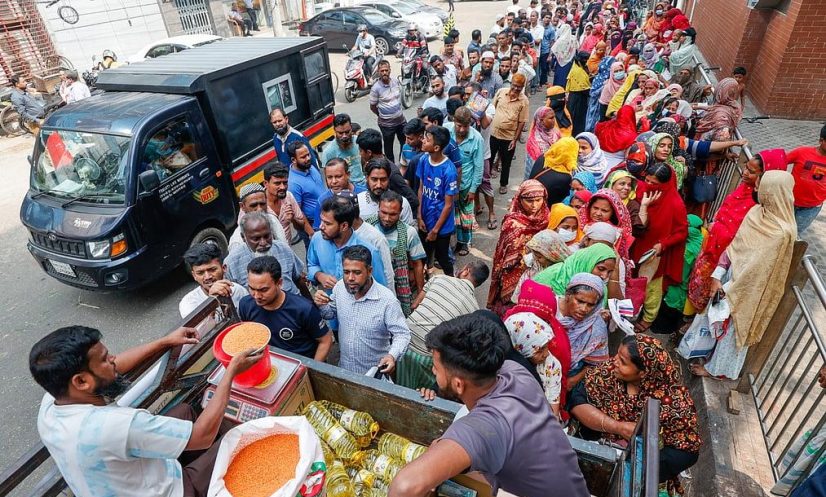
The Trading Corporation of Bangladesh (TCB) is preparing a major overhaul of its operations, aiming to gradually eliminate government subsidies by 2030 under an ambitious initiative titled “Mission Zero.” The move reflects a strategic shift toward financial sustainability while maintaining its role in ensuring affordable essentials for the public.
Traditionally, TCB has focused on supplying key commodities at subsidised prices to support low-income households. Under the new plan, however, the organisation intends to expand its activities by introducing commercially viable products such as soap, detergent, tea, spices, salt, flour, and edible oil.
These products will be sold not only to family cardholders but also to the general public, allowing TCB to generate additional revenue streams and reduce its reliance on government subsidies.
Currently, TCB requires between Tk2,500 and Tk3,500 crore in annual subsidies. Through “Mission Zero,” the agency aims to:Reduce subsidy dependence by nearly 50% in the initial phase.Achieve annual savings of around Tk940 crore.Completely eliminate subsidies within the next four to five years.
According to TCB Chairman Mohammad Foyshol Azad, a combination of improved fund management, pricing strategies, and product diversification could enable the organisation to become financially self-sufficient.
Initial outcomes from the pilot phase have been promising. Since April, TCB has been selling soap, detergent, and salt on a trial basis, generating approximately Tk28 crore in profit within just four months.
By sourcing products directly from manufacturers and bypassing traditional distribution layers, TCB is able to offer goods at prices lower than the market rate while still maintaining profitability.
To support this transformation, TCB is implementing several structural reforms:Purchasing goods using its own funds.Opening letters of credit through private banks at lower interest rates.Introducing direct dealer payments, reducing transaction time from 45 days to 7 days.Supplying goods directly from TCB warehouses, cutting logistics and handling costs.Implementing full digitisation and POS systems.Adjusting product prices on a quarterly basis
Understanding the Cost Structure.
At present, the bulk of TCB’s subsidy expenditure is concentrated in:73% for selling products below procurement cost
18% for bank loan interest.9% for operational expenses.
Essential items such as edible oil, lentils, and sugar account for the largest share of subsidy spending.
Despite its potential, the initiative has drawn cautious responses from experts. Sayema Haque Bidisha has emphasized the importance of ensuring that TCB does not lose its core social protection mandate while expanding commercial operations.
Similarly, the Consumers Association of Bangladesh has highlighted the need for robust monitoring mechanisms to prevent misuse, such as the resale of subsidised goods at higher prices in the open market.
TCB’s “Mission Zero” represents a bold attempt to redefine the country’s approach to subsidy management and essential goods distribution. If implemented effectively, it could ease fiscal pressure on the government while improving access to affordable products.
However, the success of the initiative will depend on striking a careful balance between commercial efficiency and public welfare, ensuring that economic sustainability does not come at the cost of social responsibility.