Play store

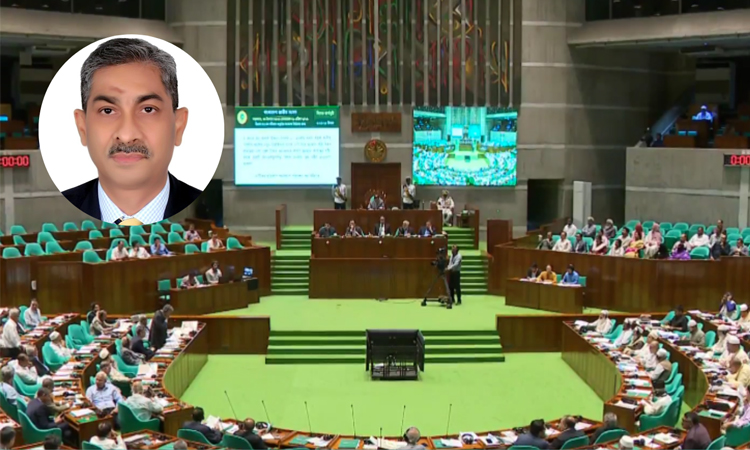
The government is implementing a series of measures to reduce dependence on groundwater by increasing the use of alternative water sources, Water Resources Minister Md. Shahiduddin Chowdhury Anee told Parliament.
Responding to a starred question during a parliamentary session, the minister said authorities have launched initiatives to identify water-stressed areas, map aquifers, assess groundwater reserves, monitor water quality and determine safe extraction limits using modern technology.
With Speaker Hafiz Uddin Ahmad, Bir Bikram, in the chair, Anee said the government is also carrying out a nationwide programme to excavate and re-excavate 20,000 kilometres of rivers, canals and other water bodies.
“Once these initiatives are fully implemented, dependence on groundwater extraction will be reduced significantly,” he said.
The minister informed the House that excessive groundwater extraction and the continued decline in water tables prompted the Executive Committee of the National Water Resources Council (ECNWRC) to declare 153 unions in 25 upazilas across Chapainawabganj, Naogaon and Rajshahi as water-stressed areas through a gazette notification issued on January 22, 2026.
Among the affected areas, 47 unions have been classified as very high risk, 40 as high risk, and 66 as moderate risk, he added.
Anee said the government has directed the relevant agencies to implement short-, medium- and long-term measures to regulate groundwater extraction.
These include restricting the installation of new tube wells except for drinking water, limiting existing tube wells primarily to drinking water supply, gradually replacing groundwater-based irrigation through crop diversification over the next two years, and keeping natural water bodies open for public use.
The minister expressed hope that the ongoing initiatives would significantly reduce reliance on groundwater and help ensure the sustainable management of the country’s water resources.