Play store

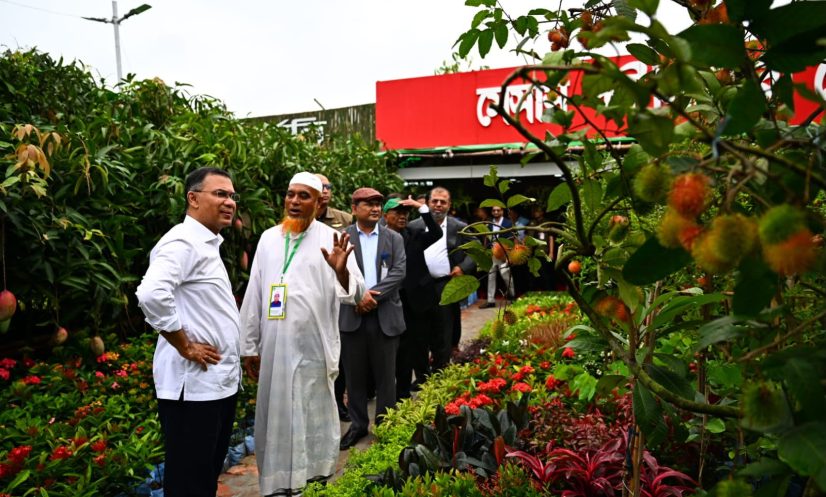
Prime Minister Tarique Rahman on Thursday unveiled a broad environmental agenda aimed at building a greener, cleaner and climate-resilient Bangladesh, urging citizens to make tree planting and environmental conservation part of their daily lives rather than limiting them to annual campaigns.
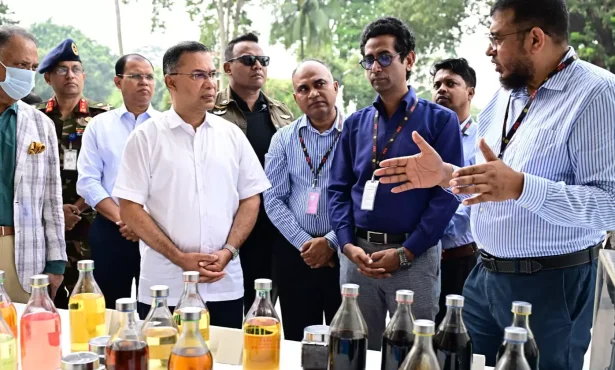
Speaking at the inauguration of World Environment Day, Environment Fair, National Tree Plantation Campaign and Tree Fair 2026 at the Bangladesh-China Friendship Conference Centre, the prime minister announced that the government plans to plant 250 million trees over the next five years while prioritising native species and ecosystem restoration.
Quoting a verse from the Holy Quran at the beginning of his speech, Rahman said all of nature is a blessing for humanity, but people also have a responsibility to protect and care for the environment.
He said the relationship between human society and ecosystems is inseparable and described environmental conservation as an investment in the well-being of both present and future generations.
“The environment fair and tree fair should not remain annual events. Tree planting and environmental protection must become part of our everyday culture,” he said.
Calling on young people to lead the country’s green transformation, the prime minister proposed celebrating the birth of every child by planting a tree. “Let every newborn grow alongside a tree. In this way, we can build a nationwide social movement for greening Bangladesh,” he said.
The prime minister said the government has launched several initiatives to strengthen environmental protection, including introducing Green Volunteerism in educational institutions, establishing a Climate Youth Fellowship and creating an Environment Start-up Fund to encourage innovation in climate action.
He stressed that tree plantation programmes should be science-based rather than quantity-driven, warning that fast-growing exotic species such as eucalyptus and acacia require further research to assess their environmental suitability.
Instead, he called for prioritising indigenous medicinal, fruit-bearing, bamboo, forest, commercial and endangered tree species.
He said successful afforestation should not be measured only by the number of trees planted but also by whether forests provide sustainable habitats and food sources for birds, wildlife and insects while maintaining ecological balance.
He also urged authorities to protect existing forests and mature trees, saying preserving biodiversity is even more important than planting new trees.
The government, he added, has adopted a zero-tolerance approach against deforestation, hill cutting, mangrove destruction and wildlife hunting.
Highlighting the growing impact of climate change, the prime minister said cyclones, floods, droughts, heatwaves, river erosion and salinity have become daily realities affecting agriculture, public health, the economy and livelihoods.
He said environmental protection is no longer a standalone issue but a cornerstone of Bangladesh’s national development strategy.
The premier also announced that the government has begun implementing a programme to excavate and re-excavate 20,000 kilometres of rivers and canals, which he said would improve irrigation, strengthen water security and help the country adapt to climate change.
He underscored the need for comprehensive reforms in waste management, particularly in cities and urban centres, saying reducing plastic waste, expanding recycling, producing organic fertiliser and generating energy from waste would be guided by the Reduce, Reuse and Recycle (3Rs) principle.
However, he said effective waste management cannot be achieved by city authorities alone and urged citizens not to dump waste indiscriminately.
The prime minister also stressed the importance of protecting wildlife and biodiversity, warning that rapid population growth, climate change, unplanned urbanisation, wetland encroachment and deforestation are threatening the habitats of both terrestrial and aquatic species.
He called on people to treat all animals with compassion, saying protecting biodiversity is essential for ensuring human safety and environmental sustainability.
The prime minister further said the government aims to expand rooftop gardening, urban forestry, GIS-based plantation programmes, riverbank greening and eco-tourism as new drivers of sustainable economic growth.
Concluding his address, the prime minister congratulated the recipients of the National Tree Plantation Award, the National Wildlife Conservation Award and the beneficiaries of social forestry programmes, expressing hope that Bangladesh would become a safe and sustainable home for all forms of life.