


 Play store

UN Secretary-General António Guterres has expressed grave concern over renewed fighting in northern Ethiopia and reports of Eritrean forces being present in the country, calling for an immediate end to hostilities and a return to dialogue.
In a statement issued by his spokesperson, Stéphane Dujarric, in New York on Friday night, Guterres urged all parties to cease fighting and called on the signatories of the 2022 Pretoria Agreement to resume dialogue within its framework.
The agreement ended a two-year civil war in Ethiopia’s Tigray region.
Guterres warned that the renewed fighting in Tigray, Afar and Amhara could escalate and further destabilise the wider region.
He reminded all countries in the region of their obligations under the UN Charter to refrain from the threat or use of force against the territorial integrity or political independence of any state, as well as the principle of non-interference in the internal affairs of other countries.
He also urged countries with influence over the parties to use it to promote de-escalation and avoid actions that could fuel the conflict.
The UN chief said he stood ready to offer his good offices to help resolve the crisis.
Humanitarian Crisis Deepens
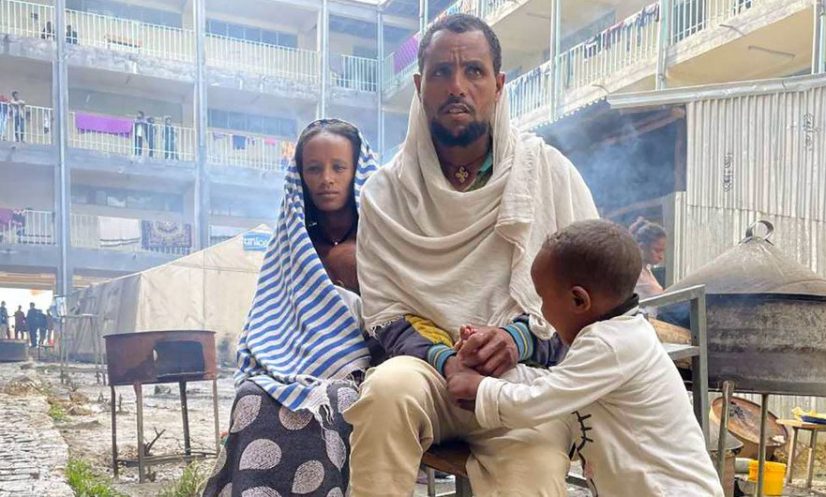
The renewed hostilities have raised concerns about civilian safety and access to essential assistance, with fighting reportedly displacing people across central, northwestern and eastern Tigray.
UN humanitarian teams are working to deliver food, healthcare and other life-saving assistance, but verified figures on displacement remain unavailable.
UN humanitarian affairs chief Tom Fletcher earlier this week called on all parties to ensure aid workers could reach people in need safely and without delay.
The United Nations and its partners are prepared to resume aid operations in northern Ethiopia, including Tigray, as soon as security conditions permit safe access.
In the Amhara region, a government-led initiative to help displaced people return from the town of Kobo to their home areas has been suspended following a deterioration in security.
The UN stressed that all returns must be safe, voluntary and dignified.
Ethiopia and Eritrea Trade Accusations
The renewed fighting has heightened fears of a wider regional conflict, as Ethiopia and neighbouring Eritrea exchange accusations over military activities and support for armed groups.
According to media reports, Ethiopia has accused Eritrea of an “all-out invasion” of Tigray and warned that it would defend itself.
In a letter to the UN Security Council, reported by news agencies, Ethiopia’s foreign minister alleged that Eritrean troops had advanced as far as 60 kilometres into Tigray.
Eritrea has rejected the allegations. Its information minister described the situation as an “unprovoked war of aggression” against his country.
Asmara has also denied Ethiopian accusations that it is supporting the Tigray People’s Liberation Front (TPLF), which previously controlled the region. Eritrea, in turn, has accused the Ethiopian government of seeking regime change in Asmara.
Reports of Drone Strikes
News reports said Ethiopian drone strikes hit Eritrean forces in the Tigrayan town of Adigrat earlier this week. No casualties have been independently verified.
Fighting between Ethiopian government troops and TPLF forces reportedly resumed about two weeks ago, with both sides accusing the other of violating the Pretoria Agreement.
Media reports also said TPLF forces withdrew from the regional capital, Mekelle, last week, leaving the city under the control of Ethiopian government troops.
The latest developments have raised fresh concerns about the durability of the 2022 peace agreement and the risk of renewed instability in the Horn of Africa.