Play store

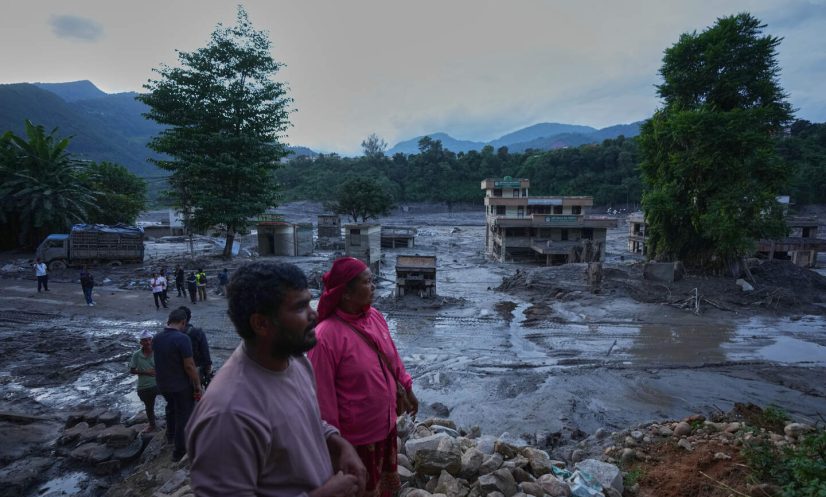
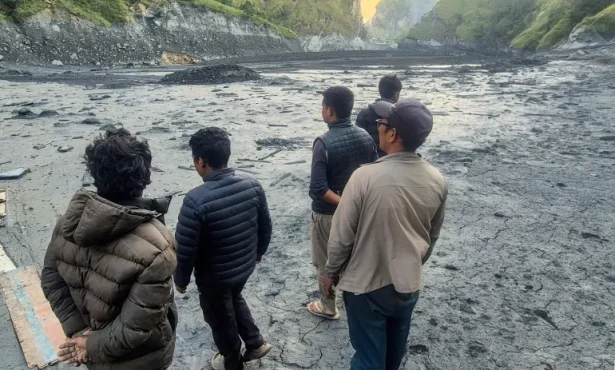
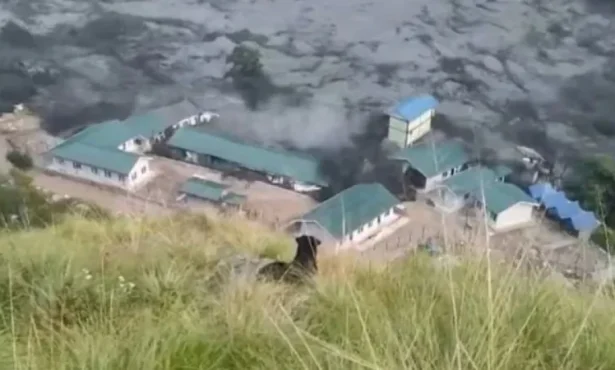
Two Irish citizens are feared missing after nearly 1,500 people including at least 800 foreigners are unaccounted for across Nepal and China’s Tibet, after a wall of mud and rock collapsed into a Himalayan river, sending catastrophic floods through towns and valleys.
A magnitude 5.0 earthquake struck China’s Tibet region late on Thursday, the German Research Centre for Geosciences (GFZ) said. The quake was at a depth of 10 km in northern Tibet, GFZ said.
The epicentre was hundreds of miles north of the regions of Nepal and China that were hit by a devastating flash flood on Wednesday that killed hundreds and left more than 1,000 people missing.
A total of 359 people a have now been found by authorities in Nepal after a torrential flood swept through the Himalayan border areas of the country and China’s Tibet, Nepal’s police said in a post on X.
Alpine Eco Trek, which offers guided tours and expeditions in Nepal, said the two Irish people had been with 12 British nationals, who were also missing, on the tour across the Nepal-Tibet border.
Nepal and China both warned on Thursday of fresh risks of flooding in the Himalayas as two lakes that have developed on either side of their border threaten to burst in a region still grappling with this week’s catastrophic flood.
Both countries have blamed the flood on a glacier collapse that pushed rock, ice, mud and debris into river systems in the mountains.
International programme manager with the Irish Red Cross Anna Marie O’Carroll said response teams have reached Nuwakot, a region 100km from Kathmandu that has been impacted by the flooding.
Ms O’Carroll described the flooding as “one of the biggest disasters that has hit Nepal” since the 2015 earthquake and said the real impact on communities there will only be seen in the days ahead.
“The initial emergency response is essential, but so is the more sustained support and solidarity that can be provided in the months to come,” she said.
“Unfortunately, the disaster happened, people donate and support and it’s in the media in that initial phase, and the longer terms needs can be almost forgotten.”
Work is ongoing on a number of fronts, with aid workers providing support through food and provisions, emergency shelters. Work is also being carried out to provide longer term solutions for people in need.
“Tens of thousands of people are in a situation of displacement,” Ms O’Carroll said.
“Along with trying to get in temporary emergency shelter, we are trying to move to a situation from temporary provisions to more sustainable solutions.
“We’re working very closely with the Nepali government and with local authorities on this, along with emergency relief supply distributions.”
Ms O’Carroll said people in Nepal are suffering from shock, anxiety, and worry for friends and family in the aftermath of the flooding.
“There’s going to be a huge need around mental health and psychological support. We have a hotline we’re supporting, providing psychological first aid to traumatised survivors.
“There are a lot of different things at play here. The biggest issues will be trying to gain access to those areas that have been essentially cut off.
“The government are trying to use helicopters; the initial efforts are around search and rescue to support the rescue of survivors in flooded areas.”
Rescuers in Nepal used helicopters to search for survivors and drop emergency supplies to thousands cut off after Wednesday’s disaster swept a rugged mountainous region thronged by trekkers and pilgrims linking Lhasa in Tibet with the Nepalese capital of Kathmandu. Police said they expected the death toll to rise beyond 165.
“This will go up, as we have resumed the search and more bodies are expected to be recovered,” police spokesperson Abi Narayan Kafle told Reuters.