Play store

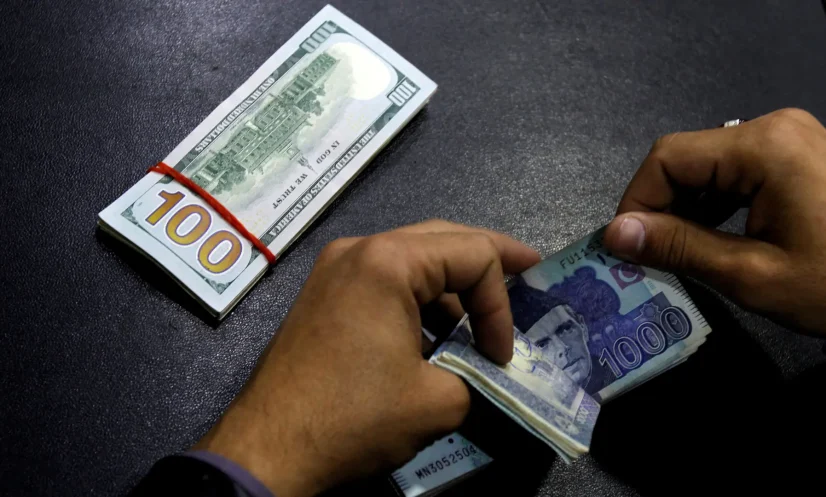
Pakistan has reportedly asked the United States for a $10 billion currency-swap facility from the US Treasury’s Exchange Stabilisation Fund. The request arrived at an extraordinary moment: the United States is at war with Iran, Pakistan has become an important channel for diplomacy between Washington and Tehran, and Islamabad is again trying to turn geopolitical relevance into economic relief.
The details of the proposal remain unsettled. Its legal structure, pricing, maturity, conditions and permitted uses have not been publicly disclosed. It may not be approved, and even an approved line may never be drawn. Those qualifications matter. But they do not make the request politically unimportant. On the contrary, the very possibility of such a facility tells us something about how money and power now travel together.
Pakistan already has extensive experience with bilateral financial support, most notably through its currency-swap arrangement with China. A US facility would add another layer to that relationship, placing Pakistan at the intersection of two competing monetary networks. Beijing’s swap lines support trade in renminbi, advance the currency’s internationalisation and reinforce China’s political influence. Washington’s provision of dollar liquidity sustains the dollar-centred financial order while rewarding countries that matter to US economic and strategic interests.
Neither side offers liquidity in a geopolitical vacuum. Pakistan should welcome additional financial insurance, but it should not confuse access to someone else’s currency with a development strategy of its own.
Not an ordinary central-bank swap : A bilateral swap agreement (BSA), often called a currency-swap line, is a standing arrangement between two central banks, which are the public institutions that manage countries’ currencies and foreign-exchange reserves. “Bilateral” simply means that it involves two parties. “Swap” refers to a temporary exchange of currencies, while the “line” is the maximum amount available. Signing a $10 billion line therefore does not mean that $10 billion has been handed over or added immediately to a country’s usable reserves. It means the recipient has the right to request funds under agreed conditions.
If the line is drawn, the transaction takes place in two stages. Suppose the State Bank of Pakistan needs dollars. It would provide an agreed amount of rupees to the supplying institution and receive dollars in return at an exchange rate set under the agreement. Subject to the facility’s rules, those dollars could then be used to supply domestic banks, pay for essential imports, meet external obligations or calm a disorderly foreign-exchange market.
At maturity, the transaction is reversed. Pakistan returns the dollars, receives its rupees back and pays any interest or fees due. A swap is therefore neither a grant nor free money. Once drawn, it creates a liability that must be repaid. Its purpose is to bridge a temporary shortage of usable foreign currency and prevent that shortage from becoming a wider financial crisis. The precise maturity, cost, permitted uses and renewal terms vary from one agreement to another.
The reported US proposal is institutionally different. Pakistan is seeking support from the Treasury’s Exchange Stabilisation Fund, not a Federal Reserve swap line. It should therefore not be presented as if Pakistan has joined the Fed’s established network of central-bank liquidity arrangements. Until the terms are public, we cannot know whether it would operate like a short-term currency swap, a balance-of-payments backstop or a more loan-like stabilisation facility.
Still, the history of central-bank swaps is relevant because it reveals the politics governing access to emergency liquidity. During the 2008 global financial crisis, the Federal Reserve supplied swaps to only four emerging markets—Brazil, Mexico, Singapore and South Korea—while other requests were rejected. Aditi Sahasrabuddhe, a political scientist at Brown University, argues that the selection reflected more than financial need. The Fed favoured economies that were financially open, strategically useful and aligned with American preferences in global economic governance. When the economic case was ambiguous, political considerations helped determine who got access.
Another study by Sahasrabuddhe shows that interpersonal trust among central bankers also shaped the network. Strong relationships brought access to larger or less restrictive facilities; countries outside those circles had to rely on more costly alternatives. In other words, the global financial safety net is neither universal nor politically neutral. It is partly a hierarchy of relationships.
That lesson applies here.
Washington does not make exceptional financial commitments merely because a country asks. If Pakistan were offered a large stabilisation facility, it would be reasonable to read it as a signal that the United States sees value in Pakistan’s economic stability and continued cooperation.
Two currencies, two strategies: Swap lines are often described as plumbing: technical arrangements that keep currencies and credit moving. But the provider decides where to install the pipes.
For the United States, supplying dollars abroad helps preserve a system built around the dollar. The Fed’s crisis facilities protect American interests as well as foreign recipients. When dollars become scarce, overseas banks and borrowers can be forced to sell assets, default on dollar obligations or bid the dollar sharply higher. Providing liquidity contains those pressures, protects internationally exposed US financial institutions and reinforces the expectation that, in a crisis, the world still turns to the United States.
The political returns can extend beyond markets. Yumi Park and Sujeong Shim find that, during the 2008 crisis, recipients of Fed swap announcements experienced an increase in government popularity while approval continued to fall in non-recipient countries. Their evidence points to exchange-rate stabilisation and greater room for expansionary policy as the mechanisms. The public may know little about the swap itself, but it notices a steadier currency and a government with more room to act. The issuer of the leading reserve currency consequently gains a form of leverage that other states cannot easily reproduce.
China is trying to build some of that capacity for itself. After the global financial crisis, the People’s Bank of China rapidly expanded its swap network, helping to turn what had been a selective crisis-management tool into a much broader layer of the global financial system. By the end of 2020, an IMF study counted 91 participants and roughly $1.9 trillion in announced capacity across the worldwide bilateral-swap network.
China was one of the main forces behind that expansion. Its authorities have identified three overlapping goals for Chinese facilities: promoting renminbi internationalisation, facilitating trade and investment, and providing renminbi liquidity for financial stability. Some Chinese swaps, including Pakistan’s, have also been used to address balance-of-payments pressure.
This is financial statecraft. A currency becomes international not simply because a government declares it so, but because foreign firms, banks and governments can obtain and use it. Every trade payment settled in renminbi, every reserve manager willing to hold it and every central bank connected to the People’s Bank of China reduces, at the margin, dependence on dollars. China’s swaps create the institutional channels through which that change could occur.
They also create political relationships. Recent research by Qi Liu, Xun Pang and James Raymond Vreeland examines 38 countries that signed swap agreements with China. On average, the authors find short-run movement towards China’s foreign-policy positions after a BSA is signed, with stronger and more persistent effects among financially vulnerable countries and governments already attracted to Chinese leadership.
This does not mean every swap purchases a vote. Pakistan itself does not show a statistically identifiable post-swap shift in that study, probably because its relationship with China was already exceptionally close. The broader conclusion is nevertheless important: access to liquidity can alter a government’s incentives, especially when alternative sources are scarce.
The United States and China therefore pursue different but comparable forms of monetary power. China wants to make the renminbi more usable and embed its partners in a China-centred network. The United States wants to preserve the dollar’s central role and retain influence over strategically significant states. A swap may be denominated in currency, but it is also denominated in trust, access and expectations about future cooperation.
Why Pakistan matters now: Pakistan’s reported request cannot be separated from the war with Iran. Islamabad has served as a mediator and a venue for US-Iran contacts, giving it a role neither Washington nor Tehran can easily dismiss. Its geography connects South Asia, China, Iran, Afghanistan and the Arabian Sea. Its military relationships with Gulf states, long partnership with China and ability to communicate across rival camps make it unusually useful during a regional conflict.
For Washington, a financially stable and cooperative Pakistan can help sustain diplomacy, limit wider regional escalation and prevent Beijing from becoming Islamabad’s only dependable source of emergency support. A Treasury facility would also remind Pakistani elites that access to the dollar system can deliver benefits that the renminbi cannot yet fully match. The strategic message would be clear: Pakistan still has a place within the American orbit.
For Pakistan, the attraction is obvious. A large dollar backstop could reassure markets, reduce the fear of an abrupt external-financing crisis and give the State Bank more room to manage volatility. Even an undrawn line may convey confidence. Pakistan has simultaneously been reducing near-term foreign liabilities, seeking longer-tenor financing and preparing a return to international capital markets. A credible backstop could reinforce those efforts by reducing rollover risk and reassuring lenders that Pakistan can meet its near-term dollar obligations.
The timing supports a geopolitical interpretation, but it does not prove a quid pro quo. No public evidence shows that Washington has offered $10 billion in exchange for a specified Pakistani position on Iran, China or any other issue. Nor is approval guaranteed. Pakistan’s own history should caution against treating temporary strategic attention as a durable economic alliance. American interest has repeatedly risen and fallen with wars and crises in the region.
Islamabad should also resist the temptation to convert its mediating role into participation in someone else’s war. Its economic interest lies in de-escalation. Conflict with neighbouring Iran would create security risks, disrupt energy and trade, strain domestic cohesion and compromise Pakistan’s ability to work with China and the Gulf states. The value Pakistan currently offers Washington is precisely its ability to communicate across dividing lines. Sacrificing that position would destroy the asset it is trying to monetise. Source The Dawn