


 Play store

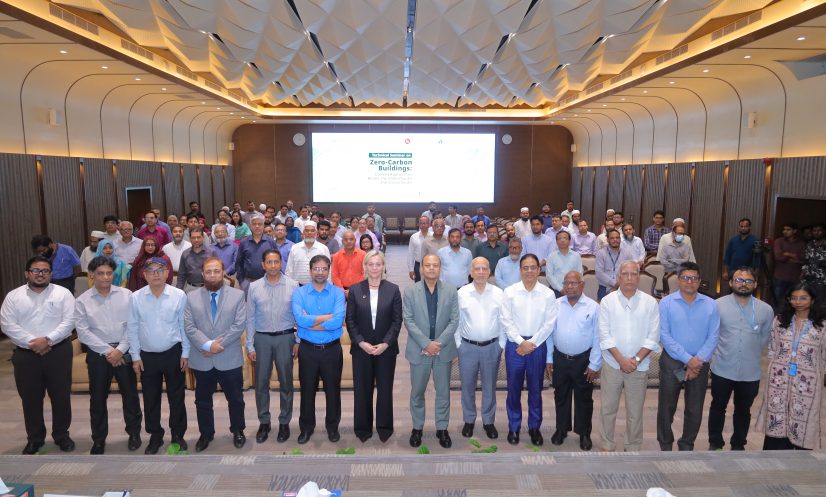
Bangladesh needs to accelerate the transition towards low-carbon and sustainable buildings by combining global experience with solutions tailored to its own environmental and development needs, speakers said at a technical seminar in Dhaka on Thursday.
The Public Works Department (PWD), in collaboration with the United Nations Office for Project Services (UNOPS) and the United Nations Environment Programme (UNEP), organised the seminar titled “Zero-Carbon Buildings: Current Approaches across the Global North and Global South” at the PWD Auditorium.
The event was organised under the “Transforming the Built Environment through Sustainable Materials” initiative and brought together policymakers, architects, engineers, academics, practitioners and industry representatives to discuss low-carbon construction, sustainable materials and whole-life carbon approaches.
Speakers stressed that the transition to sustainable buildings requires stronger policies, wider use of environmentally friendly construction materials, green public procurement and greater technical capacity across the construction sector.
Globally, buildings and construction account for nearly 40% of energy- and process-related carbon dioxide emissions, making the sector a major focus of efforts to achieve net-zero emissions.
Opening the seminar, PWD Chief Engineer Khalequezzaman Choudhury welcomed the participants and highlighted the responsibility of both public and private institutions in promoting sustainable and low-carbon approaches to the built environment.
He stressed the importance of integrating sustainability into construction planning and implementation as Bangladesh continues to expand its infrastructure and urban areas.
The seminar featured two technical presentations focusing on global approaches and Bangladesh-specific solutions.
Dr Eshrar Latif, Senior Lecturer at the Welsh School of Architecture at Cardiff University, delivered the keynote technical lecture on current approaches to zero-carbon buildings in the Global North and Global South.
He examined the different pathways followed by developed and developing countries and discussed the opportunities and challenges involved in reducing emissions from buildings throughout their life cycles.
Prof Md Ashikur Rahman Joarder, Department of Architecture at Bangladesh University of Engineering and Technology (BUET) and UNOPS Technical Expert, presented “Bangladesh’s Journey Towards Nearly Zero Emissions Communities (neZECom): Sustainable Building Labelling Framework HBRI-DESH.”
His presentation focused on developing locally relevant frameworks and standards to promote sustainable and low-emission buildings in Bangladesh.
Delivering remarks on behalf of UNOPS Bangladesh, Namira Bosnjak, Officer in Charge and Programme Manager, stressed the importance of international knowledge-sharing and adapting global experience to Bangladesh’s development context.
She said knowledge exchange can help Bangladesh identify practical and cost-effective approaches to improving the environmental performance of its buildings.
Participants subsequently took part in an interactive discussion and question-and-answer session, exchanging views on sustainable construction materials, zero-carbon building approaches and the practical challenges of applying them in Bangladesh.
The discussions also highlighted the need for closer collaboration among government agencies, universities, development partners, architects, engineers and the private sector to build technical capacity and develop appropriate standards.
The seminar forms part of a broader knowledge-sharing programme under the Transforming the Built Environment through Sustainable Materials initiative, which seeks to promote sustainable materials, whole-life carbon approaches and capacity development in Bangladesh’s public construction sector.
The initiative comes at a time when Bangladesh is facing growing urbanisation, rising construction demand and increasing climate risks, making energy-efficient and climate-resilient buildings increasingly important for the country’s long-term development.