


 Play store

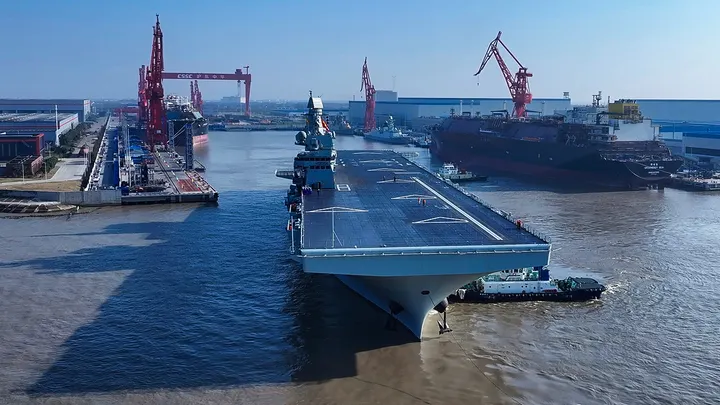
A massive new vessel under construction near Guangzhou is drawing close attention from defense analysts, as it could become the world’s largest dedicated naval replenishment ship—designed to refuel, rearm and resupply warships far from Chinese shores.
At nearly 885 feet long, the ship highlights a broader strategic shift in how China is developing not just military power, but the long-term capacity to sustain operations during extended conflicts.
Military experts often emphasize that while weapons win battles, logistics wins wars. A replenishment ship of this scale would allow Chinese carrier groups to operate longer and farther, reducing reliance on nearby bases.
This aligns with assessments from the Pentagon that China is building a global network of logistics hubs, with access to ports across Asia, Africa and the Middle East.
China’s expanding naval capabilities are matched by progress in other domains: A new amphibious assault ship, Sichuan, has begun sea trials. Production of the Chengdu J-20 is accelerating, with hundreds already delivered.
A recent submarine-launched ballistic missile test demonstrated increased nuclear reach
Together, these developments point to a military designed not only for deterrence, but for sustained operations over time.
China’s strength is deeply rooted in its industrial base. It now accounts for more than half of global shipbuilding output—up sharply from less than 5% in 1999. This civil-military integration ensures the ability to build, repair and replace assets during prolonged conflicts.
Modern warfare depends heavily on supply chains, and China dominates several key areas: Around 70% control of global refining capacity for strategic minerals. A growing share of global semiconductor production, especially foundational chips.
These advantages provide Beijing with a significant edge in maintaining weapons production during crises.
China is also expanding its influence in emerging technologies: At international AI forums, Xi Jinping has promoted Chinese technology standards. A satellite network of more than 1,300 systems enhances surveillance, communications and targeting capabilities.
The new ship alone does not indicate that conflict is imminent. However, it fits into a broader pattern: China is building the infrastructure to endure long wars, absorb economic pressure and project power globally.
With sensitive flashpoints such as Taiwan, analysts suggest Beijing’s strategy is no longer focused solely on rapid victory, but on sustaining a prolonged strategic competition.