Play store


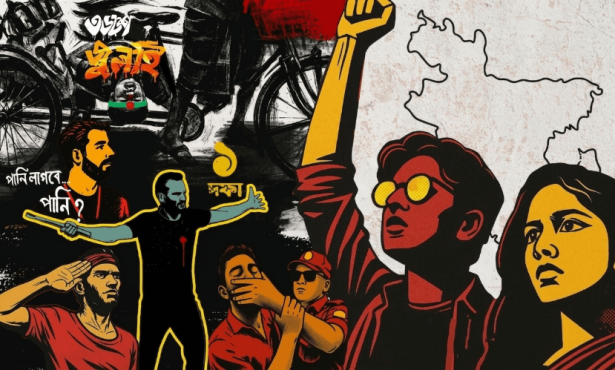
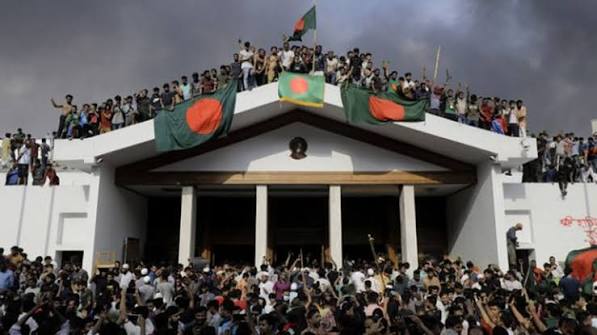
The events of July and August 2024 remain one of the most consequential and widely debated chapters in Bangladesh’s recent political history.
Two years later, discussions surrounding the uprising continue to influence political discourse, governance, justice, institutional reform and national reconciliation.
Political parties, civil society, academics, lawyers and rights advocates continue to debate the causes of the unrest, the response of state institutions, accountability for violence, and the reforms needed to prevent similar crises in the future.
The legacy of the uprising has become a defining issue in Bangladesh’s evolving political landscape.
One of the central questions emerging from the events is how a modern democratic state can balance public order with the constitutional rights of citizens, including freedom of expression, peaceful assembly and access to justice.
These questions remain relevant not only for Bangladesh but for democracies around the world.
The protests brought together people from diverse social and economic backgrounds. Students, workers, professionals and ordinary citizens participated in demonstrations driven by a range of concerns and aspirations.
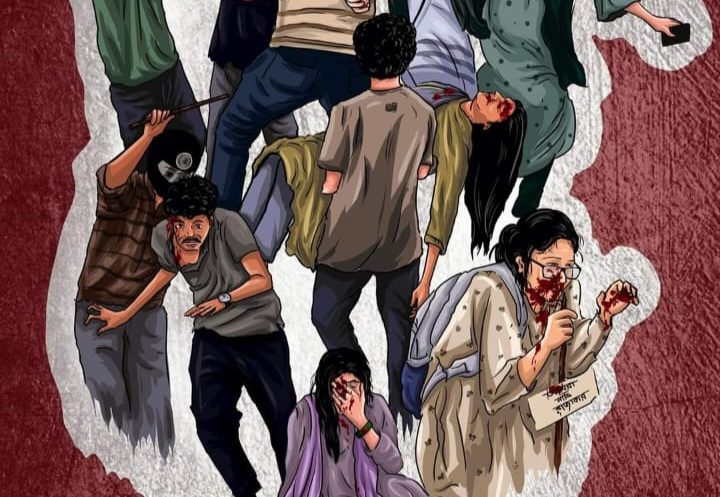
Many families continue to remember those who lost their lives or were injured during the unrest, while many others continue to seek truth, justice and accountability through lawful institutions.
The precise legal and historical assessment of responsibility remains a matter for independent investigations and judicial processes.
Public discussion has therefore increasingly focused on ensuring that any allegations are examined fairly, transparently and in accordance with the rule of law.
The uprising also reignited debate over social justice and equality.
Many observers argue that economic development alone cannot guarantee national stability unless accompanied by equal opportunities, transparent governance, accountability and public trust in state institutions.
Questions surrounding corruption remain equally significant.
Bangladesh has achieved notable economic and social progress over the past decades, yet governance experts continue to stress that corruption weakens public institutions, discourages investment, reduces confidence in public administration and limits equal access to public services.
Legal scholars frequently argue that an independent judiciary, impartial law enforcement agencies, professional civil service and accountable public administration are fundamental pillars of sustainable development.
Public confidence in justice grows when investigations are impartial, court proceedings are transparent and laws are applied equally regardless of political affiliation, wealth or social status.
Many policy analysts believe that strengthening democratic institutions requires reforms in several areas, including judicial efficiency, public sector accountability, anti-corruption measures, protection of human rights, electoral integrity and citizen participation.
Religious scholars have also contributed to discussions about justice and moral leadership.
In Islam, justice (‘adl) is regarded as one of the highest principles of governance. The Holy Qur’an repeatedly instructs believers to uphold justice without favouritism.
Allah says:
“Indeed, Allah commands justice, excellence and giving to relatives and forbids immorality, wrongdoing and oppression.” (Qur’an 16:90)
Another verse states:
“O you who believe, stand firmly for justice as witnesses for Allah, even if it is against yourselves, your parents or close relatives.” (Qur’an 4:135)
The Qur’an also teaches:
“Do not let the hatred of a people prevent you from being just. Be just; that is nearer to righteousness.” (Qur’an 5:8)
These principles have long been cited by Islamic scholars as universal foundations for good governance, impartial justice and protection of human dignity.
The Prophet Muhammad (peace be upon him) likewise emphasised integrity, honesty and accountability in public leadership.
Authentic narrations in Sahih al-Bukhari and Sahih Muslim stress that leaders carry a trust and will be accountable before Allah for how they exercise authority.
Public administration specialists often note that effective governance depends not only on strong laws but also on ethical leadership.
When honesty, transparency and accountability guide public institutions, citizens are more likely to trust government decisions and cooperate in national development.
Many economists similarly argue that reducing corruption requires digital governance, transparent procurement systems, stronger independent oversight institutions, protection for whistle-blowers and effective enforcement of anti-corruption laws.
For Bangladesh, the continuing discussion surrounding the July-August 2024 events represents more than a debate about the past.
It is also a conversation about the country’s future—how institutions can become stronger, how citizens’ rights can be protected and how trust between the people and the state can be reinforced.
Political scientists frequently observe that nations become stronger when disagreements are resolved through constitutional institutions rather than violence.
Dialogue, respect for the rule of law, peaceful political participation and independent judicial processes remain essential for long-term stability.
As Bangladesh moves forward, many observers believe that national unity, institutional accountability and equal justice under the law will be crucial for sustainable development.
Regardless of political differences, the shared aspirations of most citizens include peace, security, economic opportunity and a society where every individual is treated with dignity and fairness.
The continuing discussion surrounding the July uprising demonstrates that demands for justice, transparency and accountable governance remain central to Bangladesh’s public life.
Addressing these aspirations through constitutional processes, institutional reform and respect for human rights may help build greater public confidence and contribute to a more stable, prosperous and inclusive future.
The views expressed in this article are the author’s own and do not necessarily reflect Sarabangla English Edition’s editorial stance.