Play store


The Liberation War of 1971 was not fought merely to achieve the geographical independence of Bangladesh.
It was a struggle to establish a sovereign nation founded on justice, equality, human dignity and the rule of law, where citizens would be free from oppression, discrimination and arbitrary exercise of power.
More than five decades later, many of the country’s surviving freedom fighters continue to believe that the true victory of independence will only be realized when these principles are fully reflected in public life and state institutions.
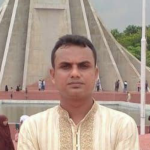
Among them is veteran freedom fighter Md. Abdus Sobhan (70+), who fought in Sector 11 under the command of Colonel Taher.
Looking back on the war, he says his motivation was simple yet profound: to free the country from injustice and foreign domination and to secure a better future for generations to come.
According to him, the slogans “Joy Bangla” and “Allahu Akbar” are not contradictory. Rather, they symbolize two complementary sources of strength—love for the motherland and faith in the Almighty.
Together, they inspired countless freedom fighters with courage, patriotism and moral conviction throughout the Liberation War.
Recalling those difficult days, Abdus Sobhan said freedom fighters left behind their families and risked their lives with one dream: an independent Bangladesh where every citizen could live with dignity, liberty and equal rights.
“There was no greater interest than the freedom of our country,” he said.
Today, however, the veteran freedom fighter believes that political independence alone is not enough.
In his view, the country must continue striving to establish a justice-based society where the Constitution and the laws of Bangladesh are applied equally to every citizen, where no one’s constitutional rights are violated, and where all public institutions remain accountable to the rule of law.
He argues that every citizen deserves protection from corruption, discrimination, abuse of authority and any unlawful deprivation of rights guaranteed by the Constitution.
For him, safeguarding citizens’ constitutional freedoms is one of the most meaningful ways to honour the sacrifices made during the Liberation War.
One of his deepest regrets comes from a personal experience. He shared that although his younger son had previously qualified in the written examination for a government job, he was ultimately unable to secure the position without paying a bribe.
For Abdus Sobhan, this was heartbreaking because it reminded him of the injustices that many hoped would disappear after independence.
“It felt like the old system of injustice had survived,” he reflected, expressing disappointment that merit alone was not enough. While this account reflects his personal experience and opinion, he hopes future generations will no longer encounter such challenges.
His expectation is straightforward: recruitment to public service should be transparent, merit-based and free from corruption, bribery or improper political influence.
Every qualified candidate, he believes, should have an equal opportunity to serve the nation through a fair and competitive recruitment process.
The veteran freedom fighter also emphasized the importance of religious freedom and social harmony. He said every citizen should be able to practice his or her religion freely and peacefully while respecting the beliefs of others.
A democratic and independent state, he believes, must guarantee equal rights and equal protection under the law for all citizens regardless of religion, ethnicity, political opinion or social background.
He further believes Bangladesh should move beyond politics that divides its people. Citizens should never be deprived of their rights because of political affiliation, religious belief or any other form of discrimination.
Instead, national unity should be strengthened through justice, mutual respect, constitutional governance and equal citizenship.
Addressing the younger generation, Abdus Sobhan urged them to uphold honesty, patriotism, justice and compassion.
He called on them to protect the values for which thousands sacrificed their lives in 1971 and to build institutions that ensure fairness, accountability, transparency and respect for the Constitution.
His message is clear: justice must come before all other achievements. Economic growth, political stability and national development cannot be sustained unless they rest upon strong institutions, an independent judiciary, transparent governance and the consistent protection of every citizen’s constitutional and legal rights.
The reflections of freedom fighters like Md. Abdus Sobhan remind us that the struggle for Bangladesh did not end with the declaration of independence.
The greater challenge lies in fulfilling the promise of that independence by building a nation where every citizen enjoys equal rights, equal opportunities and equal protection under the Constitution and the law, and where no one is deprived of justice through corruption, discrimination or abuse of power.
Only then, he believes, can Bangladesh truly fulfil the aspirations of those who fought for its freedom and become a genuinely independent state founded on justice, accountability and respect for the dignity of every citizen.
The views expressed in this article are the author’s own and do not necessarily reflect Sarabangla English Edition’s editorial stance.