Play store

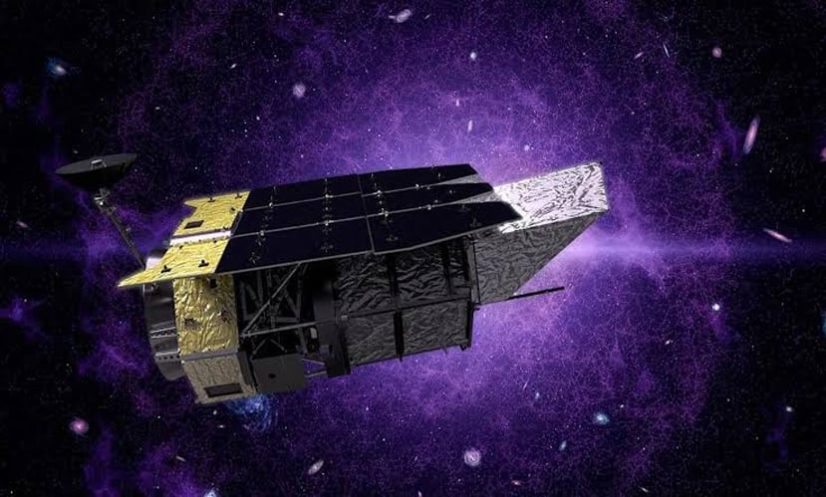
NASA is preparing to launch its next flagship space observatory, the Nancy Grace Roman Space Telescope, on August 30, 2026, marking a major step forward in the exploration of the universe and its greatest mysteries.
The telescope is scheduled to lift off no earlier than 7:26 a.m. EDT aboard a SpaceX Falcon Heavy rocket from Launch Complex 39A at NASA’s Kennedy Space Center in Florida. NASA’s Launch Services Program at Kennedy is overseeing launch vehicle management, while the Roman Space Telescope project is managed by NASA’s Goddard Space Flight Center in Greenbelt, Maryland.
Named after Dr. Nancy Grace Roman, NASA’s first chief astronomer and widely regarded as the “mother of the Hubble Space Telescope,” the observatory will feature a field of view 100 to 200 times larger than Hubble’s.
This capability will allow it to survey vast regions of the sky, collecting light from an estimated one billion galaxies over its mission.
Scientists expect Roman to shed new light on some of astronomy’s biggest questions, including the nature of dark energy, dark matter, and the formation of planets beyond our solar system. Equipped with a powerful coronagraph, the telescope will also be able to block the light of distant stars, enabling direct observations of exoplanets and planet-forming disks.
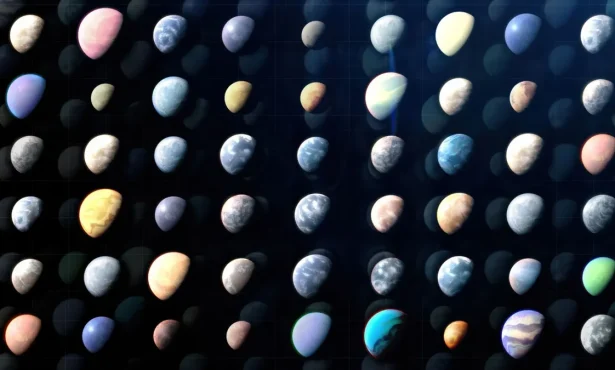
The observatory is expected to conduct the most comprehensive census yet of planetary systems in the Milky Way while carrying out unprecedented wide-field infrared surveys that could reveal hundreds of thousands of previously undiscovered worlds.
In a symbolic tribute, NASA technicians on July 27 installed a memory card carrying the names of 1,350,144 people from around the world inside a commemorative plaque attached to the telescope. The list includes names submitted by members of the public as well as astronauts assigned to the Artemis II and Artemis III missions.
The memory card will accompany the observatory on its journey to the Sun-Earth Lagrange Point 2 (L2), located about one million miles (1.5 million kilometers) from Earth. From this stable gravitational location, Roman will conduct its observations free from many of the disturbances that affect Earth-orbiting telescopes.
With its advanced technology and expansive view of the cosmos, the Nancy Grace Roman Space Telescope is expected to transform scientists’ understanding of the universe, building on the legacy of Hubble while opening a new era of discovery in astrophysics.