Play store

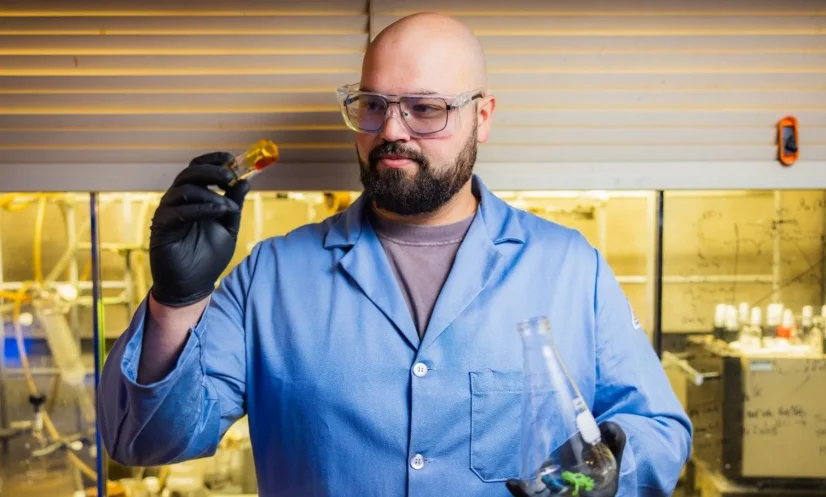
Researchers at Virginia Tech have developed a chemical process that can transform difficult-to-recycle plastic waste into a high-performance material used in synthetic engine oil, offering a potential solution to plastic pollution and the environmental costs of lubricant production.
The research team, led by chemist and chemical engineer Guoliang “Greg” Liu, has demonstrated how polyvinyl chloride (PVC), commonly found in plumbing pipes, window frames and credit cards, can be converted into polyalphaolefin (PAO), a key ingredient in synthetic lubricants.
Published in the journal Nature, the study presents a potential way to turn discarded plastic into valuable industrial products rather than sending it to landfills.
PVC is among the most challenging plastics to recycle because it contains chlorine and various chemical additives that give it different properties, including flexibility, rigidity and heat resistance. These characteristics also make conventional recycling difficult.
At the same time, demand for lubricants continues to grow worldwide. Such materials are essential for reducing friction and wear in machinery, including vehicle engines, lawn mowers and jet engines.
The researchers’ process involves placing PVC waste in a solvent and adding aluminium trichloride and alpha-olefins, a class of hydrocarbons used to manufacture synthetic lubricants.
The mixture is then heated to 158 degrees Fahrenheit (70 degrees Celsius) for three hours. Researchers subsequently extract a relatively thick lubricating oil.
The resulting polyalphaolefin belongs to a family of synthetic base oils valued for their stability, lubricating performance and ability to operate across a wide range of temperatures. They are widely used in high-performance synthetic engine oils.
“Number one, we have proved that it is feasible to use plastic waste to make high-performance lubricants. Number two, these lubricants are green, and they can meet the emerging needs for sustainability by the market,” Liu said.
Building on earlier breakthroughs
The latest discovery builds on previous research by Liu’s laboratory, published in Science and Nature Sustainability, which demonstrated how other types of plastic waste could be converted into surfactants.
Surfactants are substances that help water interact with oils and grease and are widely used in soaps and detergents.
Encouraged by those findings, the researchers decided to tackle the more difficult challenge of recycling PVC.
“We want to help improve the recycling and upcycling of PVC,” Liu said.
Unlike conventional recycling, which generally recovers materials for reuse, upcycling transforms waste into products with greater value or usefulness.
Liu assembled a team of graduate researchers to investigate the possibility. Doctoral researcher Eric Munyaneza Nuwayo led the project, joined by chemistry graduate student Connor S. Thompson and first-year graduate student Abby Civiello.
Liu affectionately called the three researchers “the three musketeers”.
The team initially experimented with ways to alter PVC’s molecular structure to produce more useful materials.
Like other plastics, PVC is a polymer made up of long molecular chains containing repeating chemical units. The researchers initially sought to modify the chemical groups attached to these chains to create materials with desirable properties.
The findings point to a promising approach to converting a difficult plastic waste stream into a useful industrial resource.