


 Play store

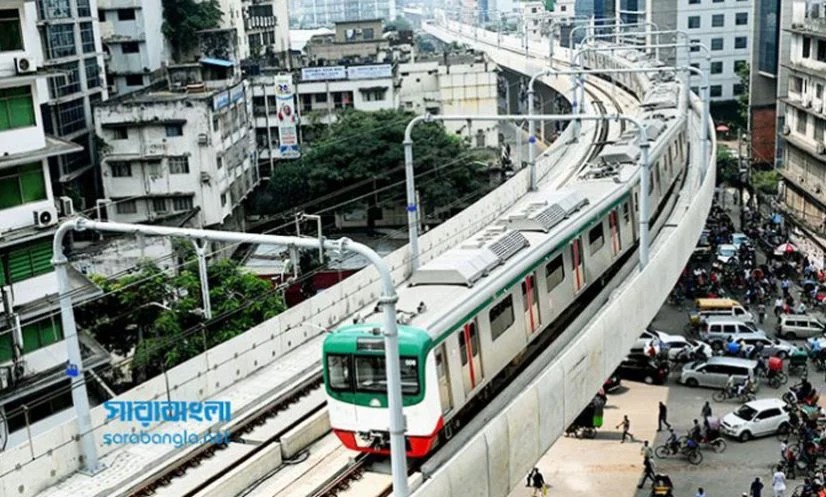
Recent incidents involving explosives, suspected bombs and drugs at Dhaka’s metro rail stations have raised questions about the effectiveness of security screening and surveillance across the network.
An IED was recovered from beneath Motijheel Metro Rail Station, while bomb-like objects were later found beneath stations in Mirpur and Farmgate. In separate incidents, police arrested a man with 1,702 yaba tablets at Mirpur-10 station, recovered seven yaba tablets from Karwan Bazar station and seized eight kilograms of cannabis from Shewrapara station.
The incidents have prompted concerns among passengers over whether weapons, explosives or drugs can be carried into metro stations despite existing security measures.
The metro rail is one of the capital’s key modes of transport, allowing commuters to avoid Dhaka’s notorious traffic congestion. More than four lakh passengers use the service every day to travel along the roughly 20-kilometre Uttara-Motijheel route.
Although authorities have described the incidents as isolated, the repeated recovery of drugs and suspicious objects has raised questions about how effectively the existing screening system can identify potential threats, particularly during peak hours when stations handle large crowds.
Drugs found at metro stations
On August 17, police arrested a man with 1,702 yaba tablets at the entrance of Mirpur-10 Metro Rail Station.
The man, identified as 43-year-old Jamal Molla, was detained with assistance from MRT Police. Police also recovered a mobile phone and Tk 1,400 in cash from his possession. A case was filed against him under the Narcotics Control Act.
Earlier, on July 31, Ansar members spotted two people behaving suspiciously at Karwan Bazar Metro Rail Station around 8pm. They chased and detained one of them, recovering seven yaba tablets during a search. The suspect was later handed over to the Dhaka Metropolitan Police.
In another incident on November 24 last year, MRT Police arrested Mahabubur Howlader, 50, and his daughter Sumi, 30, with eight kilograms of cannabis at Shewrapara Metro Rail Station.
During interrogation, they reportedly told police that they had planned to board the metro rail from Shewrapara and get off at Motijheel.
The repeated incidents have raised the question of whether criminals are increasingly using the metro rail to transport drugs or whether the cases are merely isolated incidents.
Crime experts say investigating only the arrested individuals may not be enough. Authorities should also examine the source and intended destination of the drugs, possible accomplices and why the metro rail was chosen for transportation.
IED found beneath Motijheel station
Security concerns intensified after an explosive device was recovered from a road beneath Motijheel Metro Rail Station on July 25.
Police found the device inside an umbrella and the Dhaka Metropolitan Police’s bomb disposal unit later neutralised it. According to police, the device was an improvised explosive device, or IED.
An explosion occurred while the bomb was being neutralised, injuring a member of the bomb disposal team after a fragment struck his eye.
The incident took place in the busy Motijheel area, directly beneath the metro station. Had the device exploded there, it could have caused significant casualties among passengers and pedestrians.
A few days later, on August 1, bomb-like objects were reported beneath the Mirpur-10 and Farmgate metro stations.
At Farmgate, metro rail authorities alerted police after spotting a sack near a pillar beneath the station. A bomb disposal team examined it and found that it was only an empty sack.
However, authorities cannot afford to ignore suspicious objects, particularly at a crowded public facility such as a metro station, where even a minor security threat can trigger panic and potentially cause serious disruption.
How effective is screening during rush hours?
Metro rail authorities say security measures have been strengthened at the stations, with MRT Police and Ansar personnel deployed and CCTV cameras and control rooms used for surveillance.
However, the sheer volume of passengers during peak periods raises questions about whether every passenger and bag can be adequately screened.
Regular metro rail passenger Babul Akter, a resident of Ashkona, said it was difficult to search every passenger individually because of the heavy crowds.
He suggested that modern archway metal detectors and other screening equipment could help speed up checks while improving security and reducing inconvenience for passengers.
What the authorities say
Md Ahsan Ullah Sharifi, deputy project director (public relations) and information officer of Dhaka Metro Rail, said security measures had been strengthened and the arrest of offenders demonstrated that the existing system was working.
He said security personnel had also been instructed to remain more vigilant to prevent untoward incidents.
Asked whether alternative measures were being considered for situations in which heavy passenger traffic makes it difficult to ensure that everyone passes through archways or receives individual checks, Sharifi said additional security measures in mass transit systems had certain limitations.
He added that similar security arrangements were used in metro rail systems in other countries.
MRT Police Inspector (Operations) Mohammad Mohsin said surveillance and searches of both suspected individuals and ordinary passengers had been intensified.
He said the yaba consignment recovered at Mirpur-10 was seized during routine security checks.
According to him, there are plans to introduce modern security equipment at every station. Gate scanners, luggage scanners and archway metal detectors would allow passengers and their belongings to be screened more effectively, he said.
Greater use of technology needed
Dr Touhidul Haque, an associate professor at the Institute of Social Welfare and Research at the University of Dhaka and a social and crime expert, said security and passenger screening at metro stations needed to be strengthened.
He recommended installing scanning machines at every station and expanding the use of technology to identify people involved in criminal activities.
Security measures should be designed based on analysis of crime patterns and potential risks, he said.
However, simply installing new technology would not be enough, Haque cautioned. The system would also require trained personnel to operate the equipment, regular maintenance and mechanisms for analysing information from previous criminal incidents.
With metro rail becoming an increasingly important part of Dhaka’s public transport system, the recent incidents have underscored the need to reassess station security and ensure that growing passenger numbers do not create gaps that criminals can exploit.