Play store

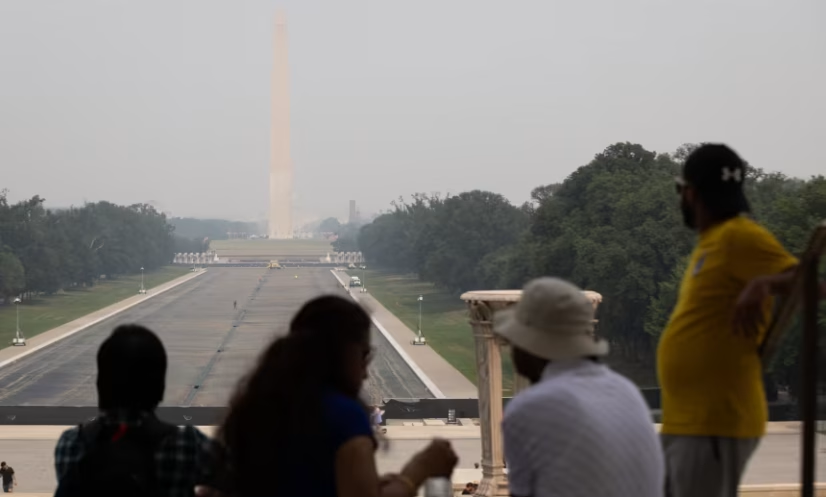
Erin Cotton didn’t notice the smoke until her eyes started to water and her two children complained they felt itchy.
“That’s when I remembered what I felt like during the Palisades Fire,” said Cotton, a Washington, DC, mother of a 5- and 1-year-old who lived in California as one of the most destructive wildfires in state history raged last year.
Cotton is one of more than 100 million people across the Midwest, Northeast and mid-Atlantic breathing in dangerous air brought by thick, choking plumes of smoke from wildfires in Canada.
Smoke put a damper on outdoor summer events across over a dozen states under air quality alerts. Events ranging from a baby parade in Flint, Michigan, to a rock concert in Herndon, Virginia, and the America’s Mile marathon in Pittsburgh were canceled Friday as smoke lingered. Businesses have also suffered during a busy season: Amusement parks like Kennywood and Sandcastle Water Park in Pennsylvania were shuttered due to the poor air quality.
Highly anticipated sporting events like the Cleveland Guardians game against the Pittsburgh Pirates and the RowFest National Championships in Michigan were called off or postponed.
But one question looms as thick as the smoke itself: Will the air pollution be a problem for the World Cup final on Sunday afternoon in New York City?
The good news: The heaviest smoke could clear out of the region ahead of the final. The bad news: Some less dense, thinner smoke plumes could move into the area.
DC resident Abigail Nguyen planned to watch the World Cup on the National Mall with thousands of other soccer fans. Now she says she’ll just watch it with her roommates at home.
“I can’t really get the full effect and energy of the crowd, which is so sad, because we should be celebrating this summer event instead of being holed up inside,” she said.
Residents from Minnesota to Washington, DC, told CNN the noxious air has disrupted their lives, seeping into everything from their health and leisure to their businesses and family life.
Officials in a handful of states most impacted advised residents to stay indoors and to wear masks if they need to leave their homes.
For some, the shutdowns and masking guidance brought flashbacks of the COVID-19 pandemic about six years ago. Others like Cotton were reminded of past natural disasters, leaving them wary of stepping outside.
Communities across parts of the mid-Atlantic and Northeast will face poor air quality until Saturday afternoon, when a storm system arrives to help clear the air.